LandOffer
Job search
Technical Account Manager vs. Customer Success Manager: Technical Ownership, Adoption, and Renewals
Two current employer descriptions, a bounded account-team framework and an original completed handoff distinguish support, adoption and commercial authority.
A Technical Account Manager may coordinate a customer's technical support experience, while a Customer Success Manager may own adoption, account health and renewal work. Both can require substantial product knowledge and manage escalations. Choose between TAM and CSM jobs by the decisions, customer commitments and systems you would own, then check the actual posting's requirements.
LandOffer publishes this comparison. We reviewed public employer descriptions and GitLab's handbook on October 21, 2026. The worked assets are a completed role comparison and an original fictional customer handoff. We did not access customer records, contact an employer, change a service or submit an application. Compare recent roles on LandOffer using the same responsibility questions.

Read technical ownership as a specific responsibility
“Technical” can describe product fluency, troubleshooting, architectural guidance, configuration work or code ownership. These are different responsibilities. A primary technical contact might coordinate an issue through backend engineering without implementing the fix personally. A CSM might understand a developer platform deeply enough to guide adoption without owning its production service.
Look for verbs and their objects: investigate support cases, recommend configurations, lead onboarding, monitor usage, forecast renewals or negotiate commercial terms. Identify who can authorize each action as well as who coordinates it. Owning customer communication does not automatically authorize changing infrastructure, promising a release date or approving a contract concession.
The same distinction applies to outcomes. A resolved incident, a completed rollout, increased usage and a signed renewal require different evidence. One can influence another without establishing it. A technical workaround may restore a workflow while the customer's broader adoption plan remains incomplete. A positive meeting is not proof of a renewed agreement.
Completed role comparison: two vacancies and one framework
This bounded review compares actual public descriptions, not a representative market sample. Availability and employment terms can change. The GitLab row is an operating framework, rather than a current vacancy or a universal definition of either title.
| Description examined | Explicit ownership | Completed interpretation |
|---|---|---|
| Cloudflare Technical Account Manager, Washington, DC/hybrid | Post-contract support experience, technical escalations, customer environment knowledge and Quarterly Support Reviews | Support-oriented technical coordination with incident and coverage responsibilities; working with backend teams does not establish sole code ownership |
| Coder Senior Customer Success Manager, United States/remote | Onboarding, rollout plans, adoption barriers, health and usage, renewals and forecasting; partner with Sales on expansion | Commercial and adoption responsibilities coexist with knowledge of cloud infrastructure, developer tools and the software lifecycle |
| GitLab account-team framework | CSM post-sales journey and risk management; account executives negotiate price/contracts; additional renewal and technical partners | Customer relationship ownership is shared across specific responsibilities, so read the company's division of work before assuming who closes a renewal |
An older TensorWave TAM lead displayed a job-not-found message when opened. We excluded it from the current vacancy comparison. A cached description does not establish an available opening, and the missing page does not explain why recruiting changed.
Read the two roles as different combinations of support, adoption and commercial responsibilities. Cloudflare emphasizes the support experience around a technical environment. Coder requires technical context while connecting rollouts and health monitoring to renewal work. Both descriptions involve coordination with other teams.
Examine the TAM's incident and coverage obligations
Cloudflare places this TAM in its Customer Support organization and describes the role as the primary technical contact for top Enterprise customers after the contract. It includes support interactions, escalations and recommendations aligned with customer requirements. Its Quarterly Support Reviews cover SLA adherence, leading ticket drivers, case deep dives and incident reviews.
The technical requirements are specific to that environment: Layer 3 and 4 networking, routing protocols, security products and troubleshooting appear in the description. Under its desirable-experience heading, the posting includes a minimum-eight-year customer-facing TAM experience statement. Preserve that wording as an employer-specific condition; it is not a universal entry requirement for every TAM opening.
Coverage is also explicit: travel up to 25%, one weekend every quarter, business-hours escalation and backup escalation for colleagues in other regions during their off hours. Before accepting, establish the scheduled coverage, escalation handoff, recovery time after weekend work and number of assigned accounts. Do not substitute a generic assumption that account management follows ordinary office hours.
The posting calls for working with backend teams on technical support issues. Distinguish diagnosis, coordination and implementation in your examples so an interviewer can see which part you actually owned. Explaining the evidence that helped another team fix a problem can be valuable without claiming authorship of its code or authority over the service.
Examine the CSM's technical and commercial work
Coder's CSM owns onboarding and rollout plans, removes adoption barriers, monitors health and usage, and serves as a primary contact for inquiries and escalations. It also oversees renewals and forecasting and partners with Sales on upsell and cross-sell opportunities. A candidate should be comfortable discussing both customer workflows and the account's continuing relationship.
The technical context includes cloud infrastructure, DevOps, developer tools, coding agents, platform engineering, CI/CD and the software development lifecycle. This is substantive product context. The description does not support treating customer success as a role that requires no technical understanding, nor does it establish that the CSM writes the platform's production code.
The advertised background includes three or more years in software/SaaS sales or customer success, with enterprise experience preferred, plus hands-on Salesforce and other customer-success platforms. Renewal-management experience appears in the bonus list. Separate mandatory and additional qualifications rather than inventing a clean universal seniority threshold from the title.
Ask how many accounts you would cover and how the team distinguishes a high-touch rollout from recurring portfolio management. A role that expects deep product guidance for a few complex customers can produce a different week from one that measures adoption across many accounts. Neither description alone supplies a complete workload model. Establish the actual portfolio, meeting cadence and available specialist support before comparing titles or compensation.
The page labels the role full-time, United States and remote. Those conditions differ from Cloudflare's DC/hybrid example. Neither a global customer base nor remote wording establishes that every location or employment arrangement is eligible. Confirm the applicable conditions for the particular role before investing in an application.
Renewal involvement does not settle signing authority
GitLab's public framework assigns post-sales onboarding, success planning, adoption, account health and risk work to its CSM function. It separately describes account executives negotiating price and contracts, with renewal managers participating in renewal discussions. Its matrix also limits the framework to the specified account-management arrangements; other coverage models have their own guidance.
Its Support escalation workflow describes the Account Owner as usually the main contact for renewal and expansion discussions. It also describes GitLab CSMs as formerly called TAMs. That is evidence of this organization's naming history, not proof that every employer renamed TAMs or that the two titles always describe identical work.
Use this framework to identify unanswered questions in an offer: who maintains the forecast, who leads the commercial conversation, who can approve a concession, and who signs? Ask how those responsibilities interact with Support, Engineering and Professional Services. A renewal target alone does not specify all of those boundaries.
Worked handoff: one account, three unfinished outcomes
The following case is entirely fictional. Noor has three years of developer-tool customer support experience and has led onboarding workshops. She has coordinated incidents but has not owned a renewal forecast or negotiated a customer agreement. She is comparing support-oriented TAM and technically oriented CSM work.
The invented customer, CedarWorks, has a rollout involving two teams. One team's workspace launch fails; the other can launch but has not completed its agreed onboarding workflow. A renewal discussion is due in six weeks. No logs, private customer data or real commercial terms were used to create this case.
Noor completes a handoff record from those supplied observations:
| Work item | Evidence currently available | Recorded owner and next requirement | State |
|---|---|---|---|
| Failed workspace launch | Customer reports a failure in one team; cause and impact duration are unknown | Technical support coordinates an authorized investigation with the relevant engineering owner; obtain reproducible details through approved channels | Open incident; no fix or cause established |
| Second team's onboarding | Launch works, but its agreed workflow is incomplete | Customer-success owner and customer champion identify the blocked milestone and acceptance evidence | Adoption follow-up; launch success does not complete onboarding |
| Renewal discussion | A discussion is due in six weeks; no customer commitment is supplied | Commercial owner confirms the process; CSM contributes verified health, risks and customer objectives | Renewal uncommitted; no forecast category invented |
| Customer update | The three work items have different owners and missing evidence | Noor prepares one bounded update and routes it for review | Draft prepared; not sent |
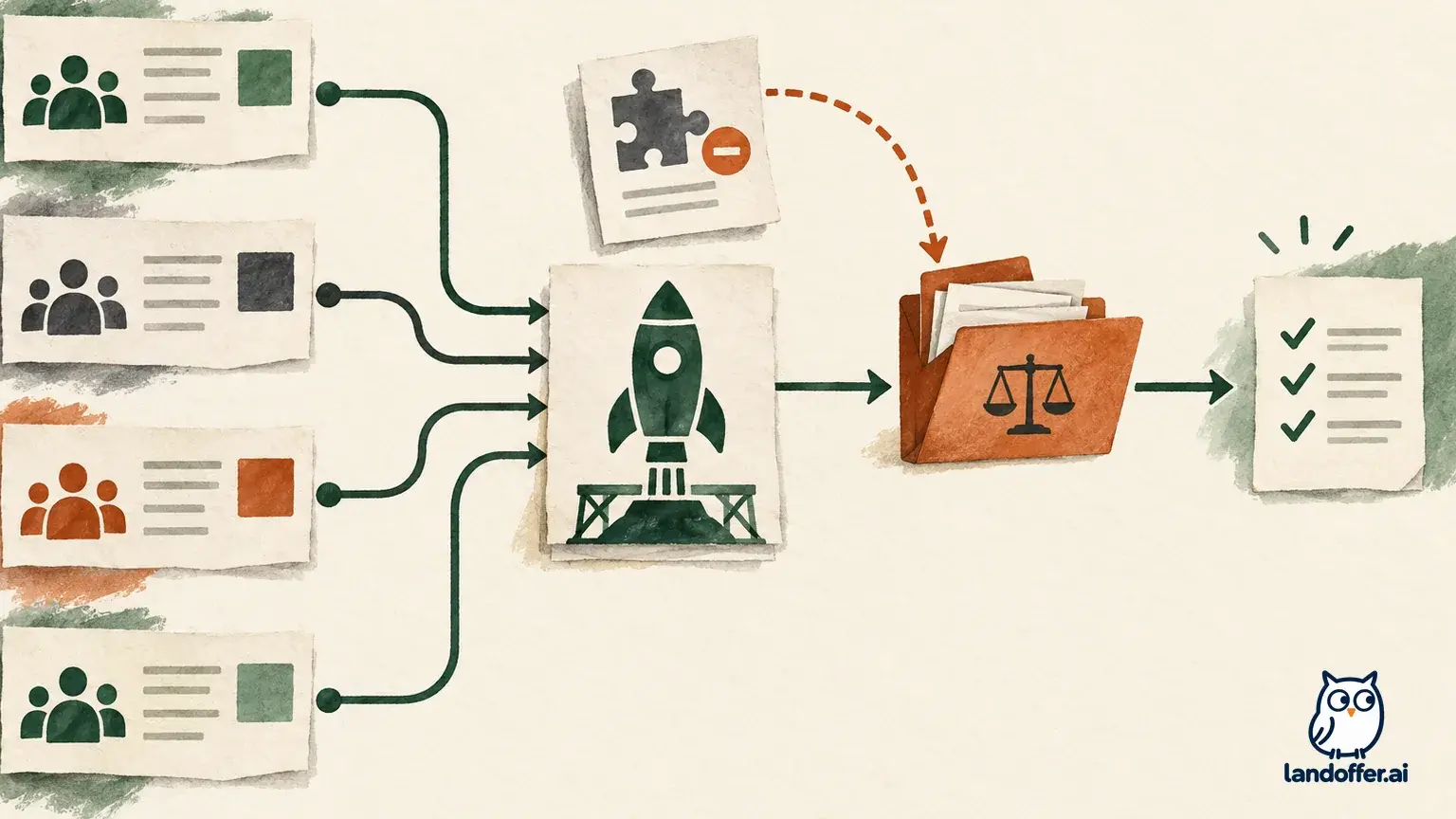
The completed decision is to maintain three separate work items under one coordinated account plan. Noor does not mark the account healthy because one team can launch. She does not infer churn because an incident exists. Both conclusions require evidence beyond the supplied observations.
The incident record deliberately leaves severity and resolution time unset. The supplied facts do not establish either, and a renewal deadline does not change the technical evidence. Noor records the next customer update as a coordination task rather than inventing a contractual response obligation. The customer-success owner still needs the champion's confirmation of the incomplete milestone, while the commercial owner needs an actual renewal discussion. A shared account plan makes these dependencies visible without merging their acceptance conditions.
Her finished, unsent update reads: “We have separated the reported launch failure from the remaining onboarding milestone. Support will coordinate investigation of the failure; the customer-success owner will confirm the next rollout milestone with your champion. The commercial owner will coordinate the renewal discussion. We do not yet have a confirmed cause, resolution time or renewal commitment.”
The filled-in update completes the fictional communication task; its four assertions remain limited to the supplied observations and assigned next actions. It is not an actual customer notification, service commitment, incident diagnosis or renewal forecast. The case specifies the next evidence to obtain without pretending that the investigation or customer meeting already occurred.

Translate the handoff into truthful application evidence
Noor's strongest existing evidence concerns technical support coordination, customer communication and onboarding workshops. She prioritizes roles whose advertised responsibilities match those contributions. The Cloudflare example would still require reviewing its networking depth, experience wording and coverage conditions; the case demonstrates her reasoning, while the employer's requirements still need separate review.
For CSM roles, she can explain adoption support while naming the forecast and renewal-ownership gap. Her accurate fictional summary is: “Coordinated developer-tool support investigations and onboarding workshops, maintained customer updates and partnered with engineering on unresolved issues. Commercial owners handled renewal forecasting and negotiation.” She should replace the fiction with her own verified work when applying.
Interview examples become clearer when they identify the customer's objective, the evidence available, the candidate's decision and the collaborators' contributions. Distinguish a promised action from a completed action and an observed result from an inferred benefit. A workshop attendance count alone does not prove product adoption or retained revenue.
Before choosing a role, establish which technical tasks you would perform, which actions need another team's approval, how escalations are covered and how commercial responsibility is measured. Then compare the location, schedule and experience conditions. Use LandOffer's recent roles or your existing shortlist to choose work whose ownership you can explain accurately.
Sources and Further Reading
- Cloudflare Technical Account Manager — support ownership, technical requirements and coverage obligations.
- Coder Senior Customer Success Manager — technical context, adoption and renewal responsibilities.
- GitLab account-team framework — organization-specific post-sales, technical and commercial division of work.
- GitLab Support escalation workflow — account-owner and CSM escalation responsibilities.