LandOffer
Job search
ResumeHelp Review: Guided Editing, Saved Versions, and Paid Download Access
Review ResumeHelp's guided editing, saved resume versions and paid downloads, with worked examples and clear limits on formats and subscription access.
ResumeHelp may suit someone who wants a guided way to organize a resume and maintain several targeted versions. Check three things separately: the editing guidance, access to saved versions and the file you can download. Its homepage describes free TXT output and paid PDF or DOC downloads, while other help pages use broader paid-access wording that needs checking against the selected offer.
This documentation review uses official pages and public browser observations checked October 13, 2026. We did not create an account, save versions, upload a resume or download files. All cases are fictional. LandOffer publishes this review and offers job-search tools; assess whether guided editing solves a problem your current editor leaves unresolved.

Guided editing should help you select the evidence
The ResumeHelp homepage describes templates, job-specific content suggestions and a review tool. A guided sequence can help you assemble the sections in a sensible order instead of trying to perfect the whole page at once. Use the sections to explain relevant work accurately; filling every field is only part of the task.
Start with the employer, official title and dates. Then decide which contributions explain your fit for the target. Write the summary after the evidence is organized, so it describes what the document supports rather than the experience you hope to have.
Suggested phrases can help you recognize a useful topic. They cannot establish that you performed the suggested activity. A technical writer may have edited an API guide, tested examples or coordinated releases; those are different contributions even when a job-title menu groups them together.
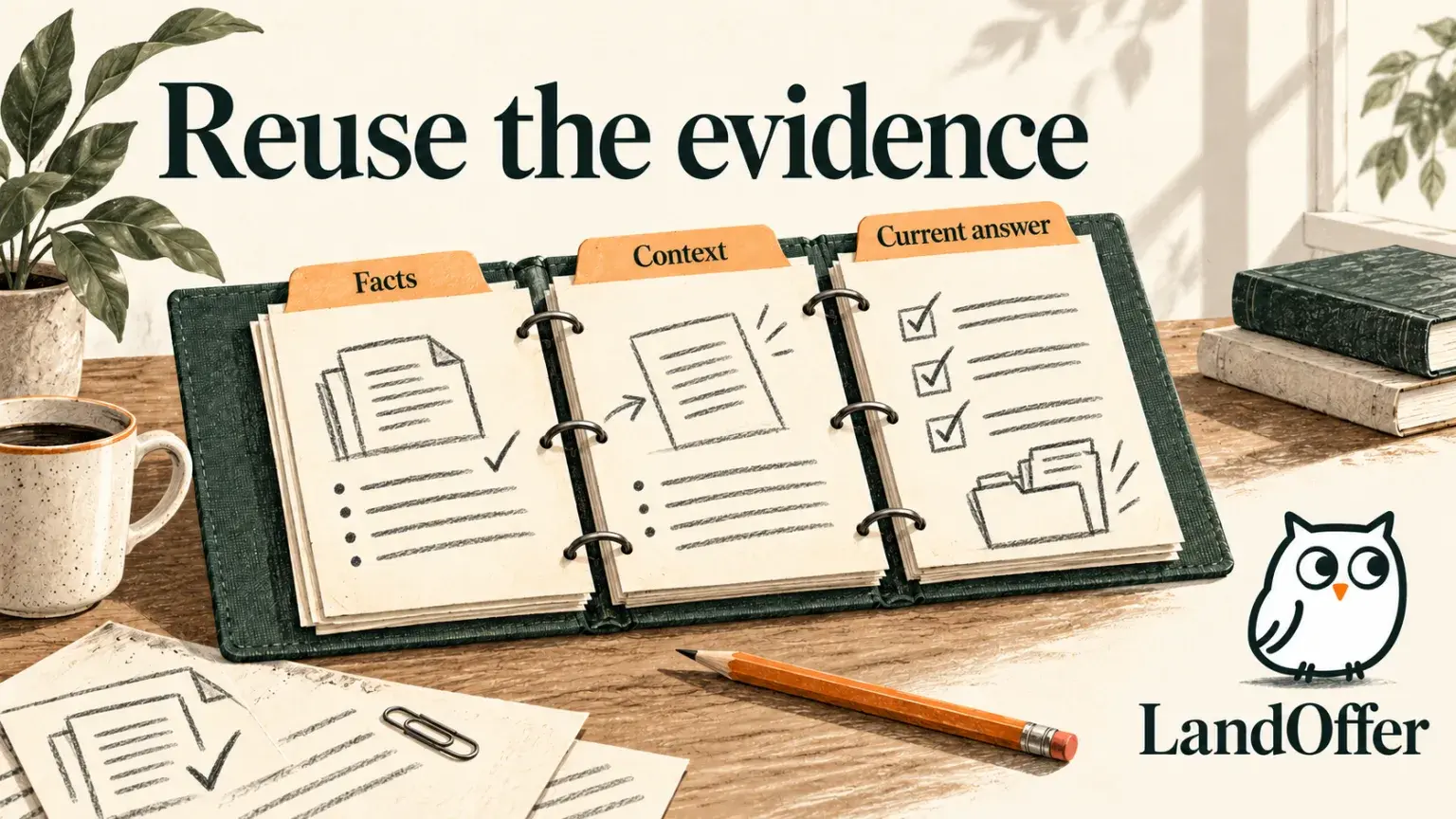
Keep a small factual record beside the editor. Identify the intended audience, the document you worked on, your specific action and how you checked it. You can explain useful work without disclosing private source material or claiming a business result you did not measure.
We did not test the live editing sequence, suggestions or reviewer. The exercise below demonstrates decisions you can bring to a guided workflow, not output produced by ResumeHelp.
Rina's completed section-by-section edit
Rina is a fictional technical writer targeting API documentation roles. She maintained integration instructions, checked request examples in a test environment and incorporated corrections reviewed by an engineer. She did not design the API or own the developer platform.
She also has a public side sample explaining a fictional API. It demonstrates her writing, but it is separate from paid employment. She wants both pieces of evidence visible without making the sample look like customer-facing production work.
Her completed editing record is:
| Section | Evidence selected | Completed wording or placement decision |
|---|---|---|
| Experience | Paid integration-guide maintenance and example checks | Describe documentation work under the correct employer and dates |
| Project sample | Public guide for a fictional API | Place under a clearly labeled independent sample heading |
| Skills | Technical writing, example review and collaboration she can explain | Omit platform architecture and languages she has not used |
| Summary | Repeated pattern across the supported work | Lead with API guides and checked examples |
| Links | Public sample destination | Use a link a recruiter can open without an internal company account |
Her original finished summary is: “Technical writer focused on API integration guides, tested request examples and documentation updates reviewed with engineering teams.” It identifies the work and collaboration without suggesting she implemented the service itself.
Her experience bullet is: “Maintained API integration instructions, checked request examples in a test environment and incorporated engineering-reviewed corrections.” The sample entry separately says “Independent API documentation sample for a fictional service.”
The two entries serve different purposes. Paid work establishes a professional responsibility; the public sample gives a reader something accessible to inspect. Neither should borrow the other's context. A polished template would not fix the misleading impression created by placing the independent sample inside the employer entry.
Rina checks whether the summary still matches the body after every substantial revision. If a suggestion adds “developer platform architect,” she rejects it because the experience does not support that responsibility. She does not need a hypothetical score increase to decide that the phrase is inaccurate.
Her resulting document has a defined target, a supported summary and correctly separated evidence. That gives her a concrete standard for deciding whether guided assistance adds value.
Free creation, saving and downloads are different rights
The homepage FAQ says writing, previewing and TXT download are free, with a subscription needed for PDF or DOC. The separate general FAQ, dated April 3, 2025, says downloading, saving and multiple versions require subscription. It also describes Full Access storage and multiple documents.
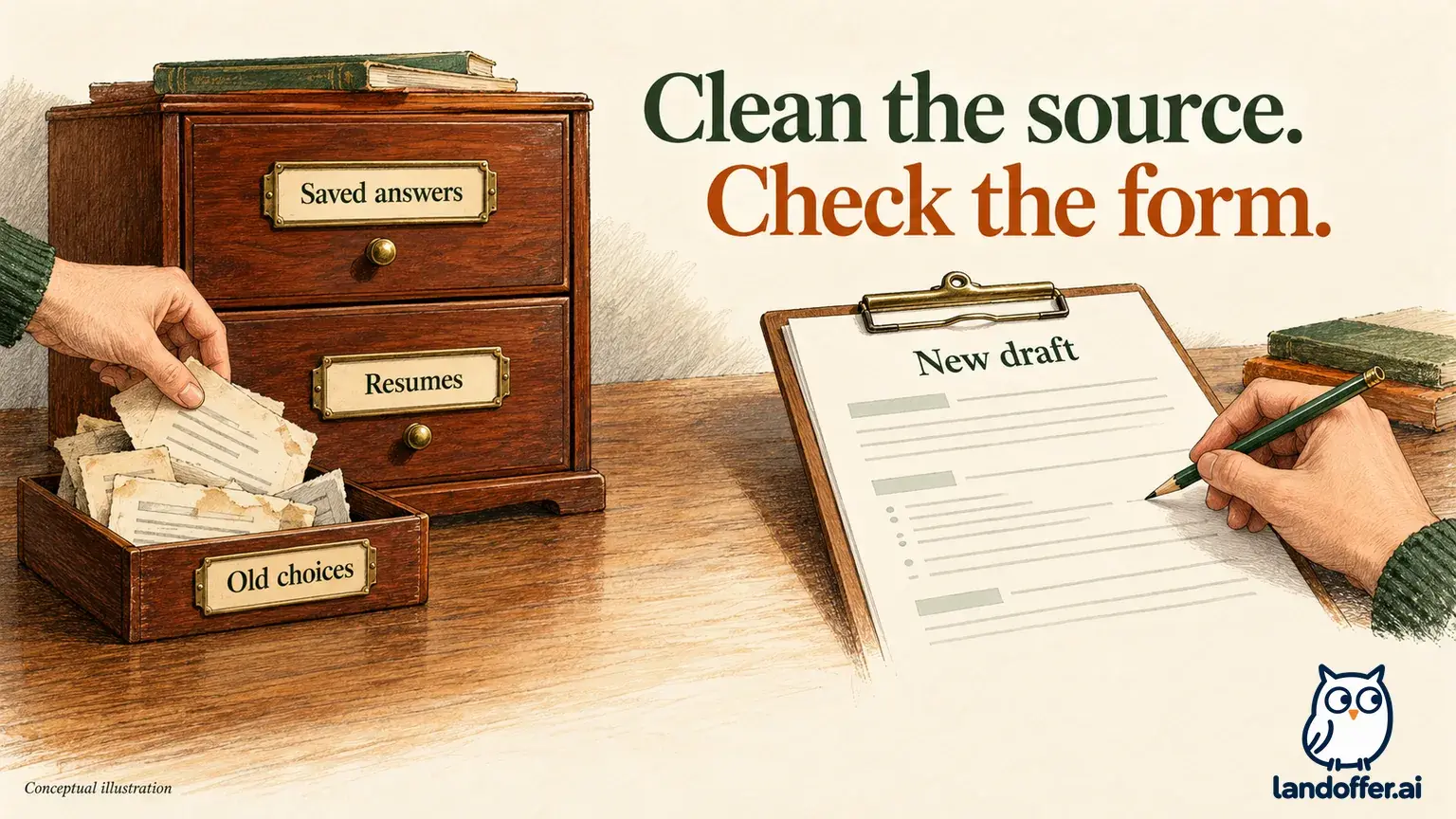
Those descriptions do not establish identical boundaries. Before moving your only copy into the builder, verify what your current account can save, reopen and export without payment. Do not infer that free access to the editor includes every later action.
TXT can be useful for reviewing the words or filling an ordinary application text box. It does not preserve the designed page in the same way as a formatted attachment. If an employer requires PDF, a text download alone does not solve the submission requirement.
Format descriptions also differ. The homepage mentions DOC, while the support page lists PDF, text and HTML in its download instructions. Confirm that the actual menu offers the required format before relying on it. We did not inspect an authenticated download menu or test a Word conversion.
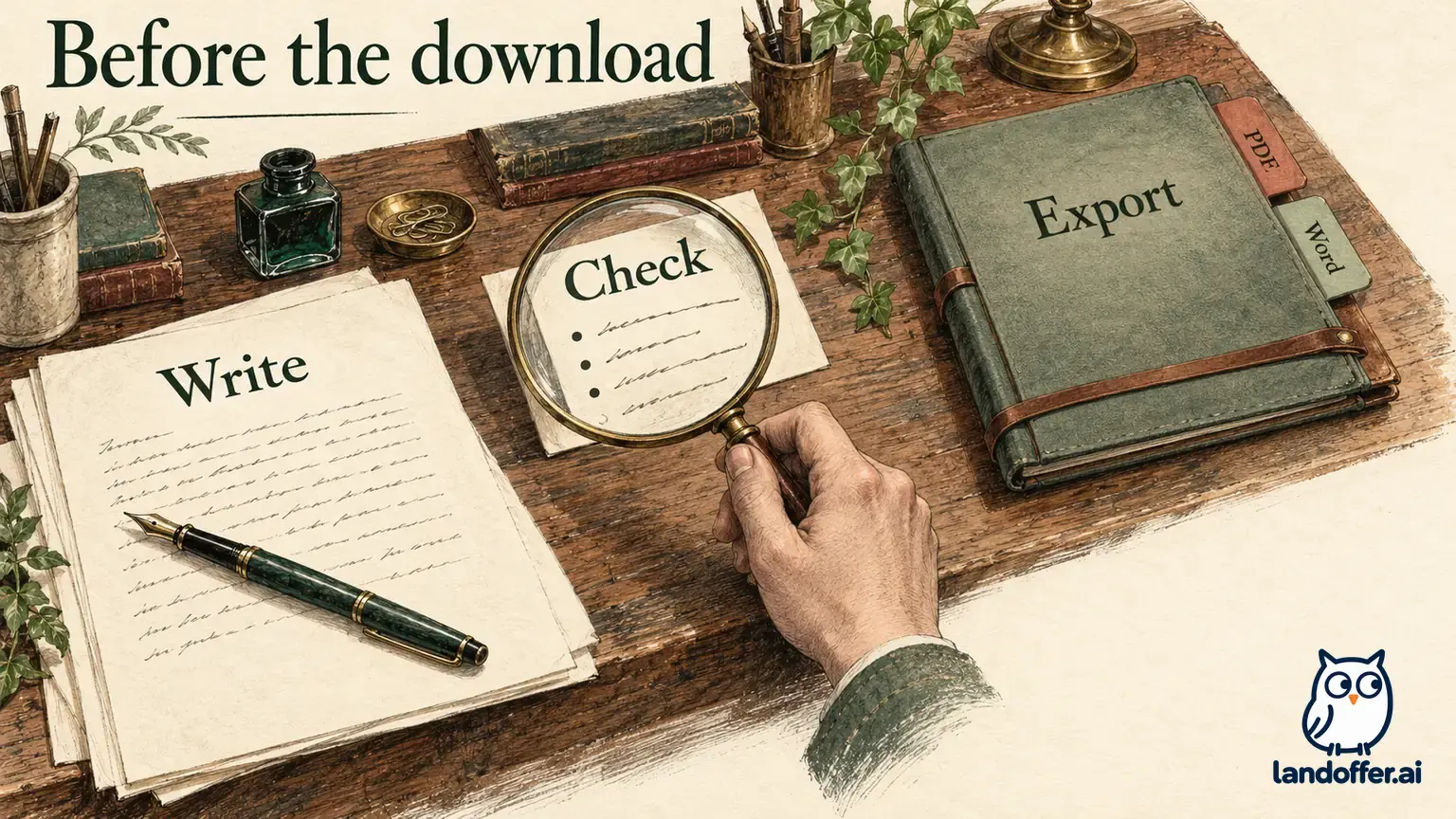
A saved document, an editable document and an exported attachment are three distinct things. Check each one that your workflow needs. A thumbnail in a dashboard would not by itself prove that you can edit or download the file under the current access level.
Rina's completed version and access plan
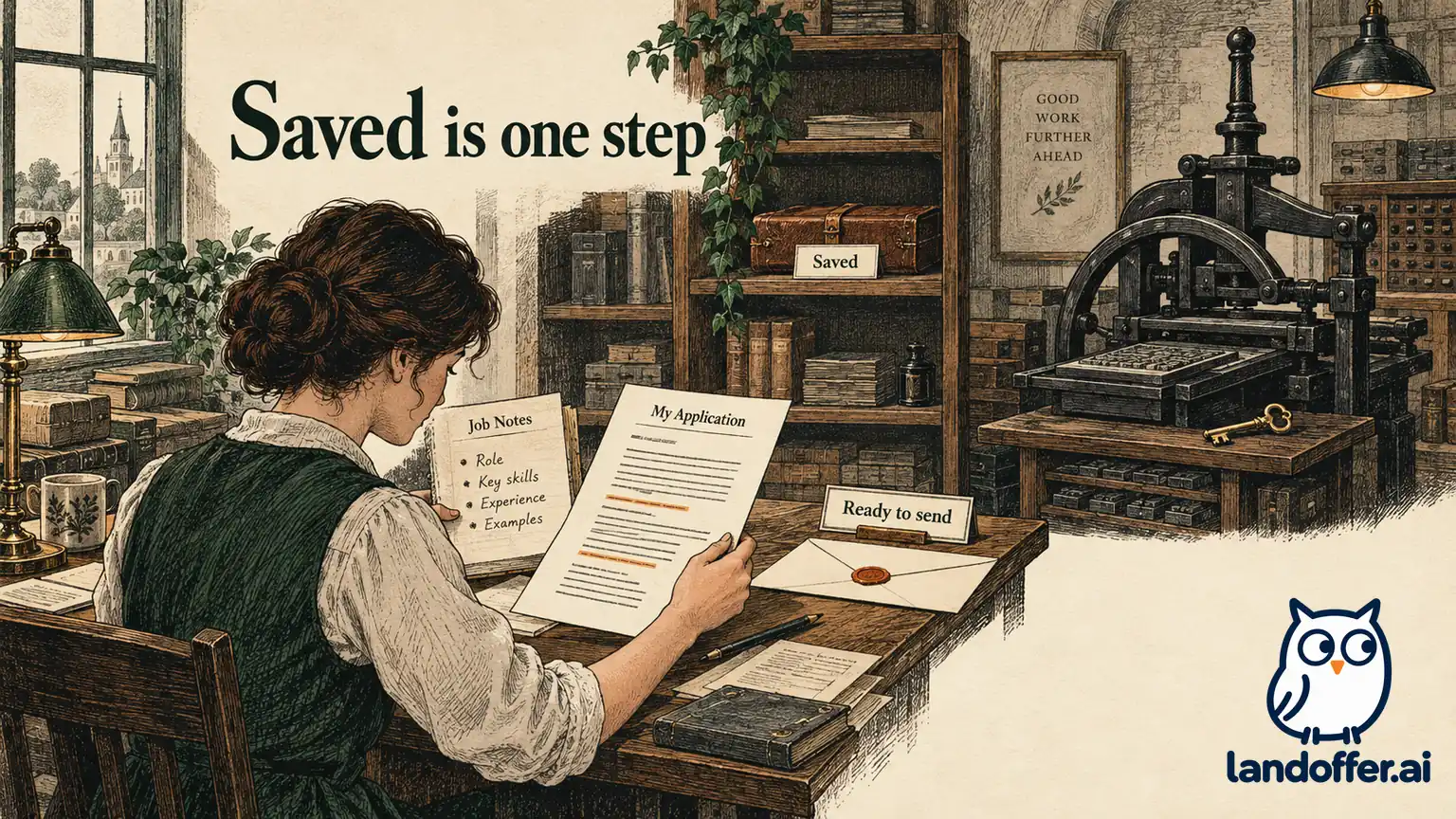
Rina has two realistic targets: API technical writer and product documentation writer. They draw on the same paid history but emphasize different documents. She wants separate working versions while retaining a baseline she can use to correct shared facts.
In this original planning exercise, she defines three records before deciding whether paid saved versions are useful:
| Record | Content decision | Retention and output decision |
|---|---|---|
| Baseline | Accurate history, official title, dates and all supported contributions | Keep an independent text copy and her existing source document |
| API writer version | Lead with integration guides and checked request examples | Save under a distinct name if the available account permits; inspect the required attachment |
| Product documentation version | Lead with release-related updates and audience clarity | Keep the same facts; use a distinct name and inspect its own output |
The API summary is the sentence above. Her product-documentation summary becomes: “Technical writer focused on clear product instructions and engineering-reviewed documentation updates.” She has changed emphasis without adding release authority or a new employment title.
In this fictional record, Rina confirms that the employment began in May rather than March. She updates the baseline and both active versions. She does not rely on one saved version automatically updating the others. The public pages did not establish linked fields, a recoverable change history or automatic synchronization among separate resumes.
Her version record notes the correction and which copies contain it. The record tells her which older copy still needs correction before she reuses it for another application. It also distinguishes a deliberate wording difference from an accidental factual difference.
For a PDF application, she checks the final PDF's content and page layout. For a text-only field, she uses reviewed text. If a DOC attachment is required, she confirms an available route before spending the editing session in a tool whose export options remain uncertain.
The case produces a practical access decision: paid saved versions may be useful if they make repeated editing easier, but independent copies remain necessary for her own continuity. She has not established that she needs a subscription simply because she has two targets.
Price the work you need before choosing access
The dated FAQ says subscription begins at $2.90 for 14-day Full Access. Treat that as a published help-page description, not a verified current checkout quote. We did not confirm the renewal amount, billing interval or total for a particular US offer, and we do not substitute another builder's prices.
Before paying, identify the initial charge, access duration, next charge, renewal interval and cancellation route shown for the selected plan. Record the actual offer rather than reconstructing it later from a general FAQ. A small introductory charge does not establish a one-time purchase.
Rina's decision depends on the remaining work. If her current editor already produces the required attachments and she can organize the sections herself, she can keep it. If the guidance and saved target versions solve a recurring problem, she can compare that benefit with the complete subscription terms.
She would not purchase solely to obtain a more elaborate template. The important missing capability is help maintaining accurate, distinct versions while finishing the required files. A decorative improvement may be pleasant without justifying an ongoing charge.
Leave time to inspect the actual attachment before an application deadline. A format restriction near the deadline can leave you rebuilding the document. Keep your familiar editor and an independent content copy available.
Saved documents after cancellation need careful reading
The User Agreement, effective September 9, 2026, distinguishes stored documents after subscription deactivation from resubscribing to print, edit and download. Retained account content should not be treated as continued access to every paid feature. We did not test the account's post-cancellation behavior.
Before ending paid access, retain reviewed text and the final files you need. Check that each independent file contains the latest factual corrections. Keep enough information to identify the specific version used for an application.
The support page describes a cancellation process under account settings and advises checking for a confirmation message. The agreement says refunds are not guaranteed. Stopping renewal and recovering an earlier payment are separate questions; neither is established merely by leaving the editor unused.
If confirmation is missing, use the provider's current support route and retain the relevant order and request details. We did not cancel access, contact support or obtain a refund. Account deletion is another separate action and is not necessary to infer from an ordinary subscription decision.
Rina would decide whether further paid editing is needed, preserve her accepted versions and verify any cancellation she requests. The agreement's storage language does not establish continued printing rights or automatic deletion after subscription cancellation.
Who should consider ResumeHelp?
Consider ResumeHelp when a structured editor helps you assemble relevant evidence and you expect to maintain several targeted documents. Confirm saving and output rights before committing your workflow, especially when a required file type determines whether you can apply.
Keep your current editor when it already handles the required files and the changes are manageable. Delay a subscription when the renewal terms or available export remain unclear. Treat scores, templates and suggested phrases as editing aids rather than hiring evidence.
Rina would first finish the factual section map, keep separate named target versions and confirm the required format and access level before choosing a subscription.
To define your first version, browse recent roles on LandOffer and choose one realistic target, then organize its most relevant supported experience into your first version.