LandOffer
Career Growth
Ask Your Employer to Fund a Conference: Make the Case and Plan the Follow-Through
Connect conference sessions to a current work decision, full cost and coverage, then document applied learning and evidence limits.
Ask your employer to fund a conference by connecting selected sessions to a current work problem, showing the full cost and time away, confirming coverage, and proposing a specific follow-through decision. Seek the required written approval before booking. Afterward, report what you learned, what you applied, and what remains untested; attendance alone does not establish business value or a return on investment.
This LandOffer.ai guide includes a completed fictional request, selected agenda, and post-event report. The conference, prices, people, approvals, and observations are illustrative. No booking, payment, attendance, workplace experiment, or employer process was performed for this article.

Start with a work question rather than a destination
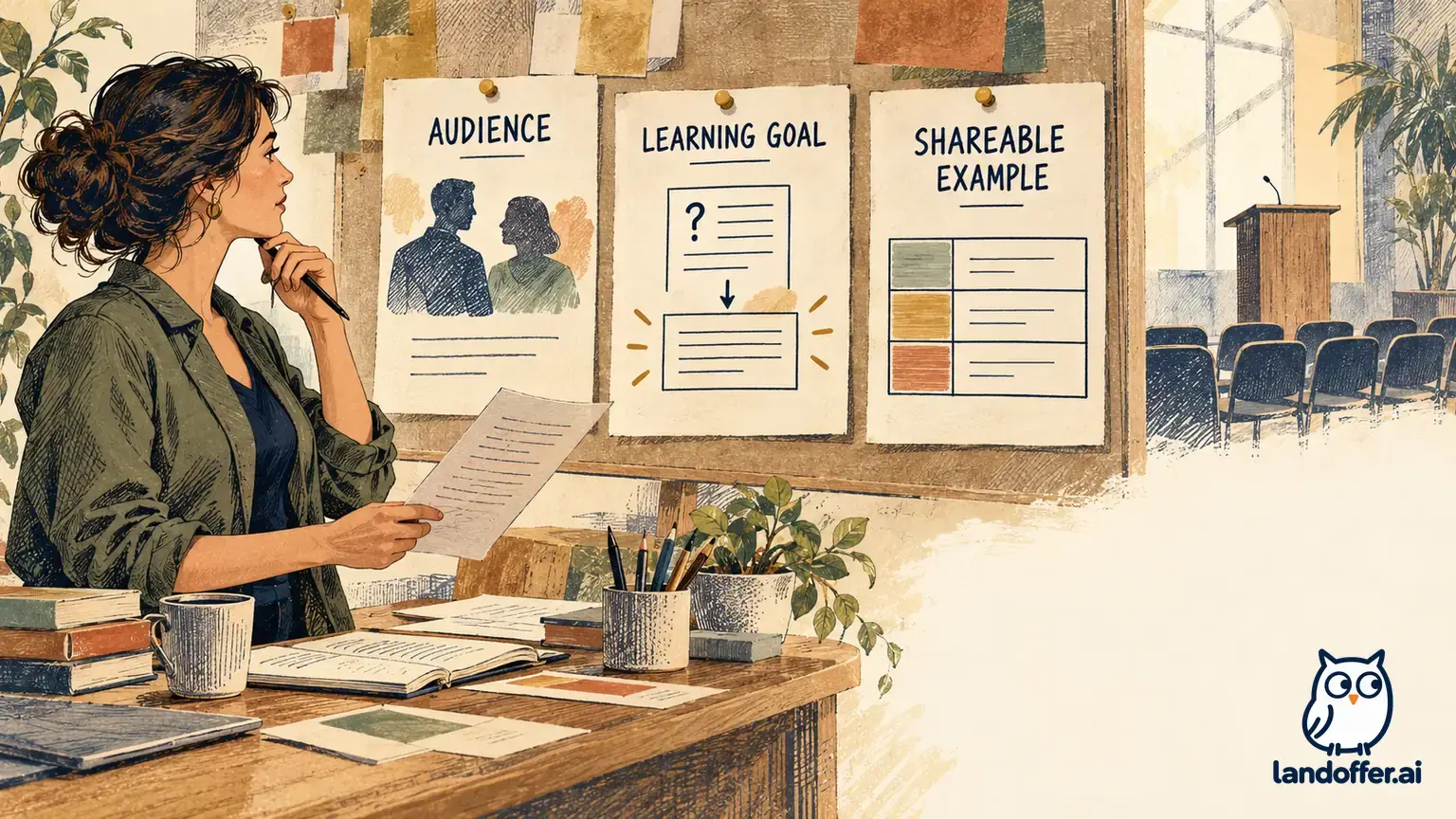
A conference request is easier to evaluate when it identifies a problem your team actually needs to resolve. “Learn industry best practices” is too broad. Name the pending work decision, the knowledge missing from it, and the sessions that could help.
For example, a team considering a software-library upgrade may need a better way to define acceptance evidence. Ask how comparable teams choose compatibility checks before adopting a new version. That question gives you a reason to select particular sessions and ask focused questions of practitioners.
ARMA's InfoNEXT attendee-justification page provides a justification letter, benefits worksheet, and expense-estimate worksheet. It also recommends connecting sessions to organizational priorities, arranging coverage, and sharing learning afterward. These are organizer-provided planning tools with a promotional purpose; their claims about conference value do not prove that your attendance will produce ROI.
Explain the alternative. Perhaps public recordings, documentation, a local workshop, or a colleague's knowledge could answer the question adequately. If so, a smaller request may be the better choice. If live questions or a focused workshop matter, describe the gap they address instead of dismissing lower-cost options vaguely.
Verify the approval route and the whole cost
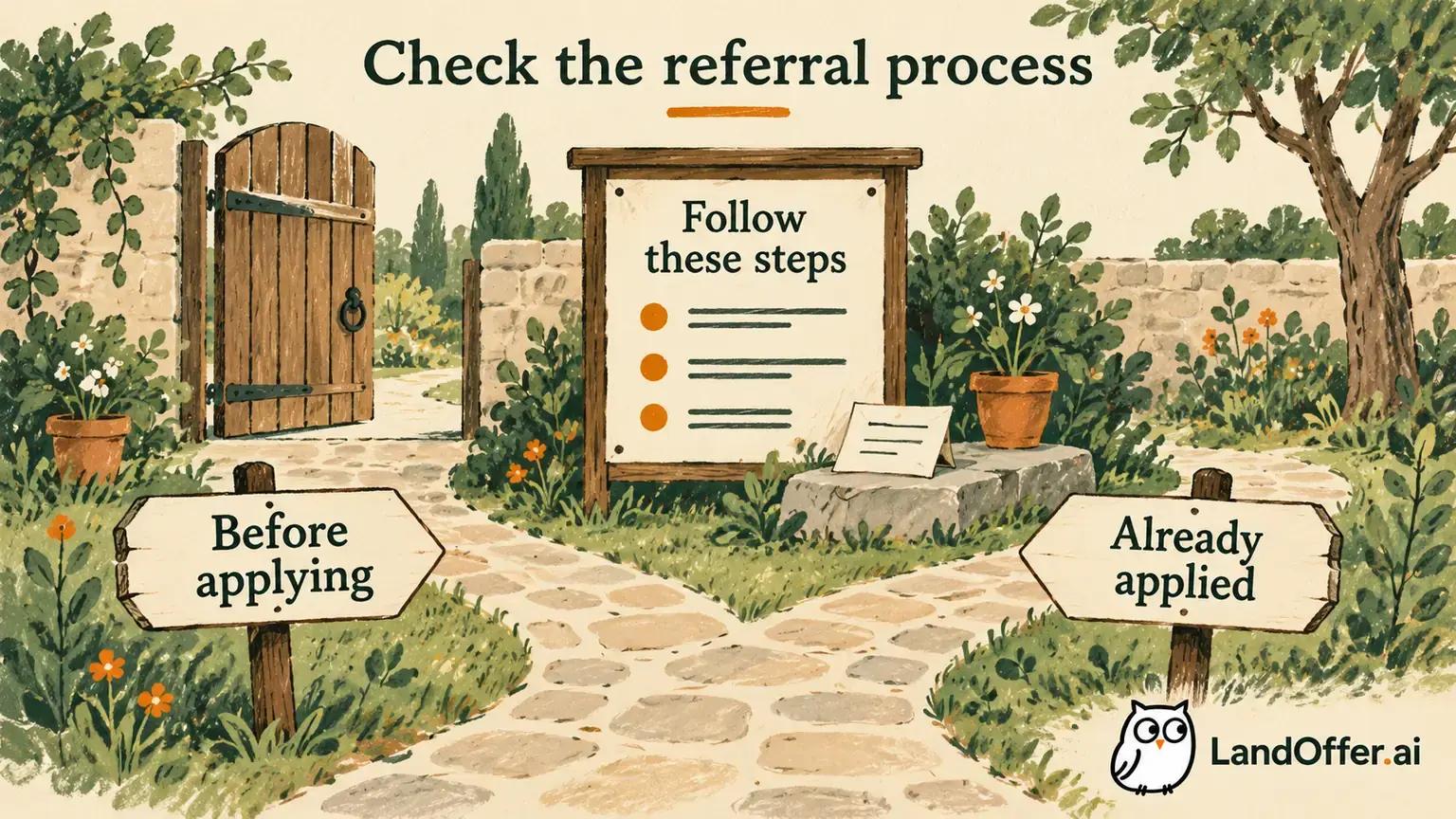
Your manager may support the idea without controlling the travel budget. Identify who approves the learning activity, travel, time away, and exceptions. Ask which system records the final decision and whether registration and travel have separate purchasing rules.
Mattermost's public engineering conference guidance illustrates an employer-specific route: a request moves through management and a business case to HR and Finance, with booking after approval. Its policy also distinguishes attending for learning from working a sponsored event. That distinction is useful to check, but its eligibility, regional preference, and expense tools do not apply automatically at your employer.
Include registration, transport, accommodation, meals, local travel, taxes, and any necessary additional costs. State the currency, estimate date, assumptions, and what is excluded. Mark a contingency as a ceiling requiring justification, not spending money that must be used.
Time is a separate resource. Count travel days, conference days, any workshop preparation, and the follow-through you are proposing. Do not hide that work inside an ordinary delivery commitment. If accessibility or other travel arrangements affect the request, use the organization's appropriate process without putting unnecessary personal details in a broadly shared justification.
Check cancellation, substitution, and refund conditions before seeking purchase approval. A registration deadline is a decision date, not a reason to buy first and ask later. If approval arrives after prices change, update the estimate and obtain any required reconfirmation.
Completed approval request with coverage
The following case is entirely fictional. Leila works on Sable's dependency-maintenance team. The team has a pending library upgrade, but its review notes do not consistently distinguish compatibility evidence from assumptions. Leila proposes attending the regional Engineering Maintenance Forum on September 15–16, 2026, with rail travel on September 14 and a return after the second day.
Her August 10 request does not promise that the conference will solve the upgrade problem. It identifies what she wants to learn and the decision that could follow.
| Request field | Completed fictional proposal |
|---|---|
| Work problem and objective | Produce a reviewable proposal for the evidence required before adopting the pending library version. Learn how practitioners select compatibility checks and record unresolved risks. |
| Why this event | Two relevant technical sessions and a practitioner discussion permit focused questions. Public materials can introduce the topic but do not answer the team's specific evidence-selection question. |
| Selected learning | Attend “Compatibility Evidence Before an Upgrade” and “Maintainer Review Clinics”; ask how teams handle an unsupported configuration and an inconclusive check. These session names are invented for this example. |
| Cash request | USD 1,300 estimated, with a USD 1,400 approval ceiling. All prices are fictional estimates dated August 10, not organizer or travel quotes. |
| Time request | Three workdays away, including travel; four hours of follow-through in the next two weeks. These are capacity commitments, not cash added to the travel total. |
| Coverage | Engineer Ben accepts the routine dependency-review queue for September 14–16. Manager Rosa confirms capacity by deferring Ben's optional tooling cleanup. Rosa owns urgent priority decisions; Leila is not primary coverage while traveling. |
| Deliverables and decision | By September 23, share a short evidence summary and proposed upgrade-review fields. By September 25, Rosa and technical owner Omar decide whether to authorize a limited internal evaluation. |
| Approval boundary | Rosa supports the time and coverage. Finance owner Dana must approve the cash ceiling and purchasing route before any booking. No purchase is authorized by this request alone. |
The cash breakdown is registration USD 650, return rail USD 160, two hotel nights at USD 180 each, meals USD 90, and local transport USD 40. The total is USD 1,300. The additional USD 100 is an unspent contingency allowance within the requested ceiling, not a hidden expense. The example assumes quoted amounts include applicable taxes; a real request must verify that assumption.
The completed request ends:
Please approve the proposed learning activity, three days away, four hours of follow-through, and the USD 1,400 ceiling through the required route. I will confirm final prices and cancellation terms before purchase. I am proposing a decision aid for our upgrade review, not guaranteed savings or approval to change production dependencies.
In the fictional record, Rosa and Dana approve the stated scope on August 14. Registration and travel are then arranged through the designated route on August 17 within the ceiling. These dates demonstrate the sequence; they do not document a real approval or booking.
Select an agenda that can answer the question
Before attending, connect each selected session to an output. A full program of interesting talks can still leave the original work question unanswered. Identify which session provides a method, where you can ask a practical question, and what evidence you should bring back.
Leila's fictional agenda has three deliberate choices. The first morning's compatibility session informs the proposed evidence categories. The afternoon clinic supplies a setting to ask about inconclusive checks. On the second day, she chooses a practitioner discussion about maintaining upgrade decisions instead of a simultaneous vendor demonstration unrelated to the current review.
Her question is specific: “When a check cannot cover a configuration, how do you record the uncertainty and decide who can accept it?” She describes a generalized scenario without disclosing Sable's code, customer details, vulnerabilities, or confidential plans. Peer conversation is input to the team's thinking, not external authorization for its engineering decisions.
Keep track of the source of each takeaway. Distinguish a speaker's recommendation, an audience anecdote, a vendor claim, and your own interpretation. Preserve links to shareable materials when permitted. Do not assume that attendance gives you permission to redistribute slides, recordings, contact lists, or private discussion notes.
If a session is canceled or turns out to be unsuitable, record the change and use the closest relevant alternative. Recording the agenda change lets reviewers distinguish the intended learning from the evidence you actually obtained.
Completed follow-through and value review
Here is the fictional report written after the event. It separates an agenda change, a concrete proposal, an authorized next step, and what remains unknown.

| Report item | Completed fictional record |
|---|---|
| Agenda actually used | The compatibility session ran as planned. The maintainer clinic became a shorter panel, so Leila asked her inconclusive-check question there. The second-day discussion covered decision ownership; the unrelated vendor demonstration was skipped. |
| Learning retained | Speaker recommendations suggested separating passed checks, uncovered configurations, and accepted exceptions. A panelist described recording an uncertainty owner. These are attributed ideas, not proof that the same approach works at Sable. |
| Applied output | Leila produced a draft upgrade-review note with fields for checked configurations, missing evidence, exception owner, and a revisit trigger. She used a sanitized example rather than importing private conference conversations. |
| Team sharing | On September 23, Leila, Ben, Omar, and Rosa reviewed the note in the allocated follow-through time. Omar asked for a clearer distinction between a failed check and a configuration never checked. Leila revised that field. |
| Decision and limit | On September 25, Rosa and Omar authorized a limited evaluation of the revised note on a non-production upgrade review. No production upgrade or organization-wide process change was approved. |
| Unmeasured value | The completed report contains a draft review note and an agreed limited evaluation. It has not established fewer incidents, shorter reviews, financial savings, or ROI. Those outcomes were not measured in this fictional report. |
The actual-cost illustration is registration USD 650, rail USD 152, hotel USD 360, meals USD 78, and local transport USD 32: USD 1,272 in total. That is USD 28 below the base estimate and USD 128 below the approval ceiling. Neither difference is a return on investment. The unused allowance is simply unspent budget; expense approval and reimbursement remain subject to the employer's process.
The report closes with an explicit next owner: Omar will assess whether the proposed fields make missing evidence easier to identify in the limited evaluation, then report to Rosa. The conference request does not authorize Leila to expand that evaluation indefinitely. If no useful method had emerged, the honest report would say so and explain why.
Make the debrief useful to people who did not attend
A debrief should let colleagues use or challenge the relevant learning without replaying your entire trip. Lead with the work question, the strongest useful idea, its source, and the proposed application. Put additional session notes behind that concise explanation.
The University of Colorado Boulder's Office of Contracts and Grants conference process includes budget and staffing considerations and a post-return discussion about sharing information. It is a process for that office, not a university-wide or general employee entitlement. It illustrates that follow-through can be part of the original attendance agreement.
Invite technical disagreement. A method used by another organization may depend on different constraints, staffing, or risk tolerance. Identify those differences before presenting it as a new team standard. If the method still needs checking, propose a bounded evaluation with an owner before recommending adoption.
Also return the dependency-review queue to its ordinary owner after checking open items with Ben. Thank the colleague who covered the queue, review unresolved items, and restore the ordinary ownership arrangement explicitly. Learning value should not obscure the additional work someone else absorbed.
Finish the request with a decision, then close the loop
Before submitting, check that the work question, selected sessions, full cost, time allocation, coverage owner, approval route, and follow-through decision agree. If one changes materially, update the request rather than relying on an older approval for a different trip.
Afterward, compare what you proposed with what actually happened. Save the permitted materials, the applied output, the decision and owner, and the limits of the evidence. Keep reimbursement documentation in the required system; the learning report does not replace it.
A funded conference can be worthwhile without a defensible financial ROI calculation. Make the useful output and remaining uncertainty visible instead of inventing one. Save the approval decision, coverage handback, and follow-through owner; then return to LandOffer.ai for related workplace-development guidance.