LandOffer
Productivity & Workflows
A Zap Creates Duplicate Records: Separate Trigger Deduplication from Action Behavior
A completed two-Zap event timeline and actual offline model separate polling deduplication, sequential lookup, and unprotected concurrent creation.
When a Zap creates duplicate records, trace the source event, the Zap run, and the destination action separately. Zapier's polling-trigger deduplication checks event IDs within an individual Zap. That check does not coordinate two Zaps or guarantee one destination record after an action is repeated.
Start with the affected records and their run history before changing the workflow. This LandOffer guide uses a fictional request-intake case and an offline synthetic ledger to explain the boundaries. We reviewed official Zapier guidance on October 25, 2026. We did not access Zapier, execute a Zap, connect an app, or change production records.
Identify which kind of duplication you have
Two identical-looking destination records may have different explanations. The source may have emitted two distinct events for one business request. Two Zaps may each have processed the same event. One action may have been attempted again after an uncertain outcome. Or the action may be sending a fixed test value every time, making unrelated requests look identical.
Zapier's duplicate-data documentation distinguishes polling-trigger deduplication from destination behavior. Polling compares received unique IDs with those previously seen by that Zap; separate Zaps have separate checks. The page also states that instant triggers do not use that polling deduplication. Identify the actual trigger type rather than assuming every trigger shares one mechanism.
The same documentation explains that action behavior depends on the app. A repeated operation may create another record, return an error, update existing data, or be ignored. A step named Create does not acquire cross-workflow uniqueness merely because the trigger avoids repeated IDs.
Describe the unwanted business outcome before selecting a fix. For a request-intake workflow, the goal might be one intake record per submitted request. That differs from one record per person, email address, or delivery event. Keep genuinely new requests distinct so a deduplication change does not discard valid work.
Build a run-to-record evidence chain
Gather the source's event identifier, the request identifier if different, Zap identity, run reference, action inputs, action result, and destination record identifier. Keep timestamps and timezone. Use the organization's approved access and record-handling procedures; an investigation does not require distributing customer payloads across unrelated tools.
Zapier's duplicate troubleshooting guide recommends comparing affected runs and their step data to determine whether one or multiple workflows are involved. It lists timeouts among possible causes and warns that replaying an errored action can create duplicates. An error is therefore not proof that the destination did nothing.
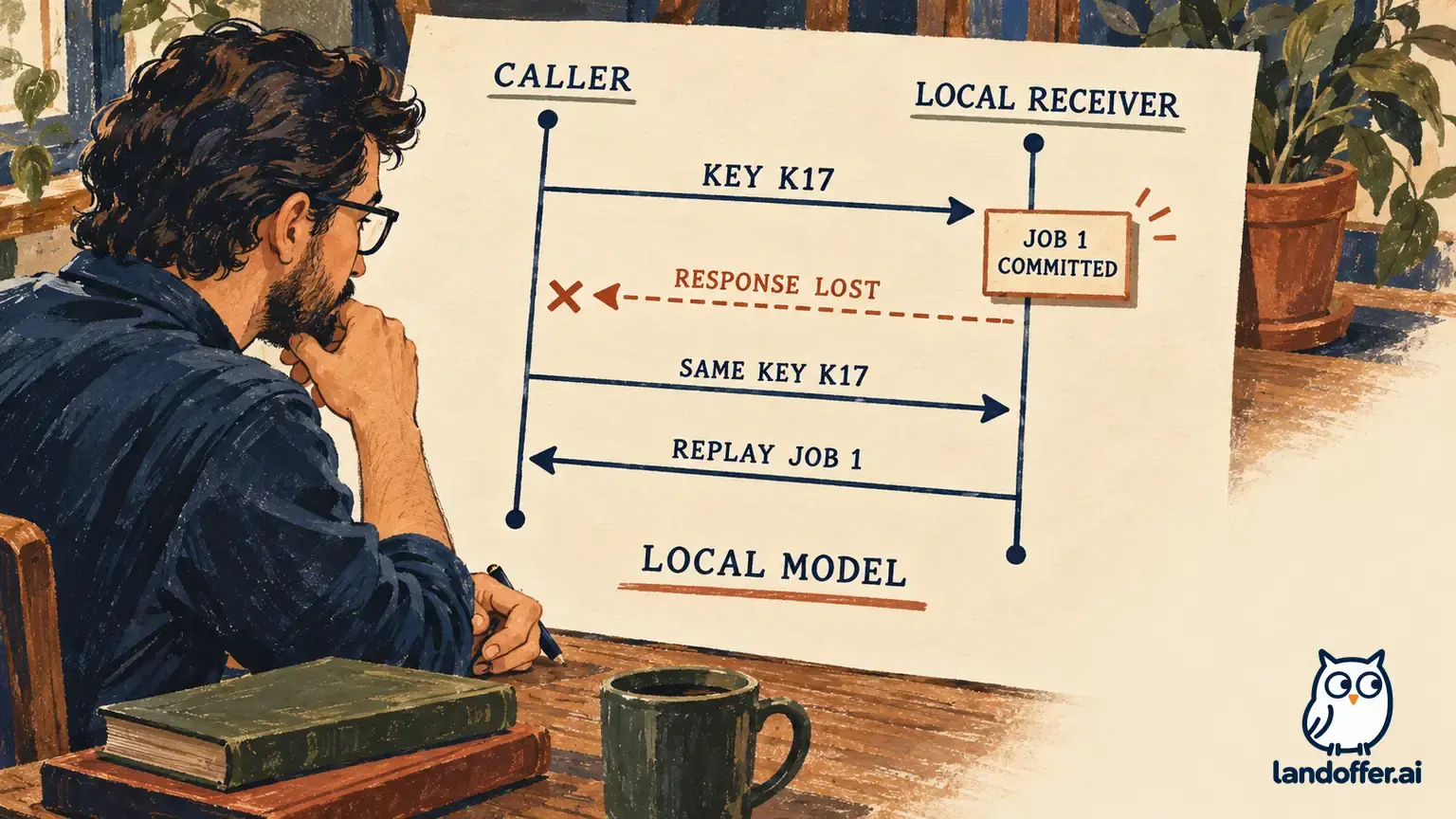
When an action times out, mark its result as uncertain until the destination is checked. The destination may have accepted the operation even though the workflow did not receive a usable acknowledgement. Replaying before resolving that uncertainty can repeat a side effect. The appropriate investigation depends on the app's records and available identifiers; do not manufacture a success or failure from an incomplete run display.
Also compare mapped inputs. Zapier's static-value troubleshooting note identifies typed test values as a reason an action sends the same data repeatedly. Confirm whether a supposed business key comes from the current event or is a literal left in the configuration. Similar record names alone cannot answer that question.
Completed diagnosis: one form request reaches two Zaps
All requests, people, workflow names, run references, and records in this case are fictional. Operations owner Amara expects one intake record per equipment request. An old workflow, “Equipment intake A,” and its replacement, “Equipment intake B,” are both described in the scenario as using the same polling form trigger. Neither workflow checks the destination for the request's stable identifier before creating a record.
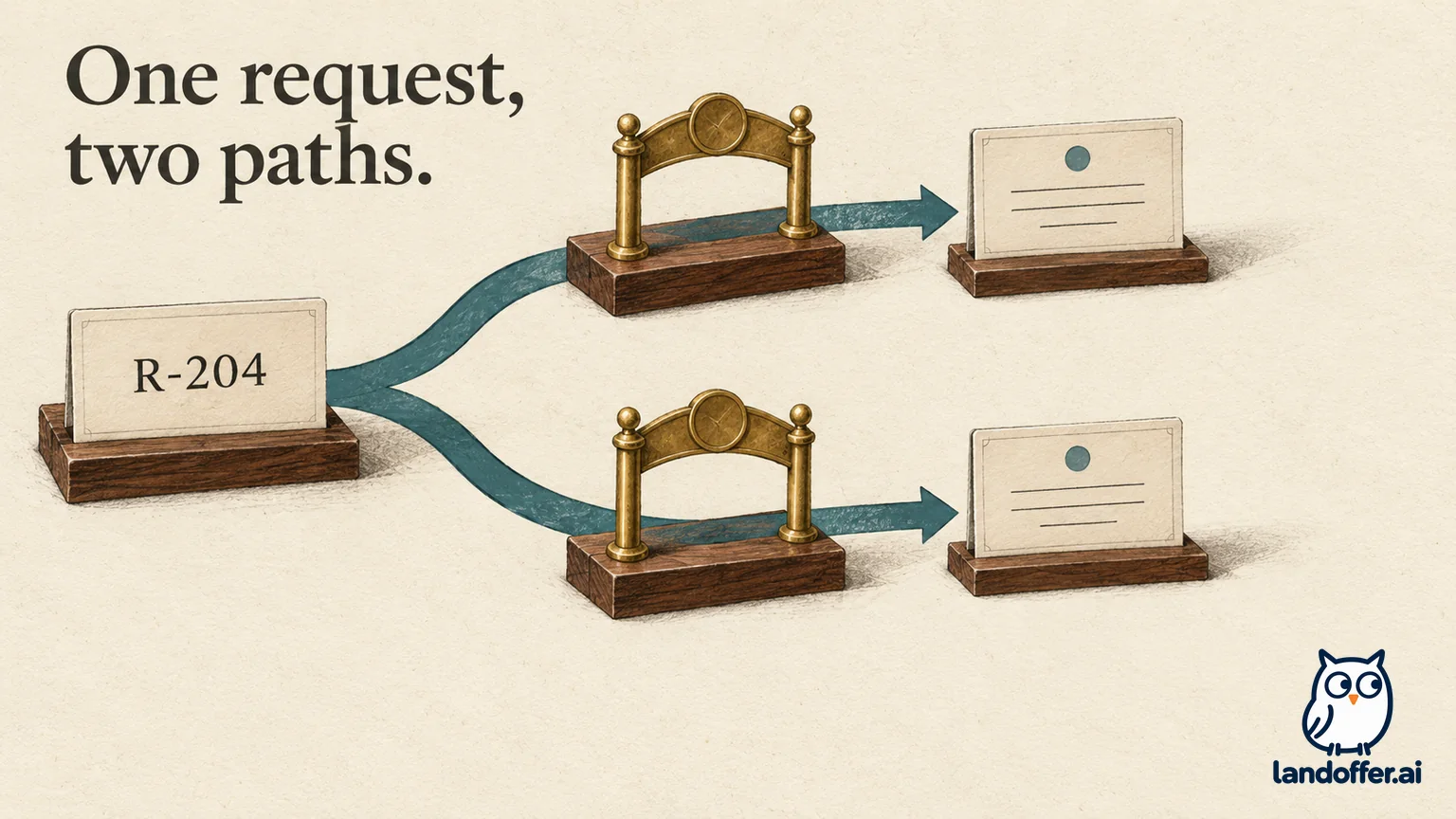
The request source assigns event ID R-204 to one submission. Amara's completed evidence comparison shows:
| Fictional time, UTC | Source and workflow event | Destination observation |
|---|---|---|
| November 19, 09:00:00 | Source creates request/event R-204 | No intake record yet |
| 09:01:00 | Zap A accepts R-204; run A-81 sends Create with request key R-204 | Record Q-1 created |
| 09:01:04 | Zap B accepts R-204; run B-12 sends Create with request key R-204 | Record Q-2 created |
| 09:03:00 | Zap A sees R-204 again in a later poll | No new run in this stipulated polling example |
The two destination records share the same business key, but their creation is associated with different workflows. This is consistent with per-Zap trigger checks: Zap A's prior receipt does not represent Zap B's prior receipt. There is no need to infer that the same Zap's deduplication failed to explain these example records.
Amara records the conclusion narrowly: “Two active intake workflows each processed R-204 and invoked Create. The destination accepted two records. We have not evaluated other request types or all historical duplicates.” That finding identifies the overlapping writers and the action boundary without claiming the entire account has been audited.
The owner coordinates the production response through the team's change process. This article does not turn either Zap off or remove Q-2. Existing duplicates may have downstream references, assignments, or messages. Deciding which record remains authoritative and how related work is reconciled is a separate business action requiring the appropriate owner.
A different evidence chain would lead elsewhere. If both records were associated with an action attempt and its replay, investigate the uncertain first outcome. If two different source event IDs represent an edited version of the same request, inspect source semantics. If every run carries the literal R-204 despite different submissions, investigate field mapping. Choose the explanation that matches the recorded events and action results.
Design a bounded sandbox check around a stable business key

For the fictional redesign, Amara and integration owner Dev agree on a test-only intake destination containing invented requests. The proposed key is lab:equipment-request:R-204: a test namespace, an entity type, and the source's stable request identifier. In this proposed design, another delivery of R-204 retains its key, while request R-205 uses lab:equipment-request:R-205.
Before using the key, Dev asks the source owner to confirm its lifecycle. Does an edit retain the request identifier? Can an archived request be resubmitted with the same identifier? Could two source forms issue the same short ID? The fictional design keeps the source namespace explicit so request R-204 from another system is not silently merged with this request. These questions require actual source documentation or bounded tests before implementation.
The namespace keeps this example's keys distinguishable, but it is not an access control. The team must still isolate test connections, destinations, and side effects. Their agreed sandbox scope excludes production forms, customer records, notifications, and automatic cleanup. No connected sandbox was operated for this article; the approval and boundaries are fictional, and only the separate offline model was executed.
The proposed flow is to look for the exact stable key, use the returned record identifier when one match exists, and create only when no match exists. More than one match stops for reconciliation rather than picking an arbitrary record. Lookup failure is an investigation state, not evidence that the record is absent. Whether an app supplies an appropriate search, find-or-create, update, or uniqueness capability must be verified for that integration.
The team also decides what a repeated event is allowed to change. In this example, a repeat can point to the existing intake record but must not overwrite an assignee's later review notes. A new request can create a new record. A reused key with conflicting request identity stops for review. These are explicit business rules; searching alone does not define them.
A lookup followed by Create is still two operations. Two simultaneous workers can both search, see no record, and then both create. If concurrent delivery is possible, ask the integration owner to investigate an appropriate destination-enforced unique key, atomic operation, or other verified coordination mechanism. Do not label a sequential lookup design transaction-safe before checking the destination's guarantees and failure behavior.
Read the offline regression ledger at its actual scope
We executed a small Python model using invented IDs, in-memory collections, and explicit assertions. It models assumptions chosen for teaching; it does not emulate all Zapier behavior or any destination API. Its script and result ledger are saved with this local draft.
The first check gives model workflows A and B separate sets of previously seen IDs. A accepts R-204, B accepts R-204, and A then ignores its repeat. The model's naive destination creates two records. The result follows from the separate sets explicitly implemented in our script; it is not a measurement of Zapier's service.
The second check runs a sequential key lookup for R-204, R-204 again, and R-205. The repeated request returns the first record, while the distinct request creates a second record. Finally, an explicit interleaving makes two workers search for R-206 before either creates. Both searches find nothing, and the model creates two records because it deliberately has no uniqueness constraint.
| Actual offline model check | Observed result | What remains unverified |
|---|---|---|
| Two independent seen-ID sets, same request | Two naive destination records | Real Zap runs and actual destination behavior |
| Sequential lookup: R-204, R-204, R-205 | Two total records; repeat reuses the first identifier | Integration search semantics, mapping, and error handling |
| Two searches before either Create for R-206 | Two records in the deliberately unprotected model | Any particular app's atomicity or concurrency protection |
The completed sandbox review record is therefore a decision to test, not a release approval. Dev owns verifying the real integration's key mapping and destination capabilities in the approved test environment. Amara owns confirming which repeat fields may change. A separate reviewer checks that no production destination or message action is connected before an authorized test begins.
The review also records what will happen when an expected field is absent: stop before a write and return a diagnostic item to the owner. An empty key must not become a shared key for every malformed request. The owner reviews that path alongside the successful examples so rejected data does not quietly disappear.
The acceptance cases include a repeated key, a distinct key, multiple existing matches, lookup failure, conflicting payload, uncertain Create outcome, and overlapping attempts. Record the actual run and destination identifiers for each permitted test. A successful sequential repeat is useful evidence for that path; it cannot close the overlap or timeout cases by implication.
Separate prevention from duplicate cleanup
Before approving a real change, identify all workflows that can write the same business record and agree which owns the creation path. Preserve the evidence for uncertain attempts, and keep replay decisions with someone who can evaluate destination side effects. Ask the owner to name the missing evidence before the next permitted test.
Existing duplicates need a separate reconciliation decision. Determine which record's state, related references, and later human work must survive. Do not delete a record merely because it was created second, and do not bulk replay a failed batch to see what happens. Those actions can create consequences beyond the duplication you are trying to diagnose.
For your next investigation, write down the source event, the stable business key, the contributing run or runs, and the destination action's observed result. Then choose a bounded test that addresses the missing evidence. LandOffer's workplace guides cover related operational communication; the outcome here is an evidence-backed automation decision with its unresolved cases still visible.