LandOffer
Job search
Technical Artist vs. Graphics Programmer Jobs: Compare Content Pipelines and Rendering Systems
Compare technical-art content workflows with rendering-engine responsibilities using actual US postings, overlapping duties and portfolio contribution examples.
Choose a technical artist role when the main responsibility is helping artists produce, integrate and optimize content through tools and workflows. Choose a graphics programmer role when the main responsibility is developing rendering or engine systems. Then read the full posting: both can involve shaders, profiling, artist tools and pipeline problems, so the title or programming language alone cannot establish the boundary.
This comparison reviews official Epic Games and Riot Games descriptions checked on October 14, 2026, plus Epic's portfolio guidance. The live examples are lead and principal roles, not universal entry-level requirements. The portfolio cases are explicitly fictional teaching examples; we did not apply, run their engines or measure rendering performance.
LandOffer publishes this guide. You can browse recent roles on LandOffer.ai, then identify the responsibility you could support with a clear work example. A polished scene can interest either team, but the explanation of what you changed determines which contribution it demonstrates.

Compare the work before the title
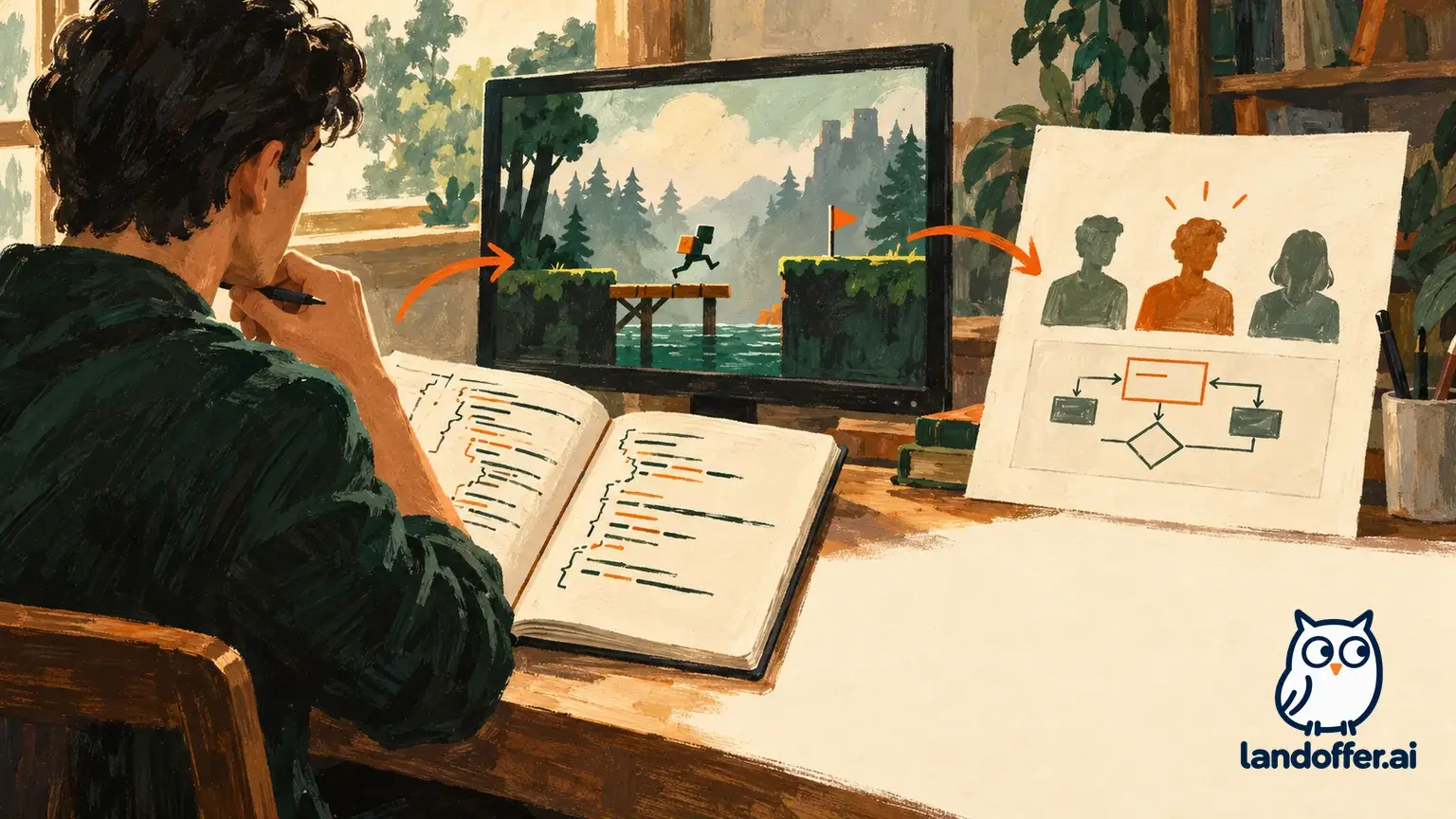
Start with the object of the technical decision: the content an artist delivers, or the rendering system that displays it. A technical artist might improve how an artist creates, validates or delivers content. A rendering programmer might improve the system that turns scene data into a displayed frame. Those responsibilities meet at shared interfaces and can overlap within a team.
Read the action and its object together. “Optimize materials” needs context: does the employee change how content uses an existing feature, develop a material workflow or implement a rendering feature? “Build tools” needs a user and an output: what does the tool enable, who maintains it and how is its success evaluated?
If a description combines content and engine responsibilities, keep that combination in your notes. Ask which work will occupy the first project and who owns the related decisions. A studio's particular division of work is more useful than trying to enforce one industry-wide definition of technical art.
Two current US postings show the overlap
The official descriptions below were readable at the review date. That observation does not guarantee continued hiring or establish an original posting date. Compare their duties and conditions directly rather than treating lead and principal as standardized equivalent levels.
| Official role | Main responsibility in the description | Material qualification context |
|---|---|---|
| Epic Games Lead Technical Artist, R27451, multiple US locations | Content profiling, optimization, validation and world-building workflows; lead a technical-art team | Live-service shipping/support, technical-art production and mentorship; engine, pipeline and scripting experience |
| Riot Games Principal Software Engineer, Rendering, REQ-0010160, Los Angeles | Rendering systems and engine features, client performance, artist tools and pipeline improvements | Eight-plus years of rendering programming, two-plus years as a technical lead, engine/multithreading/MMO experience, BS or equivalent experience |
Epic's example covers geometry, materials, shaders and other content against performance and memory budgets. It also names tools for artists, production coordination and workflow adoption. Its listed scripting examples include Python, C# and C++; the role is not defined by an absence of programming.
Riot's rendering example explicitly includes tools for artists and resolving pipeline issues. Low-level C++ optimization, Maya extension, asset pipelines, Nanite and procedural-content tools appear under desired qualifications on this page. Preserve that distinction instead of moving every familiar technology into the required list.
These are demanding senior examples. A reader earlier in their career can use them to understand the function, then look for an opening at an appropriate level. A strong personal project does not automatically supply the professional years, shipping experience or leadership record named here.
Shaders and profiling need an ownership question
“Shader work” can cover several contributions. Someone may author a material using an existing system, develop reusable patterns for content creators, investigate a visual defect or change the engine implementation. Ask what was changed and what the person was responsible for delivering. Describe whether you authored a material, improved its workflow or changed the engine feature that supports it.
The same applies to performance. A content workflow can help artists keep assets within an agreed budget. An engine change can affect how rendering work is prepared or executed. A description mentioning profiling needs an object of investigation and a method for checking the result before you can compare it with your experience.
Look for evidence of collaboration as well as individual implementation. A technical solution may require an artist's visual judgment, a programmer's system knowledge and a producer's delivery constraints. Explain which decision belonged to you and how you worked with the others. Taking credit for the whole visual outcome can obscure the specific technical contribution that matters.
Avoid choosing a path solely from a tool list. Knowing Houdini, Unreal, Maya or C++ tells a reviewer something about your exposure. A completed contribution lets a reviewer connect your tool knowledge to a specific problem, the constraints you handled and the responsibility you owned.
Keep function and seniority as separate decisions
First identify which kind of work fits your record. Then compare the opening's required experience, education, shipped-project and leadership conditions. A functional match can still leave a substantial level gap. Treat that as information for selecting another opening, rather than rewriting your experience to imitate a senior description.
Epic's technical-art description emphasizes professional production and leading or mentoring colleagues. It does not state a numeric years minimum or a degree condition in the inspected requirements. That observation should remain specific to this posting; it does not establish that technical-art employers ignore education or experience.
Riot's rendering description gives explicit professional and leadership conditions and a BS-or-equivalent-experience route. The equivalence language belongs to that role. It should not become a general promise that any portfolio replaces a degree, or that generic programming years equal rendering-engine experience.
If a clause is unclear, quote the short relevant condition in your own notes and ask a focused question about it. Keep required, desired and unanswered conditions separate. That preserves a useful comparison without assuming a recruiter will waive a requirement you have not demonstrated.
What the portfolio needs to explain
Epic's official career-path guidance asks applicants to make strong completed work easy to find and clarify their own contribution. Its art guidance requires a portfolio for art or visual roles; its programming guidance values repositories and project explanations. These are Epic's stated expectations, not proof that every studio uses the same submission policy.
For a technical-art contribution, show the artist's starting problem, the tool or workflow you built and how the result is used. A brief demonstration can connect the interface to a completed content task. Explain the assumptions and name collaborators who created the underlying assets.
For a rendering contribution, make the system change inspectable. A code excerpt, architecture explanation, diagnostic capture or comparison can explain what changed. State the setup and the check used to evaluate it. A beautiful image alone cannot establish engine ownership or a measured performance improvement.
Check each posting's instructions before deciding what to submit. The Riot page reviewed here does not explicitly specify a portfolio requirement. That leaves the requested form of work evidence to clarify; it does not justify inventing a mandatory reel, repository or take-home format.
A completed fictional portfolio comparison
Consider Noa and Ilan, fictional candidates using forest-scene projects to explain different work. The artifacts and outcomes below are assumed teaching records, not actual Epic or Riot projects, engine tests or benchmarks. Both examples credit the people who created the scene's art.
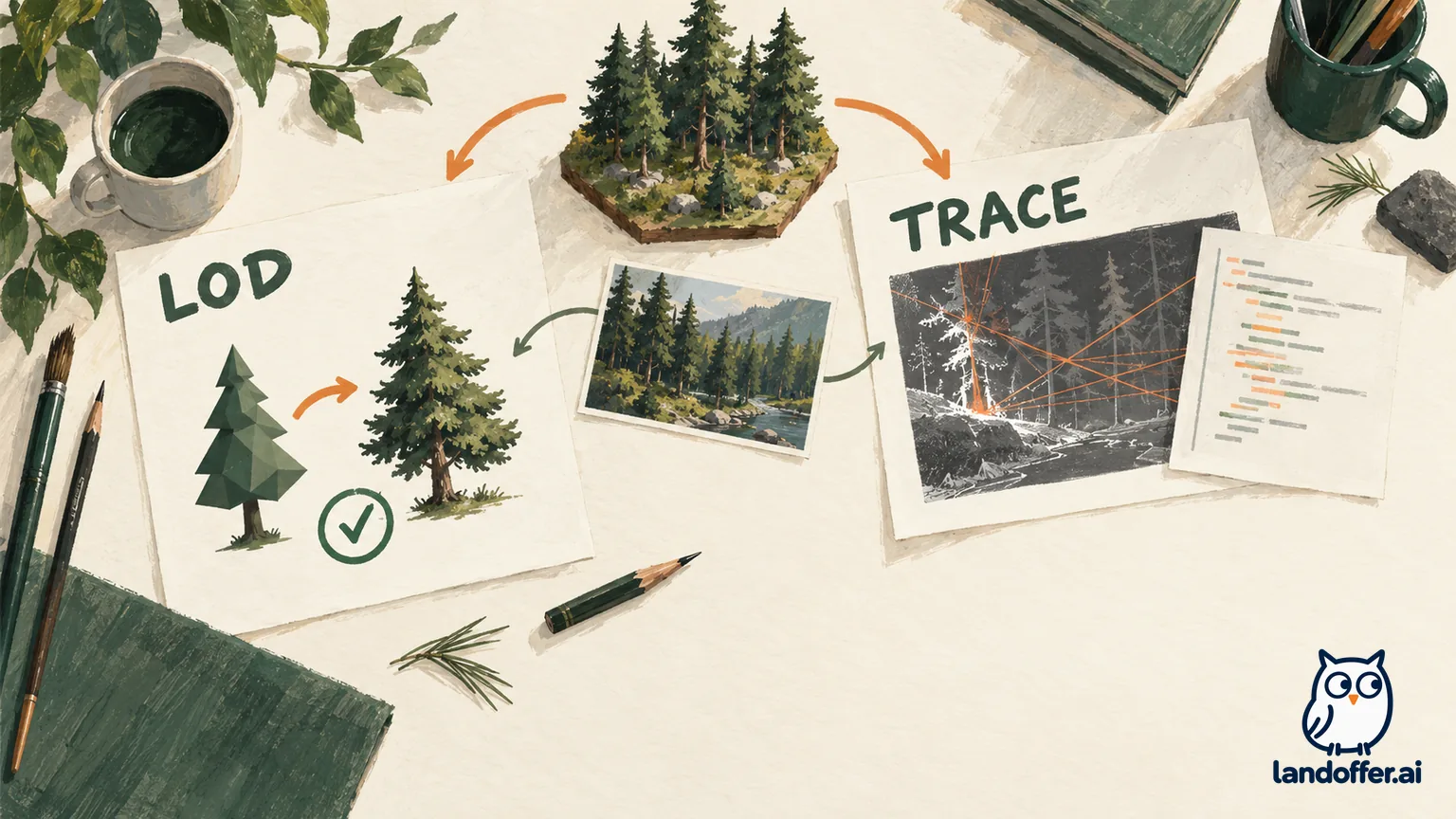
Noa's colleague supplies a tree mesh and textures named Tree07. In the assumed import workflow, the asset is expected to include a second level-of-detail representation, LOD1. Noa's validation tool reports that it is missing and identifies the asset so the artist can correct it. In this fictional record, the artist supplies LOD1 and the next report confirms its presence. That check does not measure rendering performance.
Noa's finished portfolio entry contains the original validation message, the corrected asset report and a short demonstration of the artist's reimport workflow. The contribution statement says Noa implemented the content check and feedback, while the colleague created the mesh and textures. It does not claim Noa wrote the renderer or proved a frame-time improvement.
Ilan's assumed project concerns render-command preparation in a renderer he develops. An initial diagnostic capture identifies a render-thread wait associated with that work. Ilan changes the command-preparation path and records a comparison capture under the same stated scene setup. The assumed comparison includes an image check for unintended visible changes. In a real project, the entry would show the actual images and explain what differences were considered acceptable.
Ilan's entry includes the relevant code revision, the before-and-after diagnostic explanation and the output check. This fictional example supplies no measured milliseconds or percentage improvement. A real performance claim would need actual measurements and sufficient setup detail; the assumed record here illustrates which evidence to show, not a benchmark result.
| Portfolio entry | Completed evidence selection | Supported contribution |
|---|---|---|
| Noa's Tree07 workflow | Missing-LOD message, corrected report, reimport demonstration, asset credits | Content validation and artist-facing feedback |
| Ilan's forest renderer | Code revision, diagnostic comparison, stated scene setup and image check | Rendering-system implementation and evaluation |
The completed selection memo routes Noa's workflow piece toward technical-art responsibilities and Ilan's renderer piece toward graphics-programming responsibilities. The forest imagery is similar, but the evidence answers different questions. Each entry explains its own technical work without claiming authorship of every visible object.
Choose your strongest contribution, then check the gaps
In Noa's fictional professional record, the strongest work includes Python and Houdini tools, content validation, optimization within production constraints and mentoring technical artists on a shipped project. The technical-art function is the closer direction to investigate. Noa would still check the particular lead role's shipping, support and cross-discipline requirements.
Ilan's assumed record includes eight years of professional rendering-engine work, two years as a technical lead and MMO/multithreading experience. The graphics-programming direction is closer. That record does not automatically demonstrate the artist-workflow judgment or content-production work another opening might need.
Those choices are editorial interpretations of assumed records, not hiring decisions. They identify where each candidate has useful evidence and what remains to discuss. If your own record spans both functions, describe the projects separately instead of forcing them under one broad “technical” label.
For a junior or changing-career reader, the next step is narrower: select one responsibility you can demonstrate and find a posting whose level and conditions fit your current record. A learning exercise can show progress and reasoning. It should remain labeled as learning rather than shipped professional production.
Ask which responsibility the first project will test
Useful clarification questions concern the division of work. Will the employee mainly create tools and workflows for artists, optimize content, implement renderer features or combine these? Who owns performance budgets, engine changes and final visual review? Which collaborators will use the result?
Then ask what work evidence the team wants to review. An artist workflow demonstration and a rendering diagnostic can both be relevant, but their emphasis differs. Clarify whether a portfolio entry should include a reel, code, a breakdown or another requested format. Use material you have permission to share, credit collaborators and explain your contribution without exposing proprietary assets or code.
Choose one current opening and one completed contribution. Write a short contribution note: identify what you changed, who used the result and the check you performed. Browse recent roles on LandOffer.ai, then use the employer's full description to decide whether that example supports content-pipeline work or rendering-system work before applying.
Sources and Further Reading
- Epic Games: Lead Technical Artist, R27451 — content, tools, optimization and leadership responsibilities.
- Riot Games: Principal Software Engineer, Rendering, REQ-0010160 — rendering, artist-tool and pipeline duties with required and desired qualifications.
- Epic Games: Career Paths — provider-specific programming, art and portfolio guidance.