LandOffer
Job search
SQLPad Review: SQL Engines, Python Practice, and AI Interview Tokens
Match SQLPad language access to the interview, then compare recurring sessions, annual tokens and separate AI interview purchases.
SQLPad is worth considering when your interview preparation needs browser-based SQL practice and a route into Python. Choosing a plan gets harder when you add AI interviews: question access, recurring mock-session allowances, annual tokens, and separately sold interviews appear on different public pages. Choose the work you need to rehearse before choosing a bundle.
This review covers SQLPad.io, the interview-preparation service. It draws on public pages checked October 20, 2026, and original exercises below; we did not buy a plan or evaluate paid grading. LandOffer.ai publishes this review. If you are still choosing target roles, browse recent roles on LandOffer.ai, then use their interview requirements to narrow your practice.
Choose the engine before counting questions
SQLPad's current homepage presents PostgreSQL, MySQL, Python, and R playgrounds. For a data analyst facing a PostgreSQL screen, that is a useful starting point. For someone preparing for a Python data-manipulation round, the language route matters more than a large question count. If your interview uses R, inspect that route directly; older SQL-and-Python descriptions omit it.
Do not confuse this service with the open-source SQLPad database client. Documentation for that separate project does not establish which databases SQLPad.io's interview exercises support. Nor does SQL experience automatically transfer every date function, cast, or string operation to another engine.
Ask your recruiter which language and database the screen permits. If the answer is BigQuery or SQL Server, practice the underlying reasoning here only if useful, and rehearse the final syntax in the required environment. We found neither BigQuery nor SQL Server in the current playground menu; native support remains unverified.
There is a similar version trap. SQLPad's FAQ lists PostgreSQL, MySQL, Python, and Pandas versions under an explicitly March 2023 heading. Those are dated documentation, not verified October 2026 runtime versions. An exact-version requirement needs a current runtime check or a direct answer from the provider. A question that executes successfully still may not reproduce the interviewer's environment.
What can you learn before paying?
The homepage offers an anonymous sample playground, including a runnable question before signup. The FAQ separately describes a free-account allowance of ten SQL/Python questions, followed by an account lock requiring an upgrade. Treat these as two boundaries: public sampling and account entitlement. An anonymous example is not evidence that an unlimited free library exists.
Use the sample to answer practical questions: can you read the schema, edit comfortably, understand errors, and compare output with the requested result? Then use any free-account questions deliberately. Include a question in your weakest topic; familiar easy exercises alone reveal little about whether the paid material fills that gap.
For this review we read the public sample and playground pages, but did not complete an authenticated question submission. We therefore cannot rate paid solution quality, hidden test coverage, account limits in operation, or support response time. The original exercise below supplies a way to evaluate your own reasoning; it is not a reported SQLPad score.
Before running code, explain what a correct result should contain. If the platform makes it easy to check syntax but you cannot explain the denominator, the next practice session should focus on interpretation. Buying more questions will not decide that denominator for you.
Worked example: transfer one answer from SQL to Python
Suppose your interview invitation permits either SQL or Python. You want SQLPad's two routes to reinforce the same reasoning rather than become unrelated completion streaks. Use this original fixture, which is not copied from SQLPad's question bank.
A support team records four closed tickets. For each ticket, minutes holds the resolution time; a missing value means instrumentation failed. Report the average over measured tickets and the percentage of closed tickets with a measurement. Keep missing observations out of the average, but include their tickets in the coverage denominator.
| Ticket | Minutes recorded |
|---|---|
| A | 10 |
| B | 20 |
| C | NULL |
| D | 0 |
There are four tickets and three measurements. The recorded minutes total 30, so the measured average is 10.0 minutes and coverage is 75.0%. Ticket D's zero is a real measurement. The missing observation for C is not a zero-minute resolution.
This SQL expresses both denominators explicitly:
SELECT AVG(minutes) AS measured_average,
       100.0 * COUNT(minutes) / COUNT(*) AS coverage_pct
FROM tickets;
The Python equivalent, using an ordinary list rather than a library-specific shortcut, is:
minutes = [10, 20, None, 0]
measured = [x for x in minutes if x is not None]
average = sum(measured) / len(measured)
coverage = 100 * len(measured) / len(minutes)
print(average, coverage)  # 10.0 75.0
We executed both versions locally: SQL against Python's SQLite library, and the list calculation in Python. Both returned (10.0, 75.0). This verifies the fixture's expected result in that local reference environment; it does not verify SQLPad's PostgreSQL/MySQL/Python runners. The query avoids engine-specific date functions, so this test addresses interpretation rather than dialect compatibility.
The revealing mistake is replacing every missing value with zero before averaging: that returns 7.5, a different metric. Another mistake is filtering with if x in Python, which drops the legitimate zero and produces 15.0. Both programs might run without an error. Neither answers the stated question.
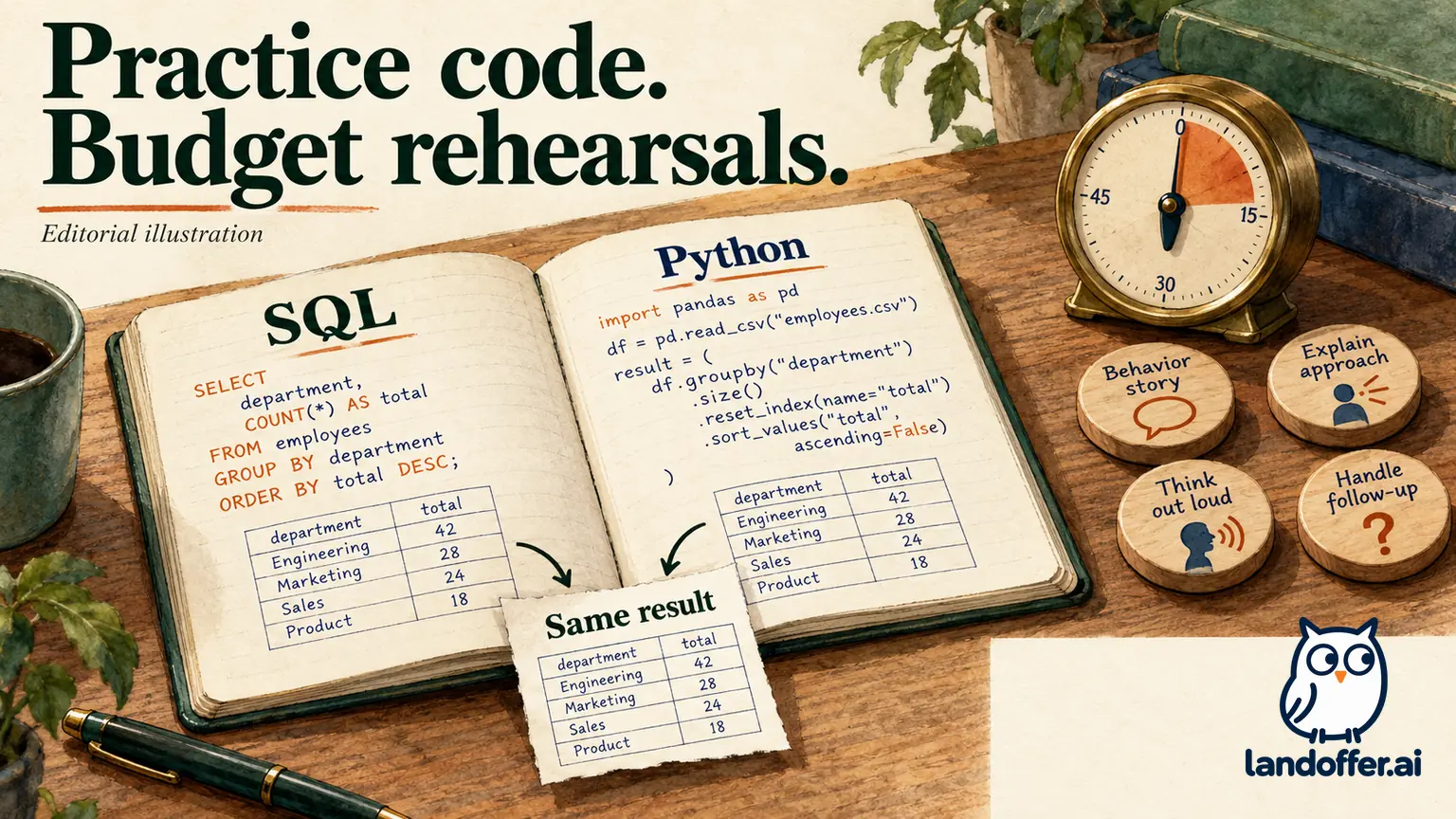
When comparing SQLPad's language routes, keep a small result ledger like this one. Write the expected result, run the exercise, then explain why SQL's non-null count corresponds to Python's explicit missing-value check. For empty input or entirely missing measurements, define the reporting rule before extending either solution; this four-row fixture does not settle that policy.
For the next practice round, change only ticket C to a measured thirty minutes. The expected average becomes fifteen minutes and coverage becomes one hundred percent. Then restore C and change D from zero to missing: the measured average becomes fifteen minutes while coverage falls to fifty percent. These small changes reveal whether you understand what each denominator counts. Keep the same prediction step when moving between the SQL and Python routes. If the code gives the expected number but your explanation describes a different population, correct the explanation before adding another language or paying for a mock session.
Python access is a plan decision
The pricing page separates SQL & R, Python, and AI tiers. In the page's displayed quarterly mode, the monthly rates were $79, $99, and $149 respectively. These are displayed rates under a billing-period selector, so do not mistake the number beside “month” for proof of a one-month purchase. Check the selected period and total before checkout.
The Python tier adds Python questions and coursework to the SQL/R package; AI adds mock interviews and other AI tools. For a candidate whose gap is writing and checking Python, buying the AI tier solely to unlock Python would overshoot the stated need. Conversely, a SQL-only purchase will disappoint if you expect the Python material simply because the homepage mentions it.
SQLPad also lists one-time twelve-month passes: $599 for SQL & R, $799 for Python, and $999 for AI. An annual pass is time-limited access, not lifetime ownership. We did not open or submit a checkout, so these are public listed prices rather than verified final charges, taxes, or a personalized offer.
Estimate the SQL or Python sessions you can finish before your interview, then compare access periods. A year of access may suit a long, steady preparation schedule; it can be a poor fit for a two-week screen if you have not first checked the material. Keep the first purchase tied to a concrete study gap rather than the broad promise of a complete career toolkit.
AI interview tokens need their own budget
SQLPad's AI interview page describes template-based or job-description-based sessions, transcripts, and feedback. It lists a thirty-minute interview format and separate purchases of one interview for $19.90 or ten for $149. Those descriptions establish an AI-led rehearsal product. They do not establish a live human interviewer, employer endorsement, or an independently validated readiness score.
The purchase pages require careful comparison. Recurring AI pricing advertises four sessions per month. The annual AI pass advertises thirty mock-interview tokens. Those are different stated allowances; multiplying four by twelve and assuming the annual pass includes forty-eight sessions would contradict the displayed annual offer.
The AI landing page also uses “unlimited” language in its benefits copy. That wording does not resolve the priced allowances. Before relying on it, get the exact entitlement for the offer you will buy. We did not find an unambiguous public explanation of token expiry, rollover, aborted-session charges, or how annual tokens interact with separately purchased codes. Those remain purchase questions, not benefits we can confirm.
Worked example: a six-rehearsal purchase decision
Consider a fictional candidate, Elena. She already has SQL materials, needs no resume generator, and wants six AI rehearsals before an interview in three weeks. Her question is narrow: what does the public offer actually cover?
| Offer examined | Stated access or allowance | Completed comparison for Elena |
|---|---|---|
| Six individual interviews | $19.90 each | 6 × $19.90 = $119.40 for six advertised interviews |
| Ten-interview pack | $149 for ten | $14.90 per listed interview; four more than her planned use |
| Recurring AI plan | Four sessions/month; displayed quarterly rate $149/month | Four stated monthly sessions leave two of her six planned rehearsals uncovered by that month's advertised allowance |
| Annual AI pass | $999, twelve months, thirty tokens | Larger commitment; token-to-session and expiry details still need confirmation |
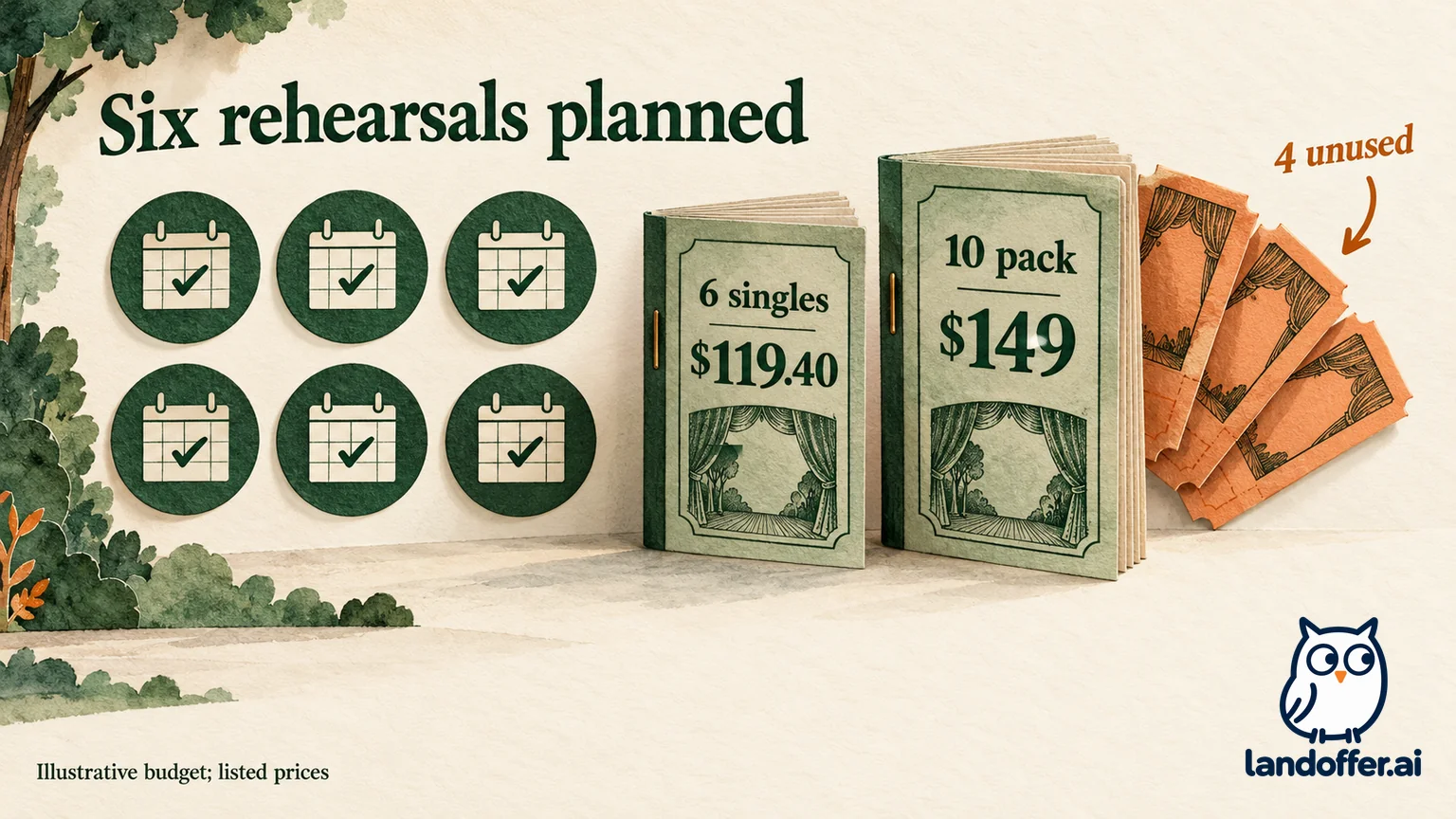
For this scenario, the single-interview arithmetic is $29.60 cheaper than the ten-pack. The pack's lower unit price saves money only if she will use enough interviews: seven singles cost $139.30, while eight cost $159.20, making eight the first whole-interview count above $149. This calculation assumes the listed prices remain available and excludes any taxes or checkout changes.
Elena's provisional choice is therefore six singles, subject to confirming code validity and session rules. She does not buy an annual bundle just to obtain six rehearsals. That is a purchasing conclusion from her fictional needs, not a quality verdict on the interviews or a claim that every payment route can be combined.
She also reserves one rehearsal with a peer who can challenge her explanation. AI feedback may help her repeat an answer; a person can ask why a missing value was treated as zero. She will compare the feedback with the actual code and expected result rather than accept a fluent critique as proof of correctness.
Check cancellation and data handling before the session
The FAQ says recurring payments already made are nonrefundable, cancellation leaves access through the paid period, and one-time purchases are nonrefundable. It directs recurring subscribers through account management to Stripe. Read the applicable checkout terms before committing, and record the paid period and cancellation route; cancellation does not promise a refund.
For a tailored mock, a job description may provide useful context without requiring private employer documents. Remove confidential examples, customer details, and unnecessary personal information from anything you supply. The public AI page's privacy language does not tell us the complete retention or deletion behavior for recordings and transcripts. Review the applicable policy and account controls before using sensitive material.
Our verdict: SQLPad merits a trial when its SQL engines or Python route match your interview work. Sample the teaching and editor first, purchase the language access you need, and treat AI sessions as a separate allowance decision. If you need a person's judgment on how you defend an answer, budget for human feedback explicitly. When you are ready to connect preparation with a broader search, explore LandOffer.ai.