LandOffer
Product & Project Delivery
Split a Large User Story Without Delivering Disconnected Technical Layers
A fictional support reply-snippet story becomes three bounded capabilities after comparing layer-based, workflow-step, and vertical splits. Filled input/output cards and an executed local reference model show what the first slice demonstrates and what remains unverified.
Split a large user story around smaller changes a user can complete and evaluate, rather than around the database, API, and interface needed to build it. Each slice should have a clear starting situation, a useful result, and observable acceptance conditions. Technical tasks still matter, but finishing one layer alone usually does not deliver the promised user outcome.
This LandOffer.ai guide works through a fictional support team's reply-snippet feature. It compares three splitting plans, fills in demonstration inputs and outputs, and checks a small local reference model. The team, product, and decisions are invented. The reference model is an isolated teaching program, not a tested support application, browser workflow, deployed service, or message-sending integration.
Name the useful change before dividing the work
The fictional product, Threadwell Desk, already lets support agents write message drafts. Agents currently keep reusable text in separate documents. Product lead Asha proposes a large story: “Agents can create, edit, share, translate, personalize, and reuse response templates so they can prepare consistent replies.”
Before splitting the story, separate personal reuse, shared publishing, and personalized text into distinct capability decisions. Personal reuse does not necessarily require a team publishing process. Shared content needs ownership and permissions. Personalization can introduce missing-value and incorrect-recipient risks. Translation adds another variation whose value and quality requirements are not yet established.
Asha and developer Ben agree on the first useful change: an agent can save one personal plain-text snippet and insert its text into an editable message draft without sending it. That provides a complete, limited outcome. It does not claim a measured time saving, improved reply quality, or demand for every later capability.
The Agile Alliance definition of story splitting emphasizes keeping measurable business value in each smaller story. Use that as a check on the split: what can a user do differently after this item is complete? “The table exists” answers a technical progress question, not the agent's workflow question.
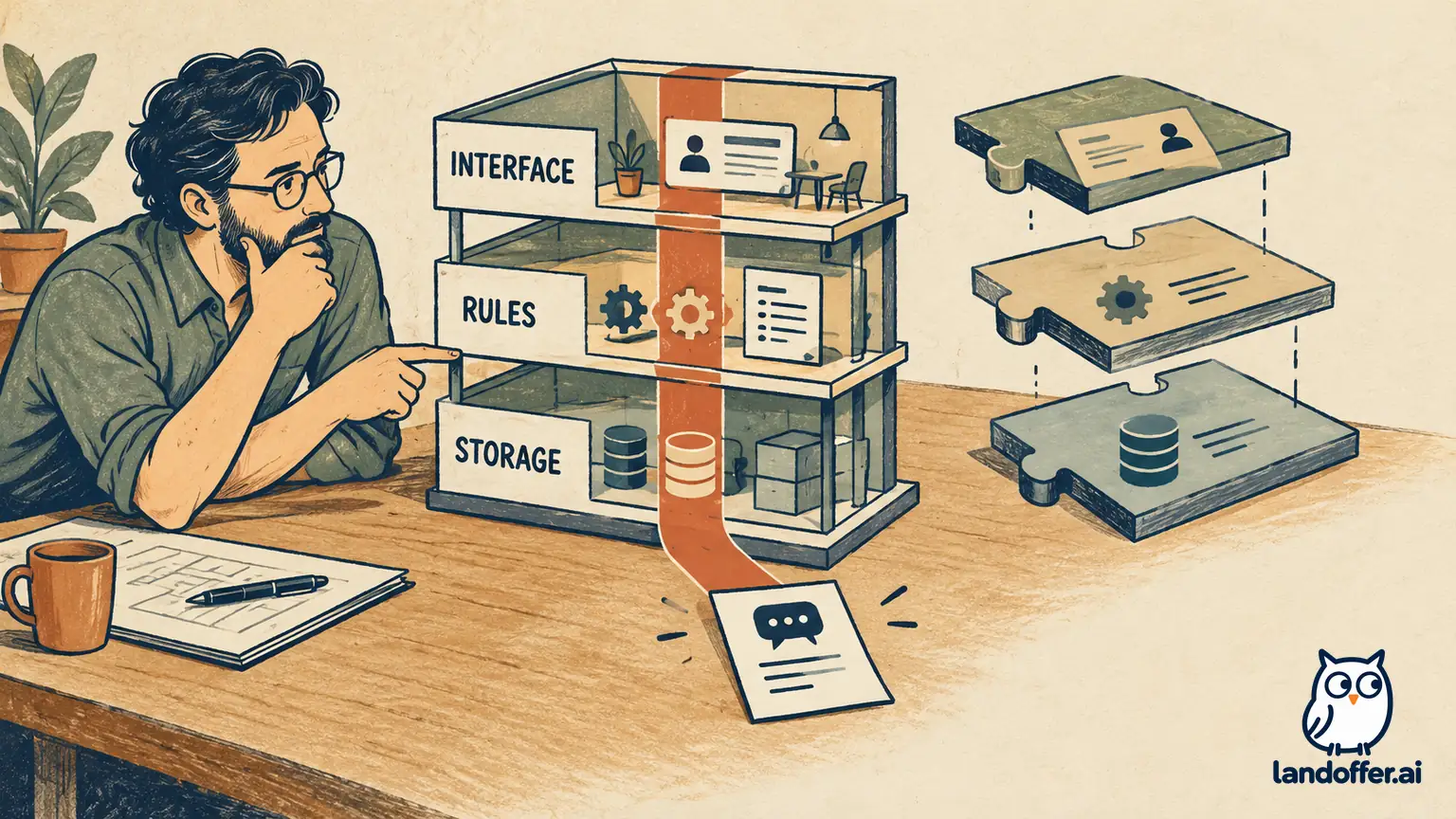
The scope can shrink along user types, content variations, or rules while still crossing the implementation layers needed for the chosen behavior. It should not shrink by removing the validation, persistence, or permission boundary that makes the promised result usable.
Completed asset 1: compare three ways to split the same story
Asha and Ben fill in three alternatives before choosing the third. The first two help expose why a small ticket is not automatically a small user story.
| Plan | Proposed items | What the first item delivers | Recorded assessment |
|---|---|---|---|
| A: architectural layers | Snippet database; snippet API; snippet interface; integration | Stored structure with no agent workflow | Useful engineering tasks, but no personal save-and-reuse outcome until combined |
| B: disconnected workflow steps | Create snippet; show snippet list; insert into draft; add ownership checks afterward | An agent can save text but cannot use it in a draft yet | May hide a long integration queue; ownership is postponed even though personal storage already needs it |
| C: bounded capabilities | Personal plain-text save and reuse; reviewed shared snippet reuse; validated placeholder insertion | One agent can save, retrieve, and reuse personal text in a draft | Chosen: demonstrates a complete result while leaving team sharing and placeholders separately negotiable |
Plan B is not a universal prohibition on splitting by workflow step. A step can be a useful outcome in its own right. In this fictional product, however, storing a snippet without any way to reuse it does not satisfy the agreed first need. The team records that judgment rather than treating a preferred splitting pattern as a law.
Plan C still needs technical work. Ben lists the interface entry and feedback, validation and ownership rules, storage, retrieval, and draft insertion beneath the personal-reuse story. These are implementation tasks supporting one outcome, not separate claims of delivered user value.
Humanizing Work's story-splitting guide describes vertical slices as valuable changes in system behavior that cross the architectural layers necessary for that change. It also distinguishes value from being substantial enough to ship on its own. A coherent small slice can be valuable without implying that every tiny item deserves a public launch.
The chosen plan lets Asha fund personal reuse without silently committing the team to shared publishing and placeholder substitution. Asha can defer shared publishing if personal reuse addresses the immediate need, or reconsider placeholders if their complexity outweighs their value. Conversely, if agents actually need centrally approved wording, a personal-only slice might be the wrong first investment. The case assumes Asha has selected personal reuse; it supplies no real customer evidence for that choice.
Completed asset 2: give each slice demonstrable inputs and outputs
Asha and Ben write three behavior cards with concrete inputs and expected outputs. S1 is specified for the local reference-model exercise. S2 and S3 are completed planning artifacts with expected demonstrations; neither capability is implemented or tested here.
| Slice and user result | Concrete demonstration input | Expected output and boundary | Dependency and status |
|---|---|---|---|
| S1: personal plain-text reuse | Agent A saves title “Tracking reply” and body “We are checking the carrier update.” Then opens a draft containing “Hello Sam,” and inserts that snippet | The personal list contains the snippet after storage is reopened; the draft contains the original greeting, a newline, and the exact saved body; nothing is sent | Existing authenticated draft workflow is a product prerequisite; local reference model checks only selected rules and file persistence |
| S2: approved shared text reuse | A designated reviewer approves shared text “Please include your order reference.” Agent B selects that approved version | Agent B can insert the approved text; an unapproved revision is unavailable for shared insertion; the version used is identifiable | Depends on agreed publishing roles and version rules; planned, no implementation or approval system tested |
| S3: explicit placeholder substitution | Agent A selects text “Hello {name}” with name “Sam”; repeats with name missing | First draft receives “Hello Sam”; missing value blocks insertion and identifies the missing field, without sending | Depends on agreed token syntax and validation; planned, no substitution engine tested |
The demonstration should also show what stays unchanged. In S1, inserting saved text must retain the agent’s existing greeting and leave the message editable. A list of saved titles alone would not demonstrate reuse. If a demonstration needs someone to paste text manually behind the scenes, record that intervention instead of describing the entire path as working software.
The cards make exclusions visible. S1 has no shared snippets, automatic translation, placeholders, rich text, or send action. It still includes the ownership rule: Agent B cannot list or insert Agent A's personal snippet. “Personal” cannot mean “we will add the access boundary after the demo.”
For S1, this example sets a trimmed title length of 1–40 characters and body length of 1–500 characters. These are authored product rules, not industry limits. A blank field or an over-limit field must be rejected without altering the stored collection. A saved body is inserted as literal text, so a name-like string is not automatically expanded into recipient information.
The product would also need accessible interactions, authenticated authorization, reliable persistence, appropriate escaping, and its normal quality checks. Those requirements do not disappear because the first slice is small. They are not all established by the reference model below.
Inspect a complete result without inventing a product test
The companion Python program creates a temporary local JSON store, validates a personal snippet, reopens the store, and inserts the saved text into a string representing a draft. It accepts an owner identifier supplied by the test. That is a model of an ownership rule, not real authentication or a security assessment.
The executed temporary-file reference model produces the following record; its retained JSON result and checks cover only the stated Python behavior:
| Check | Local input or action | Actual reference-model result |
|---|---|---|
| Save and retrieve | Agent A saves the S1 title and body, then the JSON store is reopened | Same title, body, and owner are retrieved |
| Insert into draft | Agent A inserts the saved snippet after “Hello Sam,” | Output is the greeting, one newline, and “We are checking the carrier update.” |
| Reject incomplete content | Blank title or blank body | Validation rejects the request and the stored collection is unchanged |
| Reject oversized content | Title longer than 40 or body longer than 500 | Validation rejects the request and the stored collection is unchanged |
| Preserve personal boundary | Agent B lists personal snippets or attempts to insert A's snippet | B's list is empty; insertion is rejected |
| Keep text literal | Save and insert “Hello {name}” in S1 | The braces remain literal text; no recipient substitution occurs |
This tests a thin behavioral path through the teaching program's validation, file storage, retrieval, and string insertion. It does not test a browser interface, network API, concurrent writes, real identity enforcement, output rendering, accessibility, or the existing product's draft storage. No email, support message, or account action occurs.
That difference matters when reporting progress. “The local reference model preserves A's personal snippet after reopening its file” is supported. “Agents can now use personal snippets in production” is not. A mock interface over hard-coded content could help clarify a conversation, but would not establish persistent save-and-reuse behavior either.
Keep dependencies and unfinished quality work visible
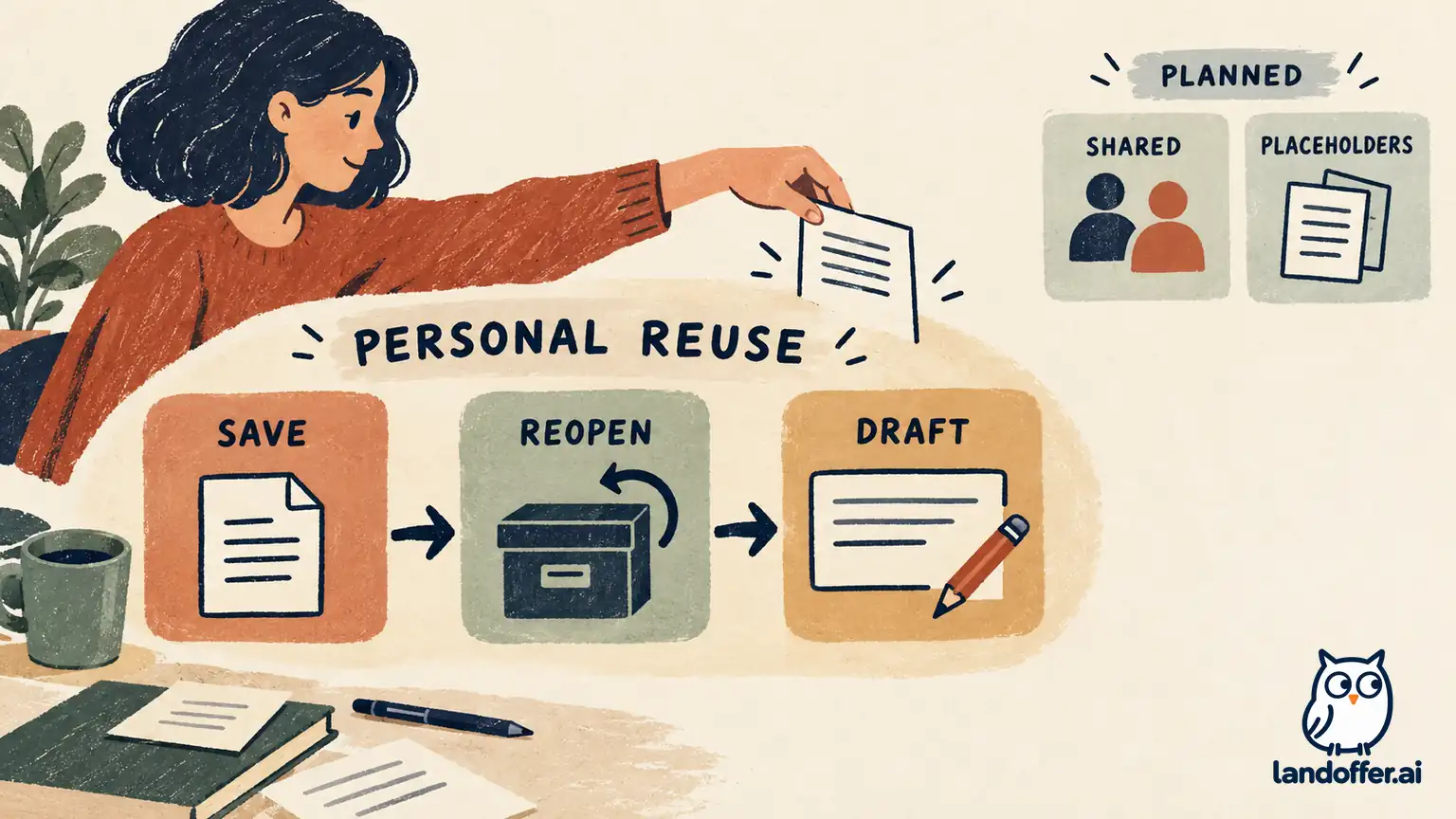
Record dependencies even when the slice crosses all necessary implementation layers. S2 may reuse S1's storage and insertion mechanisms. It should nevertheless add a separately explainable capability with its own acceptance conditions. Record the order constraint and keep technical coupling visible instead of claiming total independence because the cards have different IDs.
If storage or authentication is genuinely missing, name the enabling work and its exit evidence. Do not relabel infrastructure as an agent benefit, and do not present a stubbed identity check as production authorization. A technical investigation may reduce uncertainty without itself being a user-facing slice.
The 2020 Scrum Guide describes an Increment as usable and requires it to meet the Definition of Done. It does not make this local exercise a Done Increment. The fictional team would still have to integrate the capability and satisfy its product quality measures before reporting that state.
Asha's completed refinement decision is explicit: “Choose S1 for further implementation planning. Keep validation, owner-scoped storage and retrieval, the agent interface, and draft integration beneath the personal save-and-reuse result. Leave S2 and S3 uncommitted until we review their value and dependencies.” Ben accepts responsibility for detailing the integration and quality work, without supplying an unsupported delivery date.
They record the current evidence as a passing local model of selected S1 rules. Browser behavior, authenticated authorization, integrated persistence, and release readiness remain unverified. The next review must inspect the integrated capability and remaining quality evidence; a passing model and a refinement decision do not establish a completed product story or authorized release.
Before splitting your next large story, compare at least two plausible boundaries and write a concrete demonstration for the first candidate. Ask whether the user reaches a useful result, what must remain true across layers, and which later capability can genuinely wait. Use that comparison to refine the story with the people who will build and assess it. More workplace guides are available from LandOffer.ai.