LandOffer
Career Growth
Remember What You Learn at Work: Build Spaced Retrieval into Technical Training
A completed fictional two-week plan uses four delayed retrieval sessions to revisit conditional-update reasoning. The accompanying error log shows how each mistaken answer changes the next question, while separating documented learning guidance, invented learner exchanges, and untested workplace application.
To remember technical training, return to the same concept on separate days, try to explain or apply it before opening your notes, and correct the answer against a reliable reference. Save the answer you produced before checking, alongside its correction. A familiar slide deck can hide a missing explanation; a short response makes the gap available for review.
This LandOffer.ai guide develops a two-week practice sequence for one engineering concept, followed by a completed error-and-revision record. The learner, company, dates, answers, and reviewer exchanges are fictional. They illustrate a way to organize practice, not measured workplace learning gains or permission to perform an operational task.
Separate remembering, recognizing, and doing the job
Spacing and retrieval address different parts of practice. Spacing means revisiting material after an interval. Retrieval means bringing an answer to mind rather than having it supplied by the page. A person can space passive rereading without attempting recall, or answer ten questions immediately after a lecture without returning later.
Carnegie Mellon's spacing guidance describes repeated encounters separated in time, and distinguishes revisiting a topic from simply stretching its first presentation across several sessions. Its examples and evidence discussion concern learning settings, including classrooms and laboratories. The workplace schedule below is an editorial adaptation, not a tested employer program or a universally optimal interval.
Its retrieval-practice guidance recommends tasks that require learners to recall information and explains the value of feedback. For technical work, a useful prompt often asks for a reason, a boundary, and a next step. Repeating an acronym may help with terminology while leaving the decision it describes unexplained.
Memory is only one requirement for performing work. Correctly explaining a production recovery procedure does not establish access, judgment under pressure, supervised practice, or authorization. Keep approved documentation available during actual work. A closed-reference learning exercise is not an instruction to hide the runbook during an incident.
Choose one concept you can explain and check
At fictional document service MarginDesk, engineer Hana is learning how conditional updates can prevent one editor from silently replacing another editor's change. Her goal is narrow: explain a stale-version conflict and propose a safe next step. She is not studying the entire HTTP specification, implementing a concurrency system, or qualifying for production ownership.
The technical anchor is MDN's If-Match reference. It documents conditional requests, strong comparison of entity tags, a failed condition returning 412, and use against lost updates. Those documented rules support the exercise's answer key. MarginDesk's interface, review procedure, and people are invented; no application or HTTP exchange was tested for this article.
Hana and reviewer Omar write this practice question: “You read version A. Someone else saves version B before you submit your edit with If-Match for A. What should the failed condition tell you, and what must you inspect before trying again?”
Their answer key requires three ideas: the old condition does not match the current representation; failure is not evidence that the desired edit was saved; and a retry must account for the current content rather than blindly replacing it. Their fictional workflow preserves the attempted edit separately, retrieves the current document, compares changes, and seeks content-owner help when reconciliation is unclear.
The last steps are a proposed workflow for the case, not additional behavior promised by the header. The distinction matters: remembering a protocol rule should not smuggle in assumptions about a product's recovery controls.
A completed two-week spaced retrieval plan
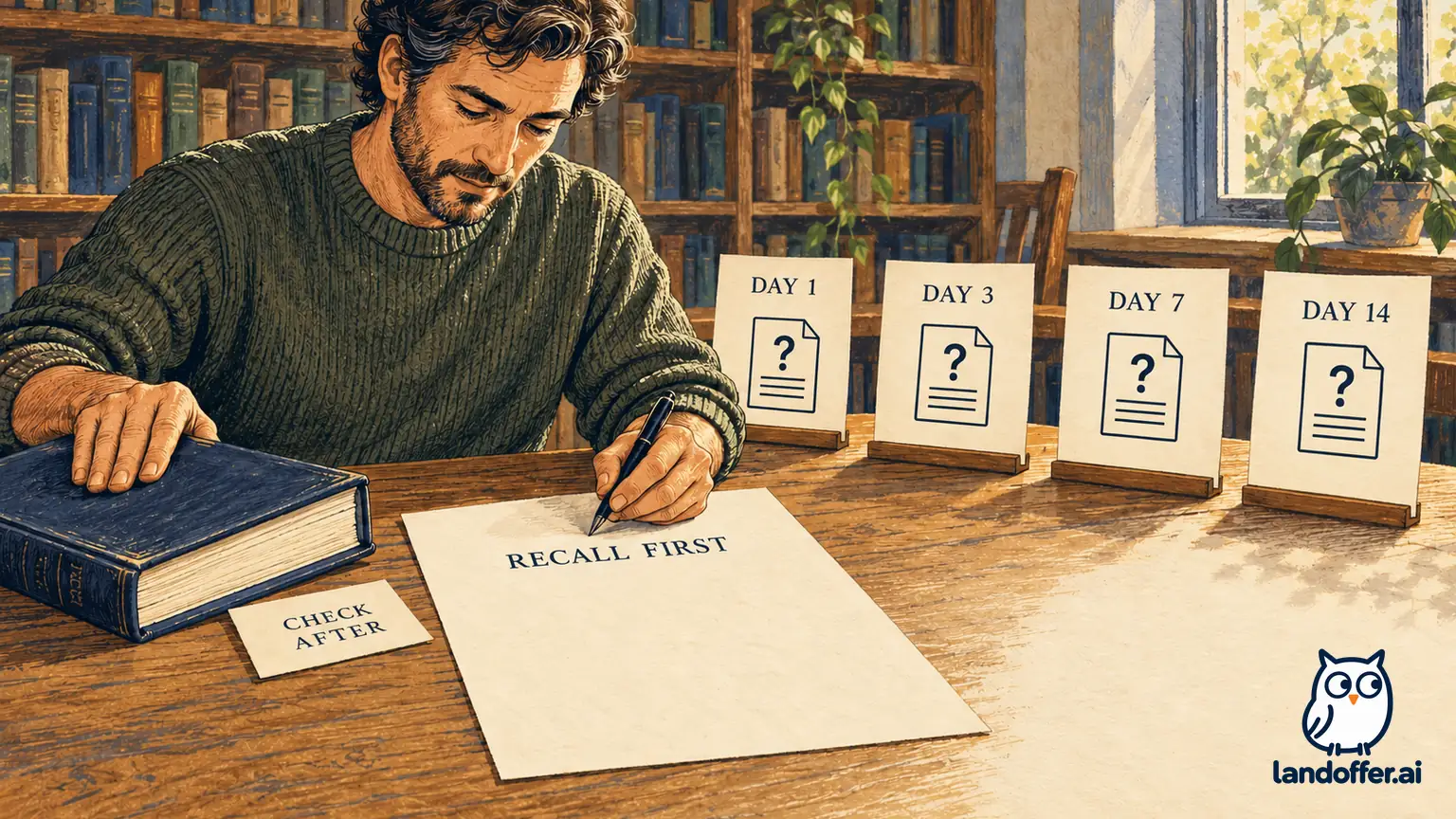
Hana budgets 46 minutes: a 12-minute introduction and four later sessions totaling 34 minutes. Omar agrees to review written answers asynchronously within their normal training allocation. Neither commits to interrupting an incident or approving live changes. The November 2026 dates and completed session records below belong entirely to the fictional case; the publisher observed no training sessions.
| Session | Time and prompt | Attempt before reference | Check and next practice |
|---|---|---|---|
| Day 0: November 2 | 12 minutes. Read the reference and trace two editors reading A, followed by one saving B. | Orientation only; no delayed-recall claim. Hana sketches where the version condition belongs. | Omar checks the initial explanation and identifies the reference section to reopen later. |
| Day 1: November 3 | 7 minutes. Explain the stale-save case without notes. | Hana identifies a conflict but proposes resending the old content with the new tag. | Compare with the answer key. Preserve that mistaken next step and write a replacement explanation. |
| Day 3: November 5 | 8 minutes. Explain why a weak tag is unsuitable for this condition, then revisit the stale-save decision. | The revised conflict answer includes comparing changes; Hana initially treats weak and strong tags as interchangeable. | Check the strong-comparison rule. Add a contrasting tag question rather than another definition card. |
| Day 7: November 9 | 9 minutes. A changed heading seems unrelated to your edit. Can you automatically retry? | Hana remembers version comparison but assumes an unrelated-looking change is safe to overwrite. | Omar asks what evidence establishes independence. Next prompt requires inspecting both edits and naming unresolved ambiguity. |
| Day 14: November 16 | 10 minutes. Explain a new two-editor example with a changed paragraph and an unclear content owner. | Hana describes the failed condition, preserves her proposed edit, and asks for owner clarification before reconciliation. | Omar records a satisfactory explanation for this exercise. A real service walkthrough remains untested. |
The dates are 1, 3, 7, and 14 calendar days after the introduction. That spacing is a manageable design choice, not a prescription that every concept needs those gaps. Two weeks is the exercise horizon, not proof of retention months later. If the knowledge is needed in a later project, arrange another delayed check around that need.
Each session includes a brief attempt, reference comparison, and correction. Do not use the entire slot answering from memory and then postpone feedback indefinitely. If an answer reveals a prerequisite Hana has never learned, Omar explains it before asking for another attempt later. Difficulty without enough teaching is not a useful training design.
Let the error change the next question
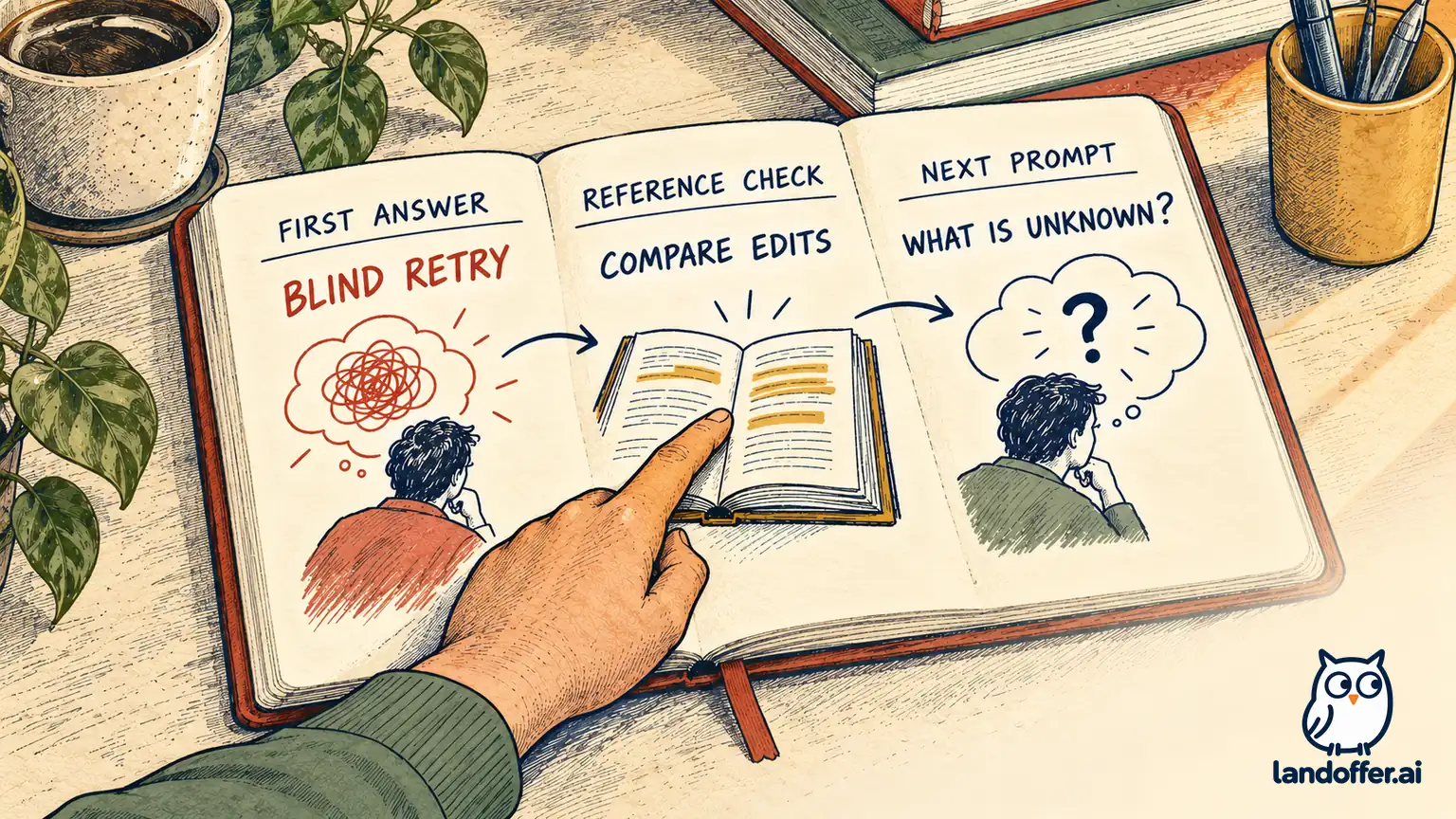
A correct-answer percentage does not tell the reviewer which mistaken decision to revisit. Hana's more useful record keeps her original claim, the reason it fails, and the next situation that could expose the same mistake. She does not erase the first answer after reading the reference.
Here is the completed revision record for the four retrieval sessions. The quoted responses are invented examples, not employee records or research observations.
| Session and first response | Feedback and corrected answer | Consequence for the next prompt |
|---|---|---|
| Day 1: “Get the latest tag and send my old edit again.” | Omar: “A current tag does not establish that your old content includes the other editor's work.” Hana: “Preserve my attempt, inspect the current document and differences, then reconcile deliberately.” | Day 3 includes the same decision in different wording, alongside tag comparison. |
| Day 3: “A weak tag should work if the text looks equivalent.” | Reference check: If-Match uses strong comparison; a weak tag does not match under that algorithm. Hana adds that visual similarity is not the comparison rule. | Day 7 asks for the decision rule rather than showing recognizable tag examples alone. |
| Day 7: “The heading change is unrelated, so retry automatically.” | Omar: “What confirms the changes are independent?” Hana: “I have not checked their interaction. Compare the actual revisions and ask about unclear ownership.” | Day 14 changes both content and ownership context, testing the explanation beyond the original labels. |
| Day 14: “The failed condition blocks this attempt; it does not resolve the competing edits.” | Omar accepts the explanation and request for clarification. He does not certify a working client, server implementation, or independent deployment readiness. | Add a supervised service-specific walkthrough when a safe training environment and owner are available. No date is accepted yet. |
This record distinguishes a remembered rule from a reasonable application. The Day 3 correction concerns a documented header condition. The Day 7 correction concerns unsupported judgment within a fictional workflow. Combining them into one score would make it harder to choose what to teach next.
The final answer fits the fictional exercise, but there is no real learner, measured baseline, or control group. It cannot show that spacing caused improvement. Its value is the reviewable connection between a particular error and a revised question.
Make practice fit the work without turning it into surveillance
Reserve a small, accepted allocation before adding recurring exercises. Name the upcoming task that needs this concept and the reference the technical owner accepts. Decide whether answers stay private, are shared with a trainer, or belong in an agreed development record. Do not quietly turn exploratory mistakes into a performance ranking.
The Institute of Education Sciences practice guide, released in 2007, recommends spacing learning, using quizzes to revisit content, and asking explanatory questions. These are educational recommendations with stated evidence ratings, not validation of MarginDesk's schedule. They help explain why the plan includes delayed questions and reasons instead of a reading-completion checkbox.
Use synthetic examples when real tickets contain customer information or security details. A prompt can describe two conflicting revisions without copying private document contents. Keep access-controlled references where they belong; a personal flashcard service is not automatically an approved destination for internal material.
When a session is missed, record the actual next attempt date and resume a manageable sequence. Avoid disguising four same-day catch-up answers as four spaced encounters. If the person repeatedly needs extensive hints, reduce the scope, teach the prerequisite, or let them consult a diagram and gradually remove that support. Record the help used so the next answer is interpreted fairly.
Questions should vary enough to require thinking while preserving the target concept. Change the order of events, ask why a tempting action is unsafe, or ask what remains unknown. Do not keep adding unrelated protocol exceptions until a seven-minute exercise becomes a new course. Keep the question narrow enough that the agreed reviewer can check the answer within the accepted training allocation.
Close the loop with a later application check
End the two weeks by deciding what the record supports. Hana can now explain the selected conflict cases within the fictional training exchange. The record also identifies what remains missing: practice with the actual service, its permitted reconciliation options, and a later delayed question. None is implied by Omar accepting the final written explanation.
A useful closeout reads: “Retain the current reference link and four first-attempt records. Ask the service owner for a safe walkthrough before independent changes. Revisit the conflict explanation at the next relevant training session; owner and date remain pending.” That preserves both progress and the unfinished work.
For your own technical training, choose one concept you will need again, write a checkable prompt, and agree on a small feedback route. At the next session, try the answer before reopening the reference and record exactly what changed. Keep the exercise alongside approved work instructions, with LandOffer.ai as the publisher of this career-learning guide. Remembering a concept becomes useful when you can explain its limits and recognize when you still need help.