LandOffer
Job search
RoboticsCareer.org Review: Manufacturing Robotics Jobs, Training, and Candidate Visibility
Review manufacturing robotics and physical AI job discovery, separate training from job applications, and understand candidate visibility before creating a profile.
RoboticsCareer.org is useful when you want to investigate robotics and physical AI work in manufacturing, including maintenance, integration and software roles. It combines job discovery, training listings and candidate matching. Use those as separate routes: a training program is not a vacancy, a skill tag does not establish your qualifications, and browsing does not require making yourself visible to employers.
We reviewed the public site, three job descriptions, a training listing and official ARM Institute guidance on October 13, 2026. We read the public job and course details; the sampled Apply and Contact Program actions then opened a signup/sign-in prompt. We did not create an account, test private matching, submit an application or verify the three jobs on original employer pages. The candidate examples below are fictional.
LandOffer publishes this review and offers job-search tools. You can compare these leads with recent roles on LandOffer.ai, using the same employer-level checks for both sources. The useful result is a role or learning decision you can explain, with unresolved conditions still attached.
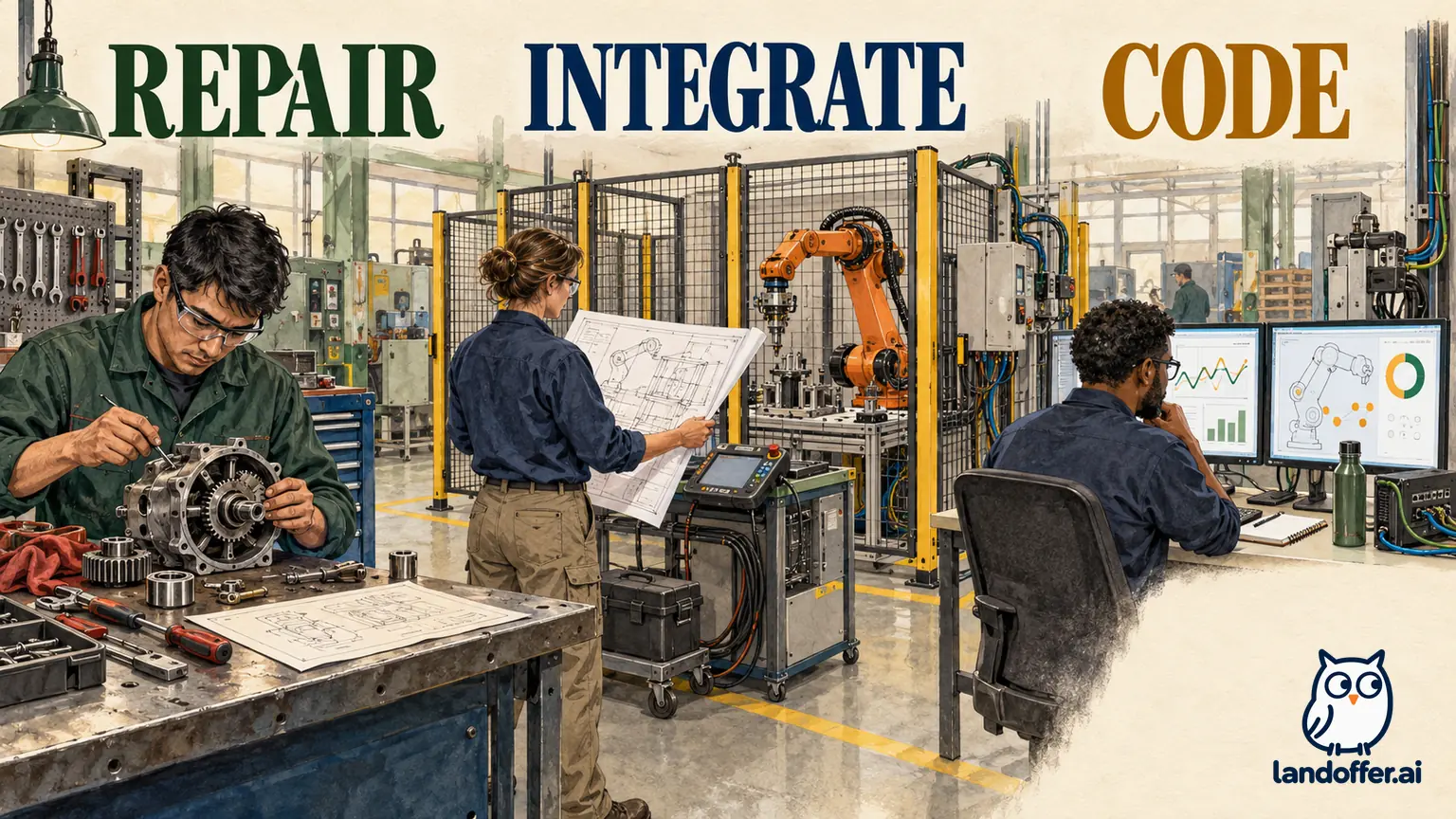
Understand the manufacturing focus and the physical AI expansion
The site is powered by the ARM Institute, whose workforce overview describes manufacturing career pathways for robotics and physical AI. This is a useful starting point for understanding the platform's scope. It is broader than a software-engineering board and more focused than a directory of every possible robotics occupation.
ARM's June 2026 expansion announcement adds an emphasis on work involving AI-enabled robots. Its description covers competency frameworks, training, jobs and a talent database. Those are official product descriptions. We did not measure matching accuracy or use the announcement's inventory and usage figures as evidence of suitable openings or hiring outcomes.
The distinction matters for an engineer searching by a familiar tool. Python can appear in a software role, an integration job or an engineering-tools task. A technician can interact with programmed equipment without owning a production software service. The platform can help you notice those possibilities; you still need to read which responsibility occupies the job.
Use the pathways to choose what you want to investigate, then evaluate the individual description. Someone seeking hands-on equipment troubleshooting may welcome factory roles. Someone seeking fully remote application engineering may find much of the same inventory unsuitable. Each should record the expected workplace and main responsibility before retaining a role.
Public searches produce leads that still need sorting
The public Jobs interface exposed keywords, type, state and city, with additional filters behind More Filters. We entered software engineer and ran the search. The resulting URL represented software and engineer as separate keyword parameters. The visible results still included automation, manufacturing and electrical roles alongside AI and machine-learning titles. We did not test whether the keyword parameters use exact phrases, alternatives or another matching rule.
Read the results as a discovery set, rather than assuming every returned title is a software-development position. In our second query, maintenance technician, several familiar cards remained alongside an equipment-maintenance role. Open the detail and identify its main duty before placing it in your software or maintenance shortlist.
The More Filters dialog exposed job format, career focus, industry, level, schedule, compensation and organization options. In the inspected view, the Career Focus choices appeared disabled; we did not complete a selection or establish why. We therefore do not claim a tested robotics-only or AI-only filter result. The actual tasks completed here were keyword searches and detail reading.
The three job samples below show why that detail step changes the shortlist. Each is a description observed on RoboticsCareer.org, with current employer availability and the final application route still unverified. We have deliberately kept those limits beside the decisions.
| Public job sample | Main work in the displayed description | Condition to retain in the search note |
|---|---|---|
| Eos Energy, Robotics and Automation Maintenance Technician | Preventive and reactive maintenance of automated equipment; PLC/HMI work, robot teach-pendant familiarity and maintenance records | East Pittsburgh, onsite; two years in automated manufacturing; twelve-hour shifts including weekends; employer verification pending |
| Freelance Robotics, Robotic Systems Engineer | Mechanical design, CAD, robot and controls integration, assembly and customer-site commissioning | Header says San Francisco; body describes Redland Bay, Queensland, Australia and in-person work; hold for location and employer reconciliation |
| CelLink Corporation, AI Engineer | Production AI/ML, Python, models, APIs and data pipelines supporting manufacturing | Georgetown, Texas; three-plus years, relevant degree and production deployment experience; substantial manufacturing-floor work; employer verification pending |
This table does not rank the employers. It separates three kinds of work that could otherwise be collapsed into a single robotics search. It also shows that code can be present in all three without being used in the same way.
Read maintenance, integration and software as different responsibilities
The public Eos detail describes keeping automated manufacturing equipment operating. It includes repair, adjustment, replacement, preventive maintenance and detailed work orders. The description names a high-school diploma or equivalent as required and an associate degree, technical school or equivalent work experience as preferred, alongside the stated manufacturing experience.
For a candidate interested in this work, the practical questions include equipment experience, shift availability and the described work setting. A general software portfolio does not demonstrate those conditions. Conversely, a technician's maintenance record should not be dismissed merely because the title lacks software-engineering language. The Eos sample centers on keeping production equipment operating through maintenance and documented repairs.
The Freelance Robotics description combines mechanical design with integration and commissioning. It mentions programming and scripts, but also CAD, components, assembly, machinery and customer-site work. Its location conflict is material: a San Francisco header does not resolve a body that repeatedly names an Australian facility. We held the lead rather than treating it as an eligible US opening or assuming the displayed dollar amount had a particular currency.
The CelLink board sample describes production models, APIs and pipelines, making it a clearer software-oriented lead. Yet its working-conditions section says the job is not primarily desk based and involves significant time around production equipment. A technical match does not make this a remote role. The Organization tab provided no additional company information in our inspected view, so an original employer check remains necessary.
Save the exact shift, location or production-experience condition that changes your decision. For these examples, that could be the Eos shift requirement, the Freelance location conflict or the CelLink production-ML requirement. Those specifics are more useful than a broad score based on shared technology words.
A training listing is a learning option, not an application
The public training route displayed certificates, workforce credentials and degrees. Some programs carried an ARM Institute Endorsed badge. ARM's workforce overview describes endorsement as a program-level evaluation and says endorsed programs receive priority listing. It does not turn an individual learner into a certified job applicant or establish that a listed employer will hire graduates.
We opened Digital Manufacturing Essentials (Level 2), listed by Digital Foundry at New Kensington. The board described onsite, hands-on training lasting 4.5 days, intended for people with a manufacturing background. The organization's linked page led to its current education catalog, from which we opened the specific course page.
The provider describes manufacturing professionals learning digital tools and data-driven factory operations. It says completing all four modules earns a program certificate and four continuing education units. The inspected page offered registration alerts and information about possible financial assistance, but did not provide a current tuition quote or confirmed cohort date. We did not subscribe or request assistance.
Here is the completed distinction for a reader deciding what to do next:
| Item inspected | What it can support now | What it does not establish | Completed next step |
|---|---|---|---|
| Eos maintenance job description | A comparison with existing factory maintenance experience | Current employer availability or a completed application | Verify the employer requisition and work schedule |
| Digital Manufacturing Essentials listing and provider page | A possible learning option for a defined manufacturing knowledge gap | Free tuition, an available seat or a job offer | Keep tuition, cohort and eligibility unresolved before enrollment |
| Endorsed badge | Evidence that the program is represented as having passed ARM's program review | Individual qualification for a particular vacancy | Assess the actual curriculum against the gap |
RoboticsCareer.org describes itself as a free national resource on its registration entry. That is different from saying every independent provider's training is free. A listed course can have tuition, funding conditions and attendance requirements of its own. Do not choose a course merely to make an account profile look more complete.

Let two candidates reach different decisions
Isabel is a fictional candidate with two years maintaining automated manufacturing equipment. She can explain preventive maintenance, fault documentation and supervised work with machine interfaces. She can consider onsite work near East Pittsburgh and the described shift pattern. She retains the Eos lead for an original employer check, rather than treating the board's requirements as proof of complete fit.
Her evidence note says: “Maintained automated production equipment, documented faults and completed preventive-maintenance work orders.” That is supported by the fictional background. It does not become a claim about designing an entire robotic cell, leading machinery-safety certification or deploying a production ML model. Isabel keeps the scope she can substantiate.
She also considers the Level 2 training because she wants to understand digital manufacturing data more deeply. Her completed decision is to investigate the course's current cost, schedule and intended starting knowledge before enrolling. Its certificate and listed duration describe a learning option; neither replaces the employer's experience requirements. She does not need to buy training merely to read the public job description.
Evan is a second fictional candidate, a backend engineer who has built web APIs but has no production ML deployment or factory-equipment experience. He defers the CelLink AI lead under that description's requirements and working conditions. He also excludes the Freelance integration role from his current software shortlist because its core mechanical and commissioning duties differ from his target, with location unresolved as well.
Evan keeps manufacturing software as an exploration area. He can look for a different role whose central work matches his service experience, without relabeling an API project as robot commissioning or model deployment. His saved outcome is two explained exclusions and a narrower next search, rather than an invented match percentage.
Decide about candidate visibility separately
The sampled job's Apply button and the training program's Contact Program button both opened a signup/sign-in prompt. The public email-registration form requested identity, location and career information, among other fields. We inspected that form without entering data or creating an account. We therefore cannot report the actual profile-visibility defaults, settings or recruiter view.
The site's privacy policy, effective July 24, 2025, says account preferences, skills profiles and uploaded documentation are stored. It describes prospective-employer contact sharing through an opt-in service. ARM separately describes employers searching its talent database, downloading resumes and contacting candidates. These statements explain why profile visibility deserves its own decision; they do not show that a particular recruiter will see or contact you.
Isabel may decide to explore that documented service once her target and materials are ready, reviewing the actual sharing choices when available. Evan can continue public research while clarifying his target. These are fictional choices, not instructions for an untested account setting. Neither browsing a course nor opening an account should be recorded as an employer application.
Use the platform when manufacturing work and its training pathways match your question. Keep another source for a software search that already supplies suitable roles. To expand your comparison, browse recent roles on LandOffer.ai. Open one public job detail and save its main responsibility, work setting, source conflict and next employer check. If a course addresses a specific gap, give it a separate learning note with the unresolved tuition and cohort date.
Sources and Further Reading
- RoboticsCareer.org — current public manufacturing and physical AI entry points.
- Public job search — three displayed descriptions inspected October 13, 2026; original employer applications not verified.
- Public training search — training-directory entry; provider conditions remain separate.
- ARM Institute workforce overview — scope, pathways and program endorsement.
- ARM physical AI expansion — June 2026 product announcement and employer talent-database description.
- Digital Manufacturing Essentials Level 2 — provider's course, credential and assistance description; no current price quote verified.
- RoboticsCareer.org registration and privacy policy — public account entry and documented information-sharing boundaries.