LandOffer
Job search
Embedded Linux BSP Jobs: Check Board Bring-Up, Device Trees, and Driver Responsibilities
Separate board support, driver work and applications through current employer roles and two complete fictional ownership and investigation records.
Embedded Linux BSP jobs concern the software that enables a particular hardware platform to boot, expose its devices and remain maintainable. C or C++ application experience can help, but a board-support role may also require device-tree work, kernel configuration, drivers, schematics and debugging on physical targets. Choose by the part of the platform you would own, then compare the required work with evidence you can explain.
We reviewed public employer postings and primary technical documentation on October 22, 2026. No board, bootloader, build, driver or diagnostic tool was operated for this article. LandOffer publishes this guide; browse recent roles on LandOffer.ai alongside the specific employer descriptions. The two worked records below are fictional preparation material.
Start with the platform, not the programming language
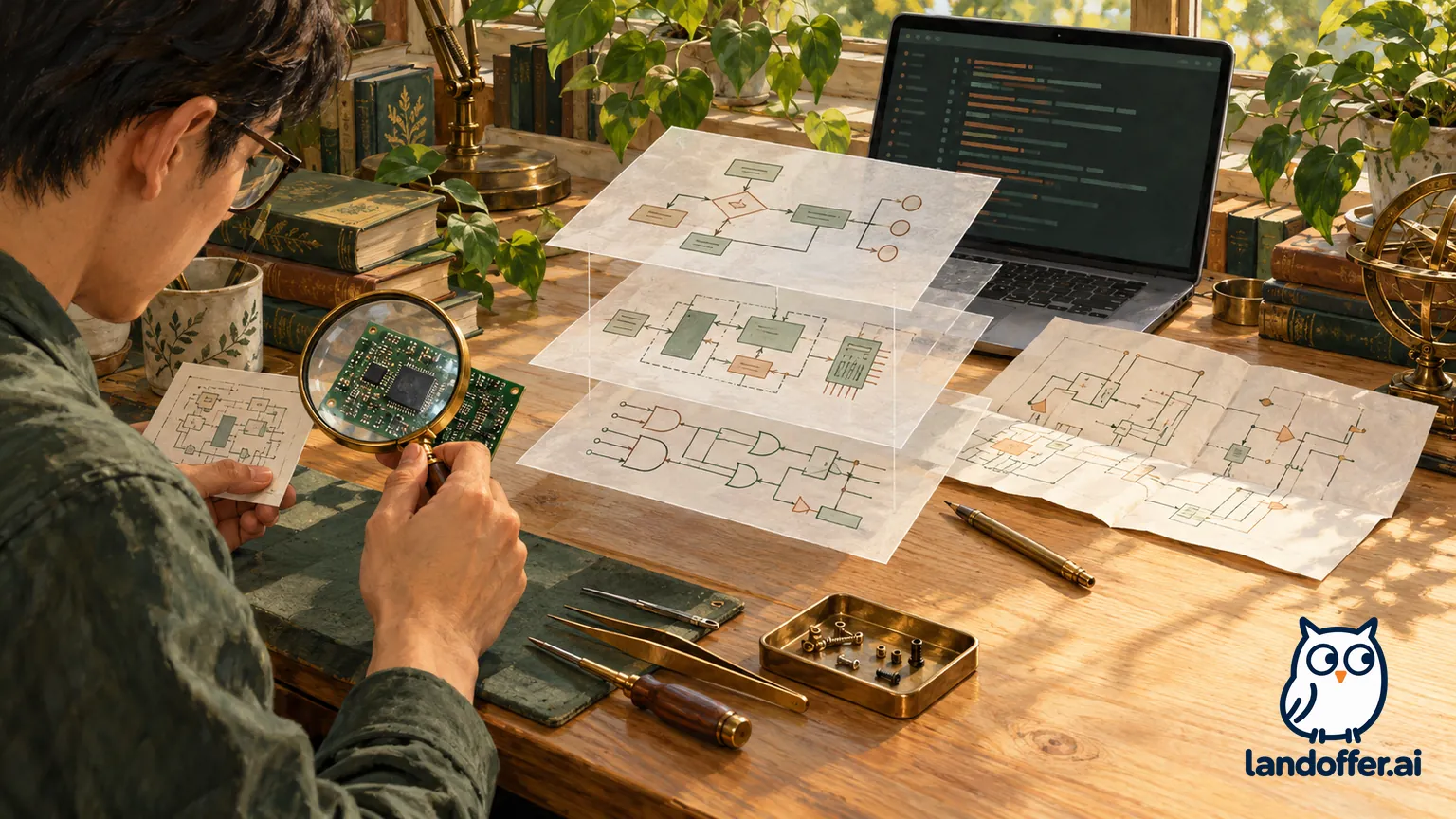
The Yocto Project's Scarthgap 5.0.20 BSP guide describes a board support package as information and software needed to support particular hardware. It includes hardware features, relevant bootloader, kernel and device-tree configuration, additional drivers and platform-specific components. Its layer structure organizes that support so it can be built and maintained.
That scope explains the job distinction. An application developer may use an existing operating system and its interfaces. A BSP engineer may be responsible for making the intended platform available to that application in the first place. Some positions combine those layers; the title alone does not tell you how much of each is involved.
Read the verbs in a posting. Building an image, enabling a peripheral, porting a driver and maintaining a service describe different outputs. Identify whether you would adapt a vendor package, create new support, carry patches across releases or investigate failures in an existing platform. Then identify who reviews that output and what evidence they require. This gives you a specific handoff to discuss instead of an undifferentiated claim to have worked on Linux.
Using a preconfigured development board can be useful experience. Describe exactly what you changed and verified on it. An application successfully running on that board does not by itself establish that you brought up a custom board or authored the kernel support underneath it.
Device trees and drivers solve related but different problems
The Linux kernel's device-tree usage model explains device trees as hardware descriptions used by the operating system. Bindings define conventions for representing components and connections. This is a way to provide platform information, not a substitute for all required driver code or hardware validation.
For a job discussion, distinguish describing a device from implementing its behavior. A device-tree change, a kernel-configuration change, a driver patch and a userspace workaround are different contributions. Explain which artifact you edited, why it was appropriate and what evidence supported the result. Avoid collapsing all four into “Linux driver development.”
Use the same distinction when describing an investigation. A peripheral not appearing could lead to questions about hardware revision, selected configuration, software support or the observation method. The symptom can guide the investigation, but the cause needs evidence from the relevant platform. Describe the evidence that separated hypotheses, including what remained unresolved when you handed the investigation over.
Bootloader and build ownership deserve their own questions
U-Boot's Standard Boot overview distinguishes a boot device, a boot method and a bootflow. Those concepts illustrate why “it boots” can hide several responsibilities. A team might expect you to maintain platform boot support, the configuration selecting an image, or the image's contents. Confirm the actual boundary rather than assuming every embedded job requires the same boot stack.
For build work, ask who maintains the board-revision list, layer dependencies, configuration and release manifest. Also ask who confirms that a built image was tested on the intended revision. The useful evidence is the relationship between source, build inputs and the target being tested. A completed build is one event; validation on the intended hardware and acceptance of a release are additional events.
These documents are conceptual references. Match the documentation to the employer's actual version and platform before proposing an implementation. The reviewed Yocto page is explicitly Scarthgap 5.0.20, not a claim that every team uses that version. This article provides no flashing procedure, production change or hardware test instructions.
Three postings show different ownership boundaries
The checked Cerebras System Software Engineer (Embedded) role was full-time and onsite in Sunnyvale. It covers low-level drivers, Linux platform/BSP components, hardware monitoring and diagnostics across bring-up, manufacturing and field use. Minimum requirements include four-plus years of production embedded or systems C/C++ work, hands-on driver integration, schematic reading and board-level debugging. Linux kernel drivers, BSP development, device trees or platform enablement appear separately in preferred qualifications; the hardware-facing minimum requirements still apply. Preserve that minimum/preferred distinction while recognizing the substantial hardware-facing duties.
Rhoda's Senior Firmware Engineer, in Mountain View, emphasizes distributed real-time firmware, RTOS work and low-level debugging. Its Linux BSP, kernel/device-tree and Yocto experience are expressly nice-to-have rather than required. A keyword match on BSP does not turn the core role into general Linux platform work. This is a role-scope comparison, not an assessment of its safety design or a candidate's suitability.
LiveView Technologies' Senior Staff Embedded Software Engineer — Cameras combines Linux BSP, drivers, bootloaders and custom Yocto with camera architecture and partner leadership. It asks for ten-plus years and senior technical leadership. The body allows remote work or offices in Utah/Seattle while expecting regular headquarters and manufacturing-partner travel. Remote does not establish a travel-free arrangement or permission to work from every location.
These are inspected public descriptions, not a survey of the whole market or confirmation of available headcount. An indexed Aurora BSP result settled to “Job not found” during the native check and was excluded as a current lead. Employer requirements and available positions can change after the check date.
Worked ownership record: keep application experience accurate
Pavel is fictional. His supplied experience is a C++ data-collection application running on a vendor-supported development board, a small application test suite and a written issue report. He did not modify the bootloader, kernel, device tree or drivers. No real person's work history or protected information is used.
He starts with the draft claim, “Owned Linux board bring-up and drivers for a sensor platform.” The completed evidence review replaces it:
| Proposed claim | Evidence actually supplied in this example | Completed revision |
|---|---|---|
| Board bring-up | Used an already supported vendor board | Remove custom-board bring-up ownership |
| Device drivers | Read samples through an existing application interface | Describe interface use; do not claim a driver patch |
| C++ application | Implemented parsing and file output | Retain application development with its actual scope |
| Kernel configuration | No configuration change documented | Leave out of completed experience |
| Debugging | Recorded a missing-data symptom and reproduced it at application level | Retain reproduction, not a proved hardware root cause |
| Validation | Application cases ran in the supplied history | Do not extend those checks to peripheral or platform qualification |
His completed paragraph reads: “Built a C++ data-collection application on a vendor-supported development board, using the existing device interface. Added application tests for parsing and file output. Reproduced an intermittent missing-data symptom and documented the application conditions for the platform team. I did not develop the board's boot support or device drivers, and the underlying cause was unresolved at handoff.”
Pavel's preparation memo reads: “Use this project as application-level evidence. For a hardware-facing role, identify additional work I can truthfully discuss and the learning still required. Ask whether the opening expects new-board enablement, existing-driver integration or application maintenance. Do not replace the missing platform history with a broader title.”
The completed result is a more accurate contribution statement. It can help a hiring conversation establish the right starting point. It does not determine that Pavel meets any employer's requirements or that a small learning exercise substitutes for years of production platform ownership.
Worked investigation record: a mismatch is a hypothesis
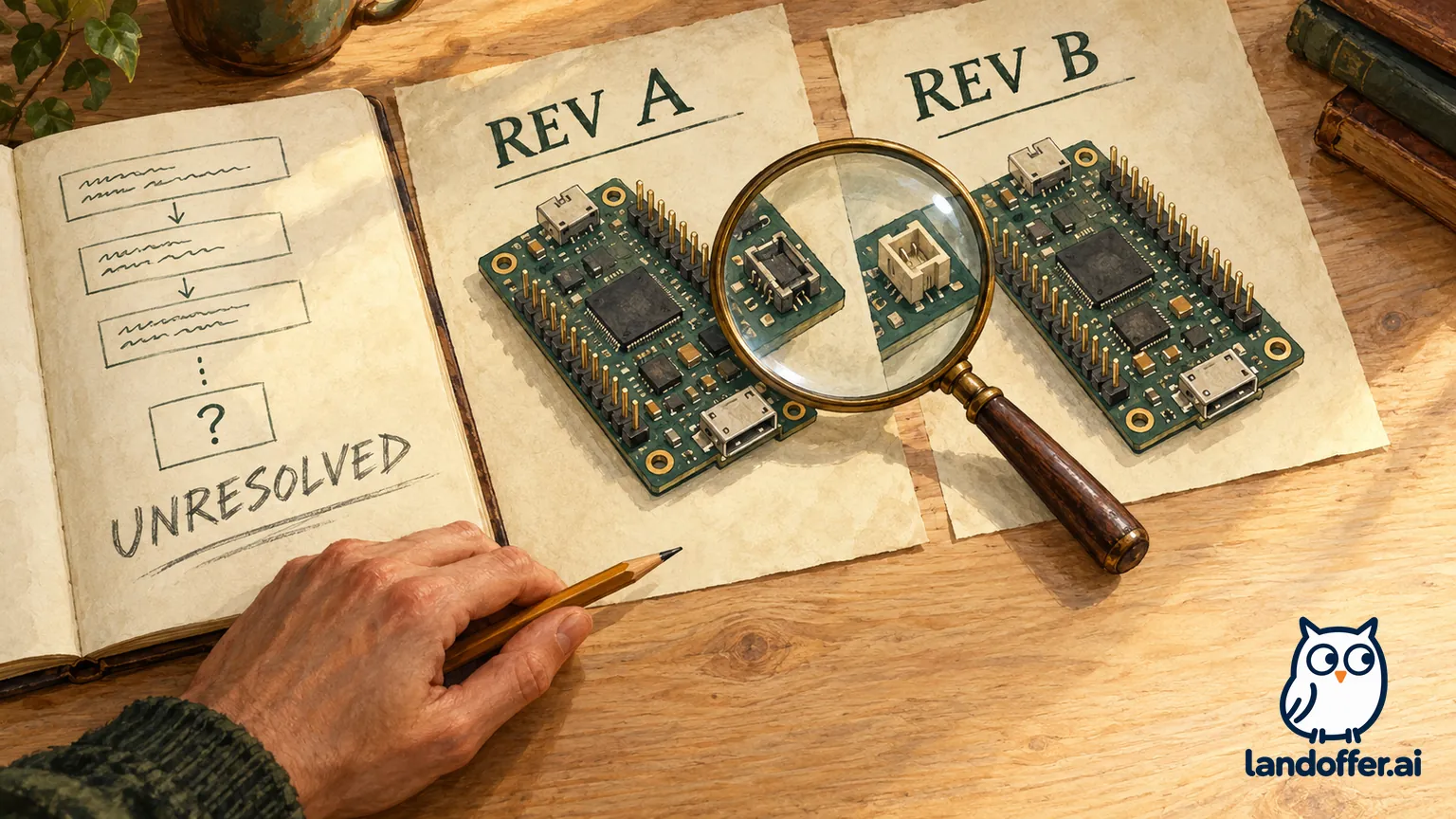
Esme is fictional and is reviewing an invented, unpowered desktop teaching exercise. The supplied records describe a harmless indicator board, with a revision-B inventory label, a build note naming revision A, and a transcript that reaches userspace while reporting no application sample. These are stipulated documents, not logs generated by us or evidence from a real device.
Her initial note says, “Bad device tree caused the failure; changing it will fix the driver.” The documents do not support that conclusion. She completes the following evidence record without operating hardware or changing a file:
| Supplied item | What it supports | What it does not establish | Completed record action |
|---|---|---|---|
| Inventory says revision B | The recorded target revision is B | Whether inventory is correct | Preserve the identifier for reconciliation |
| Build note names revision A | A potential target/build mismatch | Which image was actually booted | Request the actual image/configuration record |
| Transcript reaches userspace | The supplied text describes that milestone | Every peripheral working | Avoid calling the whole platform validated |
| Application reports no sample | A symptom is recorded | Driver, wiring, configuration or application root cause | Keep multiple hypotheses open |
| No physical measurement supplied | Hardware behavior remains unknown | A successful electrical or bus check | Mark that evidence missing |
| No before/after validation supplied | No demonstrated correction exists | That any proposed change fixes the issue | Leave closure unresolved |
Esme's finished investigation note reads: “The revision-B inventory and revision-A build note disagree. I have not confirmed the actual target or loaded image. The supplied transcript describes reaching userspace, but the missing application sample does not identify a failing layer. Reconcile the board and build records, then have the responsible team decide which observations are needed. No device-tree defect, driver repair or successful retest is established.”
Her handoff requests the board identifier, build manifest, relevant configuration reference, observation conditions and the owner of the next investigation. It does not prescribe a bus address, electrical setting, boot command or unreviewed production patch. Those require the real platform and authorized engineering process.
The result is a corrected evidence boundary: one inconsistency and one symptom are recorded; the cause and correction remain open. In an interview, Esme can explain why she resisted an unsupported conclusion and what evidence would distinguish explanations. She cannot present this paper exercise as board-bring-up experience or a measured fix.
Check physical access and operational responsibilities
Ask how the team provides access to boards, laboratory equipment and the hardware engineers needed for joint debugging. Clarify whether work happens onsite, through a remote lab or during scheduled travel. The practical arrangement matters even when much of the code review and build work can be done from a laptop.
Read any employer-published access, background-check or other role conditions in their own context. Questions about an individual's eligibility or an accommodation belong with the appropriate employer process; this guide does not make those determinations. Do not infer clearance, export authorization or a universal restriction from a company's industry alone.
Also ask where responsibility ends after first boot. A role may include manufacturing diagnostics, kernel upgrades, field failures and release maintenance. Bring an example showing how you preserved evidence, involved the relevant reviewer and documented what was still unknown. Keep successful startup, a passing application case and production acceptance as distinct milestones.
Choose one posting and mark its platform, boot, driver, application and maintenance responsibilities. For each, write one contribution you can substantiate or one unresolved scope question. Keep planned learning separate from completed work when revising your resume. Use recent roles on LandOffer.ai to compare other scopes without turning shared C/C++ vocabulary into an assumption of equivalent experience.
Sources and Further Reading
- Yocto BSP guide, Scarthgap 5.0.20, specific documentation version; checked October 22, 2026.
- Linux and the Devicetree and U-Boot Standard Boot overview, primary conceptual references, not executed procedures.
- Cerebras embedded systems role, Rhoda firmware role and LiveView camera-platform role, actual public employer descriptions read October 22, 2026; no application or contact made.