LandOffer
Job search
Elpha Alternatives: Find Tech Jobs, Community Support, and Employer Research After the Closure
Compare Tech Ladies, PowerToFly, and InHerSight for job discovery, professional community, and employer research after Elpha closed, with a separate check for Elpha’s salary database.
title: "Elpha Alternatives: Find Tech Jobs, Community Support, and Employer Research After the Closure" description: "Compare Tech Ladies, PowerToFly, and InHerSight for tech jobs, peer communities, and employer research after Elpha closed; check the salary data link safely." slug: "elpha-alternatives-tech-jobs-community-employer-research" category: "Job Search / Practical Guide" featuredImage: "hero.webp"
Elpha’s main professional network has closed, so the best replacement depends on what you used it for. Tech Ladies is the closest fit here for a technology-focused job board and peer community; PowerToFly combines broad job discovery with events and other evolving talent programs; InHerSight pairs job matching with women-focused employer ratings. None is a one-for-one copy of Elpha. Its official closure page says the Salary Database remains accessible, but we could not verify that live destination in this research session. Treat it as a separate, potentially time-sensitive resource and do not bypass a browser security warning.
We reviewed the public product pages and job-search descriptions on October 14, 2026. We did not create accounts, pay for memberships, submit applications, or test hiring outcomes. The comparison below is about the tasks each site publicly supports, not a ranking of workplace quality or a guarantee that a listing is current.
If your immediate goal is an open engineering role, you can also browse recent tech jobs on LandOffer, then verify the employer and application destination before sharing your information.

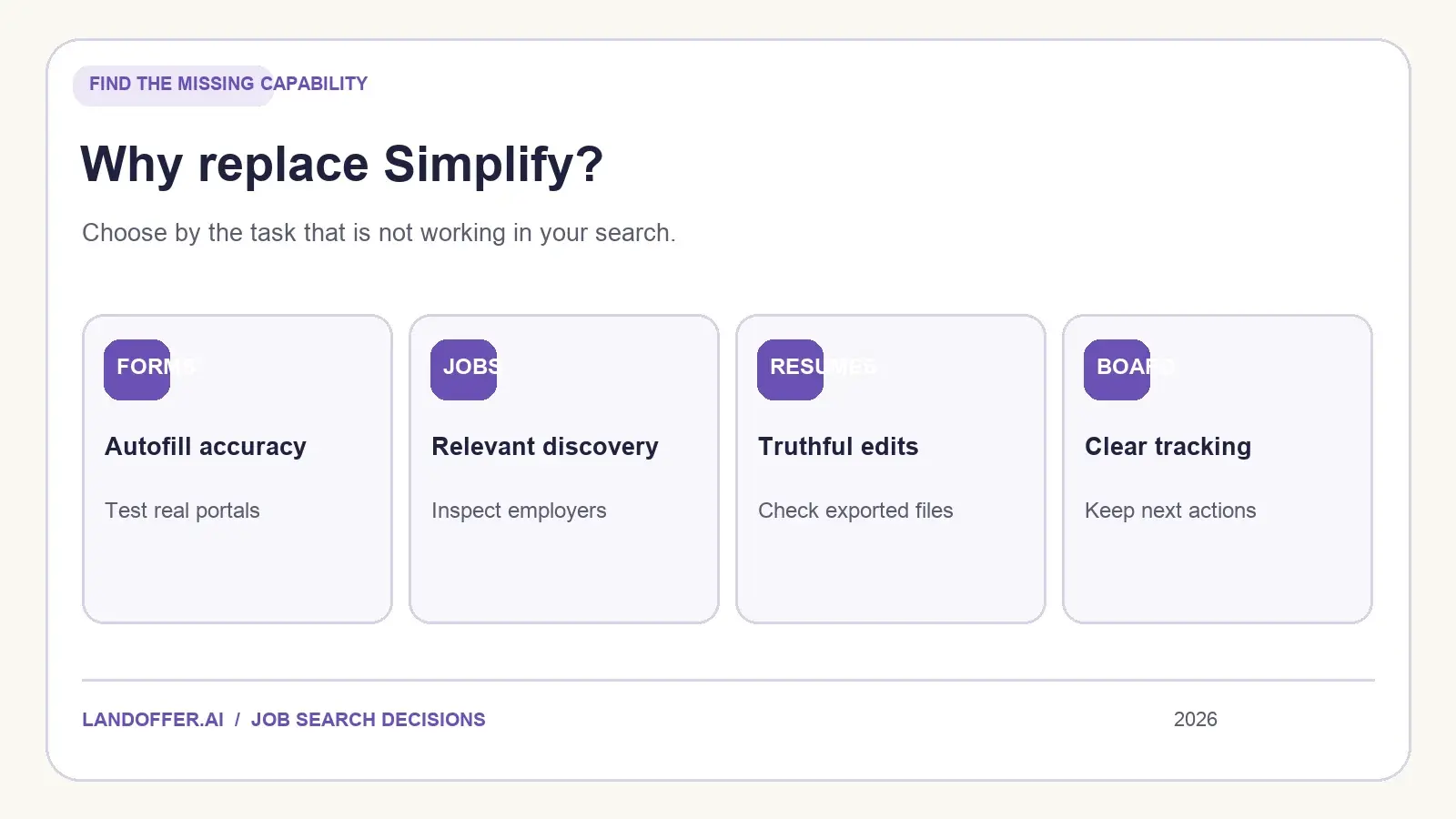
Start with the part of Elpha you want to replace
A platform can be useful for more than one reason, but those reasons need different evidence. A job board can surface a role without showing whether the specific team is supportive. A company rating can flag questions worth asking without proving that a manager, location, or job will fit you. A community can provide connection without promising introductions or interviews. Choose the task before you open another account.
| If you used Elpha for… | Start with… | Use it to… | Verify before acting |
|---|---|---|---|
| Finding technology openings | Tech Ladies; PowerToFly | Browse role families, locations, work modes, and current listings | Posting date, seniority, geography, employer site, and application destination |
| Meeting peers or joining events | Tech Ladies; PowerToFly events | Look for community programming, events, and professional connections | Eligibility, free versus paid access, event capacity, and current schedule |
| Comparing employers through women’s workplace signals | InHerSight | Read ratings and company information around issues such as flexibility and leadership | Whether reviews are recent and relevant to your team, role, and location |
| Checking pay information | Elpha Salary Database, if the official destination works; a second source | Gather context for a compensation conversation | Date, sample size, job level, location, total compensation, and access terms |
These services can work together. For example, find a role through a job board, research the named employer, and then use pay information to prepare questions. Do not treat the act of seeing a listing or rating as an application or a hiring endorsement.
Tech Ladies: a focused role board with a community layer
The US site at hiretechladies.com labels itself a job board for women in tech. Its public page exposes filters for job function, remote-work policy, seniority, location, industry, funding stage, company size, and technology stack. Those facets are useful when a broad search returns too many roles, but a filter is only a way to narrow visible listings. It does not establish that the board includes every opening or that every employer meets a particular standard.
Tech Ladies also describes a free membership with community access, events, a job board, and career resources. Its Pro membership adds features such as a private Slack community, enhanced job-board access, group coaching, and preferential access to some capacity-limited events. Check the current membership page for price, cancellation terms, and what is included before paying; features and terms can change. You do not need to buy a community tier simply to decide whether an individual public listing is relevant.
The site says hiring partners give applications made through Tech Ladies priority review while sourcing. Read that as a statement about participating partners and their process, not a guarantee of a response or interview. Open the listing, confirm its posting date and requirements, and follow the application link to the employer or its recruiting system. If a role is still interesting but the page is old, search the employer’s careers site for the same title or requisition before applying.
There is a naming trap: TechLadies at techladies.co is a separate, Asia-focused community organization. Its public site describes volunteer-led programs and a three-month mentorship; it is not the same US job board as Tech Ladies at hiretechladies.com. If you are looking for a particular country, check the organization’s region, events, and program eligibility before assuming that similarly named services share listings or membership.
PowerToFly: broad job discovery plus events
PowerToFly’s jobs page currently organizes searches across categories that include software engineering, data, design, product management, and DevOps. The page also points candidates toward experience levels, work types, and locations. This can be helpful if you want to compare technical roles with adjacent work or search across regions. The wider category mix also means you should inspect the actual job description rather than assume a result is a software position because it appeared in a tech-related search.
PowerToFly also promotes events, company connections, and recruiting activities. Those can be useful if you prefer a conversation or a live event as part of discovery. Check the event date, participating employers, registration requirement, and whether a session is informational or tied to a specific opening. A virtual job fair is not the same as a scheduled interview, and attending does not replace applying through the employer’s stated process.
The product is evolving. As of our October 14, 2026 review, the homepage also highlighted an AI expert pipeline where people create a profile, undergo review, and may be notified when projects open. That description is distinct from applying to a permanent software-engineering job. Before investing time, identify whether a page describes an employee role, contract project, event, or profile pool. Confirm compensation, hours, classification, and the hiring organization in the specific opportunity rather than inferring them from a platform category.
PowerToFly is therefore a useful discovery route when you want breadth and events. If your strongest need is a smaller, technology-centered peer group, look for an explicit community membership or recurring member program. PowerToFly’s public pages describe events and networking; do not assume that means it runs a persistent peer forum. If your goal is employer research, add a review source and the employer’s own information; a job-search page alone does not answer culture questions.
InHerSight: employer signals alongside job matches
InHerSight combines job discovery and matching with company ratings organized around concerns such as flexibility, salary satisfaction, paid time off, mentorship, family support, and women in leadership. That makes it a natural starting point when you want to research how women rate an employer while looking for openings. Its jobs page describes curated opportunities and matching; the page warns that candidates may be redirected elsewhere to complete an application.
Use the ratings to build questions, not to make a conclusion about a specific team. A score can summarize submitted experiences, but it may not tell you when respondents worked there, which office or group they knew, how the sample compares across companies, or whether policies have changed. Reviews also reflect who chose to contribute. One favorable or unfavorable rating cannot predict your manager or day-to-day experience.
For a software role, check at least three levels of evidence: the role’s written policy, the company-level pattern, and the team-specific answer you can ask in a recruiter conversation. If flexibility matters, for example, compare the review signal with the listing’s location rules and ask how often this team meets in person. If advancement matters, ask how promotion criteria are set for the role and how performance is reviewed. Keep notes about dates and sources so that an older company-wide signal does not outweigh a newer role-specific fact.
Keep the Elpha salary link in its own lane
Elpha’s official closure message says that the main site has shut down while the Salary Database can still be accessed. Historical references identify its address as elpha.com/salary-database. During this review, requests from our research environment to the official homepage and that address failed TLS certificate validation. That result does not establish what every visitor will see, but it means we cannot certify the database’s current availability or contents.
If you try the official destination, use the link from Elpha’s own page or type the known official domain carefully. Stop if your browser displays a certificate warning; do not disable browser protections or enter credentials to get around one. If the page does not load, use another current compensation source and, where possible, the employer’s posted salary range. Treat any older member-submitted entries as a benchmark with a date and sample context, not a promise of current market pay.

Compare like with like. “Software engineer” can span different levels, specialties, locations, and pay structures. Separate base salary from bonus and equity; record currency and time period; and avoid comparing a US senior engineer entry with a new-graduate or international role as if they were interchangeable. If the database asks you to sign in, assess the current terms and privacy notice before sharing personal information. You do not have to contribute your own salary simply to decide whether the site is appropriate for you.
Use a short replacement workflow
- Write down the job you want. Specify title or function, level, location or remote eligibility, and employment type. Start with Tech Ladies if the search is specifically for technology roles; add PowerToFly if its current location and role filters broaden useful options.
- Check that the opening is real and current. Note the date, employer, requisition, and work location. Follow the application destination and verify the same role on the employer’s official careers page when possible. Never rely on a platform label alone for visa eligibility, pay, or remote status.
- Research the employer with a question in mind. Use InHerSight to identify topics that matter to you, then compare those signals with the role and ask the recruiter about the exact team. Save the source and date instead of turning a rating into a universal verdict.
- Replace community deliberately. Choose a free or paid membership only after checking who can join, what events or forums are active, and whether the geographic focus fits. A targeted professional group may help with peer connection; it should not be your only route to openings.
- Keep compensation evidence separate. Try the official Elpha Salary Database only if the page loads securely. Record the date and filters, cross-check with current ranges, and avoid treating a small or old sample as a negotiating guarantee.
A simple decision example: a mid-career backend engineer in the United States who wants a current opening can begin with the Tech Ladies board, broaden the search on PowerToFly, compare employer signals on InHerSight, and then apply on the verified employer page. Someone mainly seeking mentorship in Singapore may find the Asia-focused TechLadies program more relevant than a US hiring board. Someone who only needs a salary comparison should not pay for a community membership without first checking whether the official database and alternative compensation sources meet that need. These are hypothetical workflows, not candidate outcomes.
Check the destination before you commit time or data
Before creating a profile, paying for a tier, or uploading a resume, answer six practical questions:
- Is this the right organization and region? Distinguish hiretechladies.com from techladies.co.
- Does the live listing match your role, level, location, work mode, and employment type?
- Is the application sent to an employer system, a staffing partner, or a profile pool?
- What is free, what requires an account, and what costs money today?
- What does the employer signal actually measure, and how recent is it?
- If you share a resume or compensation data, what will the service retain or display?
If you cannot answer one of these from the public page, pause and check the employer or current terms directly. Keep the original listing URL and application confirmation so you can distinguish browsing, profile registration, and a submitted application.
Elpha’s closure removed one place that combined jobs, community, employer context, and pay information. The practical replacement is a small toolkit with clear boundaries: use a job board to find an opening, a community to connect with peers, an employer-research source to prepare specific questions, and dated compensation evidence to inform a conversation. Start with the task you need today, verify where each link leads, and browse recent LandOffer tech roles when you are ready to compare current openings.