LandOffer
Job search
Educative Review for Interview Prep: Interactive Lessons, Labs, and Mock Credits
Match browser-based lessons, hands-on practice and AI interview allowances to the specific feedback you need.
Educative is worth considering for interview preparation if you learn well by reading explanations and practicing code in a browser. Choose the plan around the work you will actually do: courses, projects, AWS labs and AI interviews have different boundaries. A large course catalog does not make every feature unlimited, and the label “Expert Interview Coach” does not establish an appointment with a person.
We inspected public plans, course contents, FAQs and policies on October 14, 2026. We switched the billing selector and followed one introductory lesson link, which produced a sign-up gate. We did not create an account, run a paid exercise, launch a cloud lab or complete an AI interview. This review assesses documented scope and those public observations, rather than teaching or feedback quality.
LandOffer publishes this review. You can browse recent roles on LandOffer.ai to identify which interview skills matter for your target role before buying a broad preparation subscription.

Decide whether the learning format fits
Educative's general FAQ describes interactive, text-based courses with in-browser coding and interview-focused assessments. Reading and experimenting can suit someone who wants to pause at a particular explanation, inspect a small change and return to an earlier section without navigating a video timeline.
A familiar explanation can feel reassuring while it is open. Close it before deciding whether you can reproduce the reasoning. Recognizing a solution while reading is different from reconstructing it with the explanation closed. If you mainly need someone to challenge how you communicate, more reading may leave the central gap untouched. If you need a slow spoken walkthrough, inspect the available format before assuming interactivity compensates for your preference.
The public Grokking the Coding Interview Patterns page organized material around named patterns, including two pointers, fast and slow pointers, and sliding windows. It offered C#, C++, Go, Java, JavaScript and Python. That is evidence of the advertised course structure and language choices, not proof that every language has identical explanations or that completing the material transfers to unfamiliar problems.
We clicked “Introduction to Two Pointers” from that page. The resulting modal asked us to sign up to learn the lesson. We stopped there. The subscription FAQ advertises free courses, preview lessons and a seven-day trial, but a free preview can still require registration. We did not establish trial eligibility, payment requirements or the content accessible to a particular account.
Separate lessons, projects and cloud labs
A course explanation gives you a concept and guided practice. A project can give you a larger implementation task. A cloud lab adds access to an environment for working with actual cloud services. Those serve different preparation needs; purchasing the broadest tier is useful only when its added work addresses your gap.
The plan comparison put projects in Premium and Premium Plus, and Cloud Labs in Premium Plus. The Cloud Labs page describes AWS practice, provisioned resources and an AI assistant for troubleshooting. Its no-setup and no-additional-fees language describes that lab service. It does not establish an unrestricted AWS account or a production deployment entitlement.
For a candidate whose target role involves AWS operations, environment practice may be directly relevant. For someone struggling to explain why an algorithm remains correct after each step, AWS practice may leave that specific gap unresolved. Read the particular lab's task, available time and completion conditions before making it part of a preparation plan. We did not launch a lab or verify its resource limits.
Displayed library counts differed across the pricing page, FAQ and cloud landing page. We treat those as changing catalog descriptions, rather than a reason to calculate value per item. Match a named lesson, project or lab to a skill you need to demonstrate. A total catalog count cannot answer whether that particular task is included in your tier.
Read the billing amount beside the period
During our native-browser inspection, these were the displayed subscription amounts. The annual and two-year columns are total payments for those periods, not monthly installments. Taxes, checkout eligibility and future renewal totals remain unverified.
| Plan | Billed monthly | Billed annually | Billed every two years |
|---|---|---|---|
| Standard | $59 | $149 | $249 |
| Premium | $99 | $199 | $349 |
| Premium Plus | $129 | $249 | $399 |
The pricing page presented annual and two-year offers with discount messaging. Its monthly equivalents rounded the annual amounts to $13, $17 and $21. Those labels do not offer Premium Plus for a cancelable $21 payment. The actual monthly option displayed $129.
The subscription FAQ explicitly says annual and two-year purchases require the whole amount upfront. A longer period can lower the equivalent monthly cost while increasing the cash committed before you know how consistently you will use it. Choose the period after testing the format, rather than using the largest percentage discount as the decision rule.
Three different credit labels need three different readings
The plan comparison listed three AI mock interviews per month for Premium and seven for Premium Plus. Standard showed no included monthly AI mock allowance. Separately, AI Tutor listed five, fifteen and thirty tutorials per month across the three tiers. Tutorials are not additional interview attempts.
The coding-pattern course also advertised seventeen AI mock interviews within its course description. We did not establish how those course entries interact with subscription metering. Do not add seventeen to a monthly allowance or assume every listed mock can be repeated without consuming an attempt.
The Educative Credit FAQ concerns referral credit that can be applied toward purchases. Its statement that credit does not expire concerns that referral balance. It does not settle the expiry or rollover of AI mock attempts.
We did not verify the AI allowance reset date, rollover, charges for abandoned attempts or any separately purchasable top-up. Paying for a year does not establish that all twelve months' attempts are available on day one. Before scheduling several sessions close together, establish the actual allowance period and what starts the debit.
Nora's completed plan decision
Nora is a fictional backend developer preparing for a concentrated month of interviews. She likes reading technical explanations and wants four coding simulations plus one system-design simulation within the same allowance period. She does not currently need AWS labs and has not established a need for a full year of courses.
Her five-session target creates a specific comparison. This is our arithmetic using observed offers, not an account balance, checkout quote or record of completed vendor sessions.
| Option | Current-period capacity described | Nora's five-session requirement | Displayed payment |
|---|---|---|---|
| Premium monthly | Three AI mocks per month | Two beyond the listed allowance | $99 |
| Premium Plus monthly | Seven AI mocks per month | Fits, with two attempts unallocated | $129 |
| Premium annual | Three AI mocks per month | Same current-period shortfall | $199 upfront |
| Premium Plus annual | Seven AI mocks per month | Fits, with longer course access | $249 upfront |
She provisionally chooses one month of Premium Plus, subject to confirming that her four coding sessions and one system-design session use the listed allowance and that the reset boundary covers her dates. The extra $30 over Premium monthly addresses a concrete capacity gap even though she does not value the labs. Buying Premium annually would not solve the same-period shortfall merely by extending course access.
Annual Plus is $50 more than annual Premium, but $120 more upfront than monthly Plus. Nora has no identified need for that longer access, so the lower annual monthly equivalent does not determine her choice. If she can reduce her AI schedule to three sessions and use peer practice for the remaining two, Premium monthly becomes a plausible alternative. That changes the feedback arrangement and requires peers to be available; it is not five vendor sessions for the lower price.
Her decision remains conditional on learning-format fit. A plan that supplies enough attempts can still be a poor purchase if the feedback fails to help her understand mistakes. We have no completed AI session with which to judge that quality.
A completed learning artifact beyond the guided answer
Nora also prepares an original practice note to test whether she understands what a sliding window counts. This is our fictional exercise, independent of Educative's lessons, questions and solutions. It is not an output generated by its AI coach.
A sensor emits five readings:
| Minute | Reading |
|---|---|
| 0 | 4 |
| 1 | 2 |
| 10 | 7 |
| 11 | 1 |
| 12 | 5 |
Her first task is to total the latest three readings after each new reading, once three exist. The completed sums are 13 at minute 10, 10 at minute 11 and 13 at minute 12. At minute 11, for example, the retained readings are 2, 7 and 1. She removes 4 and adds 1 to the previous sum of 13.
Now she changes the requirement to readings in the trailing three-minute interval, defined as timestamps greater than the current minute minus three and no later than the current minute. At minute 10, the interval is greater than minute 7 through minute 10, so only the reading 7 qualifies. The count-based window still includes the much older values 4 and 2. At minute 11 the total is 8, and at minute 12 it is 13. The old values at minutes 0 and 1 cannot remain merely because fewer recent observations have arrived.
The two rules happen to agree at minute 12 and disagree earlier. Checking only the final answer would miss the distinction. Nora's note records the unit of the window, the inclusion boundary and the long gap in arrivals. Those details explain why a familiar update rule may solve the wrong requirement.
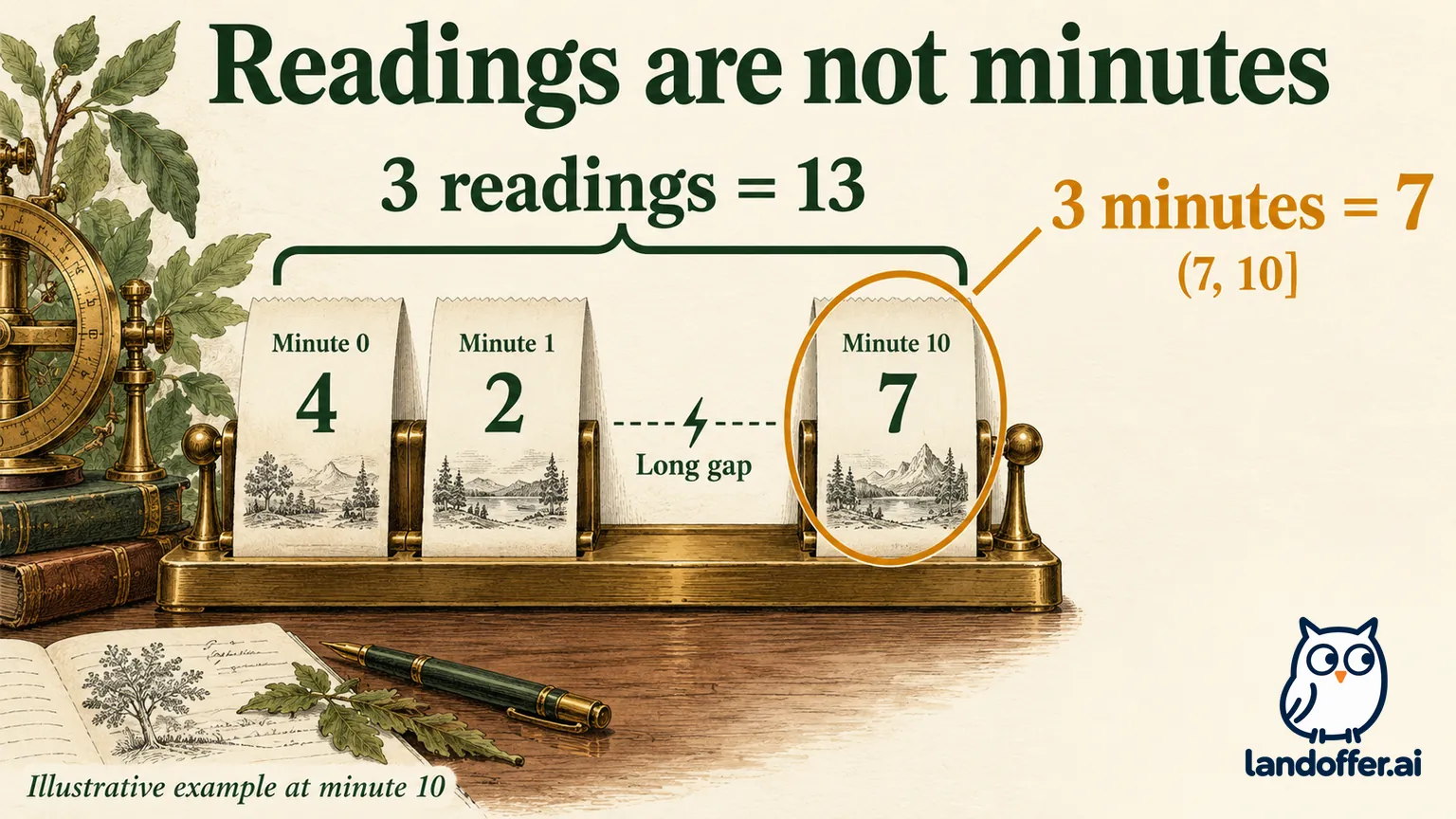
She can use this artifact after reading an explanation: close the lesson, restate the requirement and derive both traces independently. The result demonstrates a narrow distinction in this invented example. It does not establish readiness for an entire interview loop, successful execution in Educative or the quality of its automated scoring.
Know what the feedback and account retain
The AI mock page describes coding and system-design practice, an editor or diagramming workspace, and immediate feedback. It advertises free interview entries. We inspected the public listing, without starting a session or testing whether its criticism was accurate.
The pricing description identifies Expert Interview Coach as AI coaching. Do not infer a human review, scheduled appointment or independent expert assessment from the name. If you need a person to question an assumption like Nora's time-window definition, compare that task with the feedback actually delivered before valuing the feature.
The privacy policy, updated February 15, 2024, describes tracking course progress and says organizational accounts can expose names, progress and activity to the organization. Check existing employer or university access before buying, including what its administrator can see. A browser workspace should not be assumed to be an offline or private local environment. We did not verify AI-session-specific retention, training use or recording controls.
Renewal and cancellation deserve a separate check
The terms, effective December 11, 2025, describe automatic renewal and require cancellation at least 24 hours before renewal to avoid future charges. Their refund clause permits an initial-purchase request within a reasonable time, at Educative's discretion. It is not a guaranteed refund window.
The subscription FAQ says stopping auto-renewal preserves access through the paid period without a refund. The terms also contain broader wording about immediate revocation of content rights upon cancellation. Obtain clarification about the action and access consequence if that difference affects your decision. After expiry, the FAQ distinguishes retaining account history from retaining paid-course access.
Choose Educative when its reading-and-practice format fits and the selected tier supplies the work you need. Keep an existing course or peer arrangement when it already addresses that gap. Before paying, write down your required practice type, allowance period and total payment. Inspect the available preview path, including its registration boundary, and try an independent trace like Nora's. Use LandOffer.ai to connect those skills to roles you intend to pursue.
Sources and Further Reading
- Educative Unlimited: current plan comparison and billing selector
- General FAQ: learning format and account features
- Subscription FAQ: previews, trial, billing periods and cancellation
- Grokking the Coding Interview Patterns: public course contents and language choices
- Cloud Labs: AWS environment descriptions
- AI mock interviews: public types and feedback descriptions
- Educative Credit FAQ: referral purchase credit
- Service Terms of Use: renewal, cancellation and discretionary refunds
- Privacy policy: progress tracking and organizational access