LandOffer
Job search
EDA Software Engineering Jobs: When Chip-Industry Roles Are Software Development Rather Than Circuit Design
Separate EDA tool development from chip design using current duties, degree requirements and concrete software work evidence.
An EDA software engineering job can involve building the programs that chip designers use: device databases, analysis engines, optimization algorithms or design-tool interfaces. To distinguish it from circuit design, identify the thing the employee must deliver. A tested software component points toward tool development; an implemented chip block with timing and design constraints points toward design work. Programming languages alone cannot settle the distinction.
This article reviews official public descriptions checked on October 14, 2026, and uses explicitly fictional candidate cases plus a small original software exercise. We did not apply for these roles or test commercial EDA products. LandOffer publishes this guide; you can browse recent roles on LandOffer.ai, then compare each employer's full description with work you can explain.
The practical question is whether your experience matches the software component or design result the team owns. Writing C++ for a database, writing Python to coordinate design runs and writing a hardware description can all be technical work. They produce different results and demand different knowledge. Start there before interpreting the company name, a seniority label or a list of familiar tools.

Identify what the team builds
Synopsys's EDA definition describes tools that support electronic-system design, simulation, verification and preparation for manufacturing. The field spans multiple stages and technical problems. A job mentioning EDA could develop one of those tools, operate a design flow, support its users or work on a neighboring product.
Read the main responsibilities and complete this sentence: “This employee changes ___ so that ___ can do ___.” For a software role, the first blank may be a model, library, API or analysis engine. For a physical-design role, it may be a block implementation or a flow that brings a design toward signoff. If the description combines both, preserve that combination instead of forcing a clean division.
Next identify who consumes the result. Another software component consuming an API creates different expectations from a design team consuming a timing report. Both results can require correctness, debugging and performance work. That distinction helps you choose an example: checking an API contract calls for different evidence from checking a design against timing constraints.
Three official postings with different outputs
The following examples were accessible on the employers' sites at the review date. They illustrate duties rather than a complete market survey, and a readable description does not guarantee a vacancy remains available.
| Official role | Main output in the description | Reading for a software candidate |
|---|---|---|
| Altera EDA Software Engineer, R02982, San Jose | FPGA device models and database APIs in Quartus, developed with C++ and Python | The software representation and interface are central deliverables. |
| Synopsys Senior Staff Physical Design Engineer, 18905, Sunnyvale | Timing closure, signoff readiness and implementation work; Tcl, Python and Perl flow automation | Scripting supports responsibility for a chip implementation. It does not make this a general software vacancy. |
| Cadence Principal Software Engineer, R54107, Irvine | Nonlinear finite element analysis software for MSC Nastran and Marc | Software development at the same vendor can concern mechanics simulation rather than IC or FPGA design tools. |
Altera's device APIs support analysis and implementation algorithms. Synopsys's role uses tools such as ICC2, Fusion Compiler and PrimeTime to work on design outcomes. Cadence's example requires numerical mechanics knowledge. Each offers substantive engineering work, but their objects of responsibility differ.
A search result can conceal this distinction. During research, an indexed Cadence ECAD software posting led to a page that no longer existed. We excluded its cached qualifications. A current company search produced the separate finite element role above. Inspect the actual description before treating a promising title as a current, relevant opening.
Read languages in the context of their purpose
Read each language beside the task it serves. What is the code expected to accomplish? C++ might implement an analysis component, manage a large design representation or expose an interface. Python might test that component, prepare data or orchestrate existing tools. A description naming either language still needs a concrete software duty before you can infer the work.
Tcl beside implementation-tool experience deserves the same treatment. Ask whether the employee develops a reusable tool feature, automates a design methodology or runs and improves a flow for particular designs. Those responsibilities can overlap. The full posting and the team's explanation matter more than a single keyword.
Hardware description language experience is another contextual signal. Familiarity can help a tool developer understand inputs, while a design role may require creating the logic itself. Do not count “has used Verilog” as proof of either professional tool development or ownership of an ASIC block. Explain which task you performed, what you changed and how you checked it.
The same caution applies to “verification.” Testing a software API, verifying a hardware design and supporting a verification product are distinct activities. Rather than guessing from that word, ask what is under test and what a passing result establishes. This turns an ambiguous skill list into a specific evidence question.
Keep degree and domain requirements separate
Altera's posting lists CS, computer engineering or related degree routes: bachelor's plus six years, master's plus four, or PhD plus eight. That last condition is unusually worded; it is what the inspected page says, so clarify it rather than substituting an assumed alternative. EDA development, graph algorithms and HDL knowledge appear as ways to stand out; FPGA architecture and tools add further differentiation.
Synopsys's physical-design example asks for an EE, computer engineering or related bachelor's/master's degree and eight-plus years of ASIC implementation and timing-closure experience, including advanced-node work. Those years concern that design activity. Cadence's neighboring numerical-software role instead names a PhD in mechanical, civil, aerospace or related mechanics fields. Neither condition establishes an education rule for the whole EDA industry.
Create two separate notes: the explicit qualification and the domain gap you would need to discuss. “I have the stated degree” does not answer whether you understand the system the tool represents. “I know the domain” does not waive a minimum degree or experience clause. A preferred skill can strengthen an application without replacing a different required condition.
Numerical background needs a task attached to it as well. A graph representation problem is different from a nonlinear mechanics solver. Ask which mathematical work the role owns, which methods the team uses and whether you must develop the method or integrate an existing component. Describe your actual coursework or production work precisely; avoid turning a broad “algorithms” claim into expertise in every analysis domain.
Altera also states that applicants must be eligible for required US export authorizations. That sentence does not tell us a candidate's legal eligibility or the employer's sponsorship policy. Resolve those conditions through the employer's stated process. Keep them separate from the technical similarity of your experience.
A completed software example: repair a device-model reference
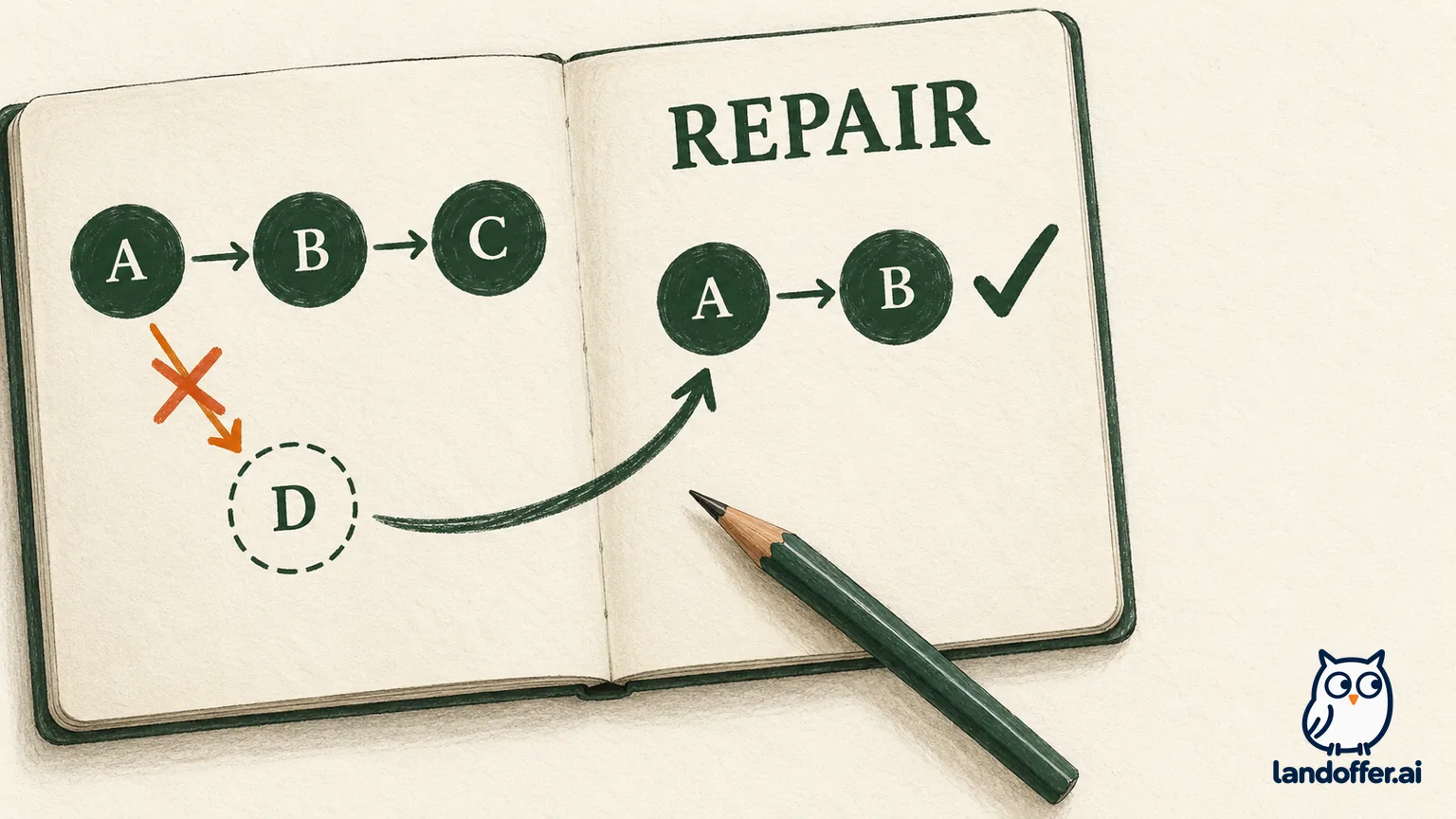
Here is an original teaching exercise we ran locally. It uses three symbolic resources, A, B and C, and directed connections A→B and B→C. It is a tiny Python representation and API test, not an FPGA architecture, electrical simulation, synthesis tool or employer interview problem.
The interface answers a narrow question: “Which resources are directly reachable from this resource?” Its contract returns sorted direct neighbors. With the starting model, querying A returns B; querying C returns an empty list. C is a known resource with no outgoing connection, so an empty result is valid.
Now introduce a broken record, A→D, while the resource table still contains only A, B and C. Returning D would expose an identifier the model cannot resolve. Our validation checks both endpoints of every connection against the resource set. It rejects A→D because D is absent, before the neighbor query returns a result. The observed error is “edge references unknown resource.”
We correct the connection to A→B and rerun the query. It returns B again. The completed result is below; the error case passes because rejection was the expected behavior.
| Fixture | Input and query | Observed result |
|---|---|---|
| Directed adjacency | A→B, B→C; query A | B |
| Known terminal resource | Same model; query C | Empty list |
| Missing endpoint | A→D, with D absent; query A | Validation error |
| Repaired endpoint | Replace A→D with A→B; query A | B |
All four small fixtures passed in the local exercise. That result concerns only this interface contract. It says nothing about electrical connectivity, routing quality, timing accuracy, FPGA configuration or performance on industrial designs. The example also uses Python, so it cannot demonstrate C++ memory management or production C++ experience.
The useful engineering story has an input, an invariant, a failure and a checked repair. “The database contains connections” describes a feature. “The API rejected a connection to an absent resource, and the repaired fixture returned the expected neighbor” explains behavior you can inspect.
Translate your evidence without claiming chip ownership
A comparable real software contribution might involve schema validation, an interface change, a graph traversal, regression testing or profiling. Explain the actual input, your responsibility and the check used to evaluate the change. If someone else designed the domain model or approved the release, retain that boundary. Those facts make your account easier to assess.
Suppose you maintained a graph-based inventory service. You can explain how you represented relationships, prevented invalid references and tested changes. The technical reasoning may be relevant to a representation-heavy role, but you still need to learn what the target system's resources mean. Do not rename inventory records as FPGA resources and imply you worked on programmable devices.
Similarly, experience writing design-flow scripts can demonstrate automation and debugging. Whether it demonstrates tool-product engineering depends on the software you owned: its users, interface, testing and maintenance. Discuss that scope directly. A script used on one project and a maintained library used by several teams can provide different evidence even when they use the same language.
For an interview example, choose material you are allowed to discuss. A synthetic exercise can show reasoning while you explain the limits of your professional experience. Keep employer design files and internal tool data out of a portfolio unless their use is authorized. The example should preserve a meaningful technical question rather than merely replacing every important detail with a vague noun.
Two candidates reach different shortlists
Emery and Rowan are fictional candidates with assumed records. Their decisions illustrate reading fit, not employer screening or hiring outcomes.
Emery has an MS in computer science and four years developing production C++ graph services and APIs. Emery has not worked on FPGA architecture. The Altera description is the closer software direction: the stated education route and component type give Emery concrete material to compare, with a domain gap to discuss. Emery would lead with a real representation/API contribution and ask how much device knowledge is needed on arrival.
Rowan has eight years of ASIC implementation and timing-closure work, including Tcl flow automation. The Synopsys role is the closer functional direction. Rowan would discuss implementation decisions and checks against design constraints. Calling that background “EDA software development” without explaining the actual software ownership would obscure the strongest evidence.
The closer functional match still leaves employer conditions to review. Location, the full qualifications, current opening status and other employer conditions still apply. In this fictional exercise, the result is a shortlist based on their assumed records: Emery starts with tool-software responsibilities; Rowan starts with physical-design responsibilities. They do not need to claim the other's experience to pursue technically demanding work.
Choose a posting before choosing a course
Open one current employer description and save its title, requisition and location for your own review. Identify the component or design result, then mark the required education and experience separately from preferred domain knowledge. If a condition is unclear, retain the wording and ask a targeted question.
Useful questions include which component the employee will change, whether the team develops tool internals or primarily enables users, and what domain knowledge the first project requires. Ask what correctness and performance checks the team uses. For an ambiguous degree route, request clarification of that exact condition rather than assuming a course or certificate supplies equivalence.
Before applying, select one truthful work example and name the responsibility it demonstrates, such as API validation or design-flow automation. Learning can help close a specific knowledge gap; it cannot retroactively create years of project experience. Browse recent roles on LandOffer.ai and use the employer's full description to choose that next example before committing to a training plan or application.
Sources and Further Reading
- Synopsys: What is Electronic Design Automation? — scope and design-tool categories.
- Altera: EDA Software Engineer, R02982 — device-model/API duties and qualifications.
- Synopsys: Senior Staff Physical Design Engineer, 18905 — implementation, timing and design-flow responsibilities.
- Cadence: Principal Software Engineer, R54107 — adjacent finite element software and numerical domain requirements.