LandOffer
Career Growth
How to Write a Software Engineer Self-Evaluation with Verifiable Impact
Turn review-period engineering work into a clear self-evaluation with fair attribution, checkable results, a documented shortfall, and a practical development request.
Write a software engineer self-evaluation by matching your review-period goals to work someone can verify: the change you made, the evidence for its result, the people who contributed, and any limits. Select a few substantial examples, explain a shortfall honestly, and ask for development support you can use in your current role. A long list of tickets gives your manager much less to evaluate.
LandOffer.ai publishes this guide for engineers preparing a review at their current employer. The completed examples below are fictional teaching cases. They demonstrate wording and evidence decisions; their measurements are invented inputs, and they establish no rating, promotion, or compensation outcome.

Establish the review period and the expectations
Before collecting achievements, open your employer's current form and instructions. Write down the period being evaluated, the submission deadline, the fields you must complete, and the version of the goals or role expectations that applied. If there is a word limit, budget space for the most important examples before drafting.
An annual review can contain several kinds of work: a project planned in January, maintenance assigned in April, and a different priority agreed in August. Record when those expectations changed. An unfinished original goal and an agreed replacement need different explanations. Ask your manager about an undocumented change while there is time to resolve it.
MIT's performance-review guidance illustrates the preparation involved: reviewing earlier discussions and records, comparing performance with expectations, and using observable examples. These are employer-specific resources that inform the method here. Your own organization's instructions determine its process and rating definitions.
Evaluate your performance in the role you held during this period. A promotion request makes a separate argument about the next level. If both documents are due together, keep their purposes clear: one assesses the year's work; the other maps evidence to additional expectations. Strong delivery in your present role does not by itself establish readiness for every broader responsibility.
Build a small evidence set before writing prose
Gather records inside the systems your employer permits you to use. Useful starting points include accepted designs, merged changes, release notes, incident follow-ups, agreed goals, and feedback connected to a specific collaboration. Keep links or record identifiers in your working notes so you and your manager can check a claim without searching an entire chat history.
For each candidate example, answer five questions: What was expected? What did I personally do? What changed? What record supports that statement? What remains uncertain? Reject an example if you cannot explain your contribution beyond being present on the team. Narrow an example when the result is incomplete or the measurement covers only part of the system.
Choose examples for relevance and coverage. Three descriptions of similar feature delivery may leave out reliability or collaboration that mattered to your role. Including every review comment can also bury a major architectural decision. Select examples across the responsibilities being assessed: delivery, operational handoff, and the proposal-writing goal in the case below.
Protect the records as you collect them. An internal review still has an audience and access rules. Link to an approved incident summary rather than copying customer identifiers into a review field. Do not export private tickets to a personal account or paste them into an unapproved AI service to generate the draft.
Worked example: turn activity into a defensible contribution
The following fictional case concerns Priya, a Software Engineer II on a billing team. Her review covers January through December. Her agreed delivery goal was to migrate invoice notifications to a retryable queue. The team also needed a documented recovery procedure and a staged rollout.
Priya's first note says: “Led the migration and eliminated notification failures.” It combines an unclear leadership claim with an absolute result. This fictional exercise supplies a narrower record: Priya implemented idempotency handling and the rollout check, another engineer designed the queue worker, and the SRE partner configured alerts. The product lead approved rollout timing.
| Working record | What it supports in the self-evaluation |
|---|---|
| Accepted design revision D17 | Priya proposed the deduplication boundary and documented its trade-off |
| Merged changes C42 and C51 | She implemented the idempotency key and rollout check |
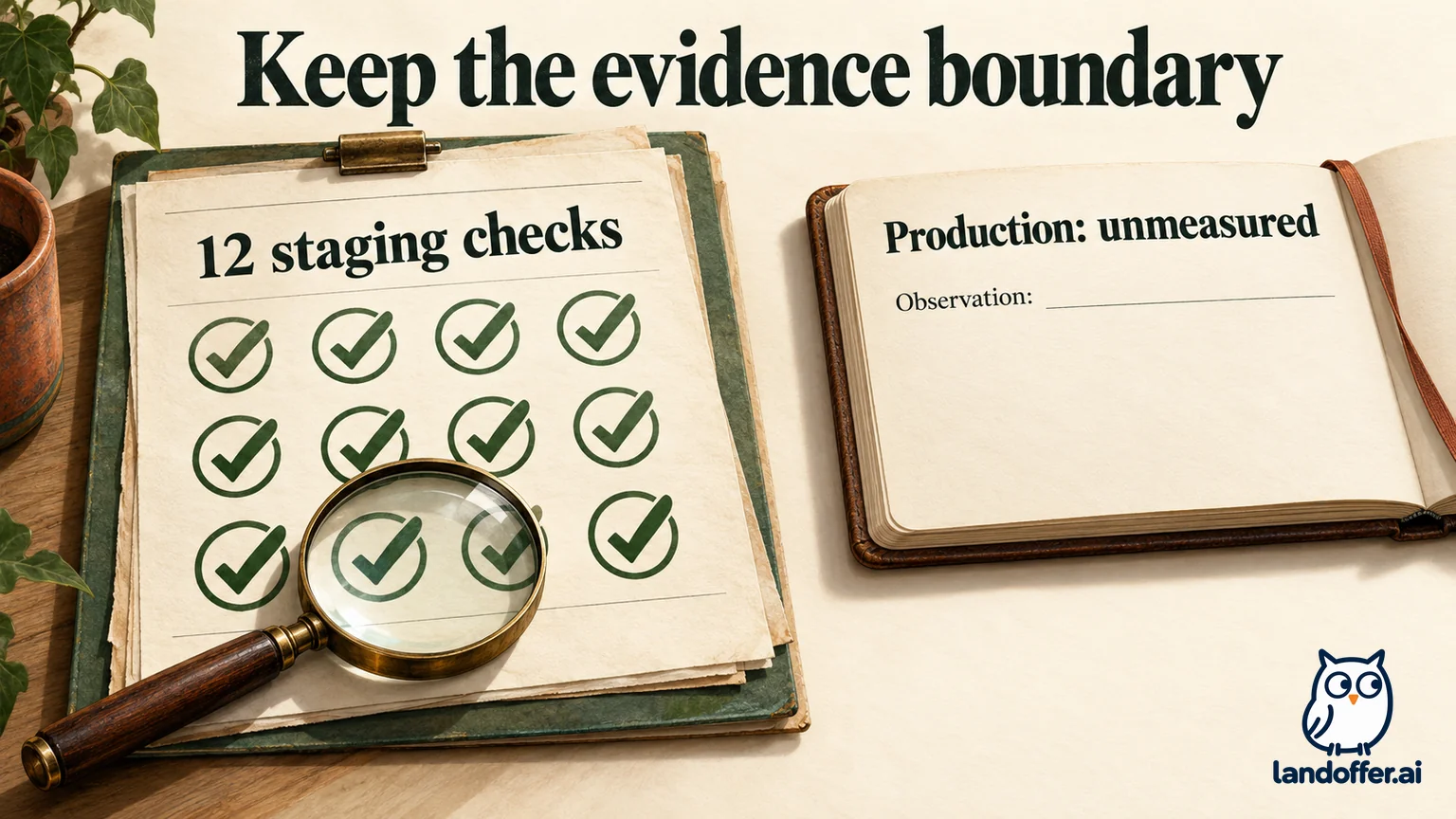
| Staging report T08 | All 12 specified duplicate-delivery cases passed in that run |
| Release note R06 | The staged rollout reached the agreed production cohort |
| Follow-up F03 | Production duplicate-notification frequency was not yet measured |
The completed rewrite is: “Implemented the idempotency key and rollout check for the notification migration, including 12 specified duplicate-delivery cases that passed in the recorded staging run. The queue-worker design and alert configuration were delivered by engineering and SRE partners. The release reached the agreed cohort; production duplicate frequency remains unmeasured.”
This version identifies the work, its verification, collaborators, and the unresolved outcome. It leaves out “eliminated” because passing a defined staging set does not establish that production failures cannot occur. It also leaves out a leadership label until the record identifies the decisions or coordination Priya actually owned.
The distinction matters when no business metric is available. You can report an accepted design or a released capability without inventing revenue, hours saved, or a reliability percentage. Explain why the contribution mattered to the goal, then stop at the result the evidence supports. An implementation result with a clear boundary gives your manager something specific to discuss, even when you cannot supply a business metric.
Write a complete self-evaluation around the evidence
The following is an original, completed example using the same fictional engineer. Its section labels are editorial choices, not a reproduction of a company's form. Priya's employer would determine the actual required fields. References such as D17 and R06 are teaching aliases, not functioning links to private systems.
Role and period. “Software Engineer II, billing platform, January–December. My main commitments were the notification migration, operational handoff, and a development goal to make technical proposals easier for partner teams to review.”
Delivery and result. “I implemented the notification idempotency key and the staged-rollout check. The accepted D17 revision records my proposed deduplication boundary and the limitation that it does not resolve every upstream delivery failure. Changes C42 and C51 contain the implementation. T08 records 12 passing duplicate-delivery scenarios in staging. R06 confirms release to the agreed cohort. I completed my assigned implementation scope; I cannot yet quantify the production change in duplicate frequency.”
Collaboration and operational ownership. “I drafted the recovery procedure and revised its failure-handling section after the SRE review. During the handoff walkthrough, an on-call teammate could not identify which condition required escalation. I added the escalation condition and the responsible team to the procedure before acceptance. The SRE partner owned alert thresholds, and the other engineer owned the queue-worker design. My contribution was making the recovery decision and rollout check explicit.”
Shortfall and adjustment. “The recovery draft was due September 10 and became reviewable September 17. I underestimated the time required to resolve the escalation owner. I raised the dependency on September 8, which left insufficient time for the original deadline. The implementation release stayed within its agreed window, but the late draft compressed the handoff review. For the next operational change, I will identify the escalation owner during design review and flag an unresolved owner before committing a handoff date.”
Development and support. “My proposal-writing goal progressed through two partner reviews where I supplied the decision, alternatives, and open questions before the meeting. I still need practice identifying operational dependencies early. I request a review of my next design's recovery section with the on-call lead before implementation starts. I propose checking progress at the first design milestone, then revisiting whether this changed the review discussion.”
This example includes accomplishment, behavior, a missed commitment, and a specific request. It does not claim that the late document was harmless because the release shipped. It also avoids turning a teammate's successful walkthrough into a universal measure of documentation quality. The reader can see what was accepted and what Priya intends to improve.
Handle ratings, missing metrics, and less visible work
If the form asks for a self-rating, read the actual scale before choosing one. Connect each proposed rating to its stated criteria and your examples. Do not infer that a particular ticket count means “exceeds expectations.” If a definition is unclear, ask how the criterion applies to your role and period.
MIT's review-forms page discusses narrative and numerical approaches and notes the value of comments alongside ratings. That distinction is useful here: the number does not replace the explanation. You do not need to copy MIT's scale, form, or departmental procedures into your employer's review.
For maintenance, code review, mentoring, and incident work, describe the specific decision or artifact. “Supported the team” leaves ownership unclear. “Documented the rollback condition and reviewed it with the on-call owner” identifies something assessable. A colleague's thanks can support a collaboration example, but it cannot independently prove reduced downtime or increased output.
When a project was cancelled, state its disposition and what you delivered before cancellation. Separate a reusable investigation from a shipped customer result. When a baseline is missing, report the observed state and identify the missing comparison. You can ask whether measurement should become a next-period goal without claiming a reduction that was never established.
Make the development request practical
Choose a development need that follows from an example rather than adding a generic promise to improve communication. Name the behavior you want to change, a work opportunity where you can practice it, the support needed, and a point for reviewing progress. Keep dependencies visible so the request can be discussed realistically.
MIT's goal-setting guidance distinguishes present-role performance goals from development goals and recommends revisiting them with the manager. Applying that distinction to Priya's case, shipping the next notification change is a delivery commitment; learning to surface operational dependencies earlier is the development need. They can share a project while requiring different evidence.
Avoid promising an outcome you do not control, such as securing another team's approval by a fixed date. Commit to preparing the recovery section, requesting review early, and escalating an unresolved decision at an agreed checkpoint. Discuss whether the manager or partner team can provide the necessary access and time.
Submit a review someone can discuss
Before submitting, read each claim beside its supporting record. Check dates, the meaning of any number, the scope of your responsibility, and whether a pending result accidentally became a completed one. Keep enough context to make a limitation understandable, then remove repeated project history. Follow the form's instructions for links and attachments.
Save the submitted version in an approved location. Bring two or three questions to the review conversation: which examples best meet expectations, where your manager sees a gap, and what support is available for the development request. Record agreed follow-up actions after the discussion. The written self-evaluation prepares that conversation; it cannot determine the decision in advance.
Start now by rewriting one activity note using Priya's example: your action, a checkable result, shared ownership, and the remaining limit. Check that the record is appropriate for the review audience, then use the revised statement in the relevant field of your employer's form. You can return to this LandOffer.ai guide when preparing the next example.