LandOffer
Job search
How to Show Engineering Work When Your Code Is Private
Build credible engineering evidence without sharing confidential source code: use approved summaries, sanitized diagrams, synthetic examples, and a clear account of your own contribution.
A private repository does not have to leave a hole in your job application. You can give a reviewer useful evidence through an approved description of the work, a carefully sanitized diagram, or a separate demonstration built with fictional data. The key is to say exactly what each artifact proves. A synthetic project can show how you work today; it cannot prove that your employer's production system used the same design or achieved the same result.
Start with the role's requirements, then choose evidence you are allowed to share. A portfolio link is useful only when it opens for the reviewer and the content is safe to disclose. GitHub's repository documentation explains that public repositories are accessible to anyone, while private repositories require access. An anonymized contribution graph does not grant that access. LandOffer publishes this guide; you can browse recent roles on LandOffer.ai and use an employer's actual requirements to decide what evidence is relevant.

Give the reviewer evidence without opening the repository
A hiring reviewer is usually trying to understand a few practical things: what problem you worked on, what responsibility you owned, how you made decisions, and how you checked the result. A public source link is one possible kind of evidence, but it is not the only one. You can often explain the shape of your work without copying proprietary implementation details.
Use three labels when preparing a portfolio item:
- Approved account of actual work: A description of a real project whose facts and level of detail have been cleared for external sharing. It can describe your role, constraints, decisions, and verification in accurate terms.
- Sanitized artifact: A diagram, short case study, or excerpt derived from the actual work after an authorized review. Sanitizing is more than removing a company name; details can remain identifying in combination.
- Independent demonstration: A new sample you built separately, with fictional inputs and no copied code, data, design, or configuration. It demonstrates the sample itself, not what the private production system contained.
Keep those categories distinct in the page and in conversation. If a case study describes actual work and includes a demo you built later, label each section. A reviewer should not have to guess which architecture, scale, metrics, or outcome belongs to the real system and which belongs only to the demonstration.
A useful private-work summary can still be concrete. Instead of saying, “Worked on a high-scale event system,” explain the approved problem, your responsibility, decision, and verification. For example: “I owned retry behavior for an internal event pipeline and reviewed duplicate handling with the team. I can discuss the design constraints, but cannot share the repository or internal traffic figures.” This fictional wording gives scope without naming a customer or inventing a result.
If your employer or client has not approved a particular detail, do not decide for them that it is harmless. Review the relevant agreement and internal policy, and ask the appropriate owner for written permission when needed. This guide cannot interpret an NDA, assign ownership of work product, or determine what a specific company permits. If you cannot get a timely answer, use a different artifact rather than treating a blurred screenshot or renamed system as automatically safe.
Build an evidence map before writing a case study
An evidence map prevents a polished portfolio page from making claims it cannot support. Start with the job requirement and identify the artifact that can demonstrate it. Add the source of permission and a clear boundary for what stays private. Do not include an item just because it looks impressive; it needs a legitimate path to an external reviewer.
Completed fictional evidence map
The following example is invented for illustration. “Northstar” and its pipeline are fictional; this is not a candidate report or a real company case. A fictional engineer is applying for backend roles and worked on a private internal event pipeline. The engineer's employer approved a high-level description and a newly authored, generic diagram, but did not approve screenshots, customer names, production configuration, source code, or throughput figures.
| Job requirement | Candidate's evidence | What it supports | Permission and boundary |
|---|---|---|---|
| Design reliable service behavior | A one-page, newly drawn diagram with generic services and a retry boundary | The candidate can explain the approved design concept and trade-off | The employer approved this abstraction; no real service names, thresholds, or network topology appear |
| Debug failures | A written walkthrough of a fictional duplicate event in a separate demo | The candidate can reason through the demo's failure and recovery behavior | Label it as an independent demonstration; it does not establish that the private system behaved this way |
| Collaborate across teams | A concise description of a design review and the candidate's own decision | The candidate can explain their contribution and a documented decision process | Confirm the summary is approved; do not name colleagues or reproduce internal discussion |
| Improve an operational outcome | No public metric; a safe qualitative description only if approved | Nothing about a numeric or measured production result | Exclude internal dashboards, customer volume, incident details, and unapproved outcome claims |
The engineer can publish the approved diagram and summary, then link the demo under “Independent demonstration.” If asked whether it is the production system, answer directly: it is a separate example; the production code remains private.
In interviews, discuss the real problem at the approved level and use the demo when asked to show code. If a question reaches confidential details, state the boundary. Do not improvise a metric or architecture detail.
Make an independent demo prove only what it contains
A demo can be valuable when it gives the reviewer something to inspect: readable code, a test, a small run command, and a sample output. It should stand on its own. Build it from a blank repository or a permitted template using fictional data and generic names. Avoid copying private snippets, schemas, query shapes, error messages, UI, or configuration and then changing the labels. Similarity can remain even after identifiers are removed.
Completed fictional case-study page
Here is a second fictional asset, written as a completed one-page portfolio outline for the Northstar example:
Actual work — approved summary. “I worked on retry behavior for an internal event pipeline. My contribution was to make transient-failure handling easier for the team to reason about and review. I can discuss the constraints and my design decisions at a high level. The source, production diagram, customer data, and operational metrics are confidential.”
Independent demonstration — separate repository. “I built a small queue consumer with generated sample events to demonstrate retry, idempotency, and test design. The repository contains a synthetic schema, a short README, tests for repeat delivery, and a diagram of this demo only. It is not copied from, connected to, or a reconstruction of the employer's system.”
What the reviewer can inspect. “Run the included test command. The tests show what the demo does when an event is delivered twice and when a handler returns a retryable error. The README states the environment and limitations.”
What this does not claim. “This sample does not prove the production system used the same architecture, had a particular scale, or produced a measured business result.”
This asset is complete because it contains the actual labels, a permission boundary, a demo description, a reviewer action, and explicit limits. It is not a placeholder that says “add a project here.” A candidate can replace the fictional facts with their own only after confirming the details are accurate and approved. If the actual work summary cannot be shared, remove it; the demo can still stand as independent work without borrowing the employer's story.
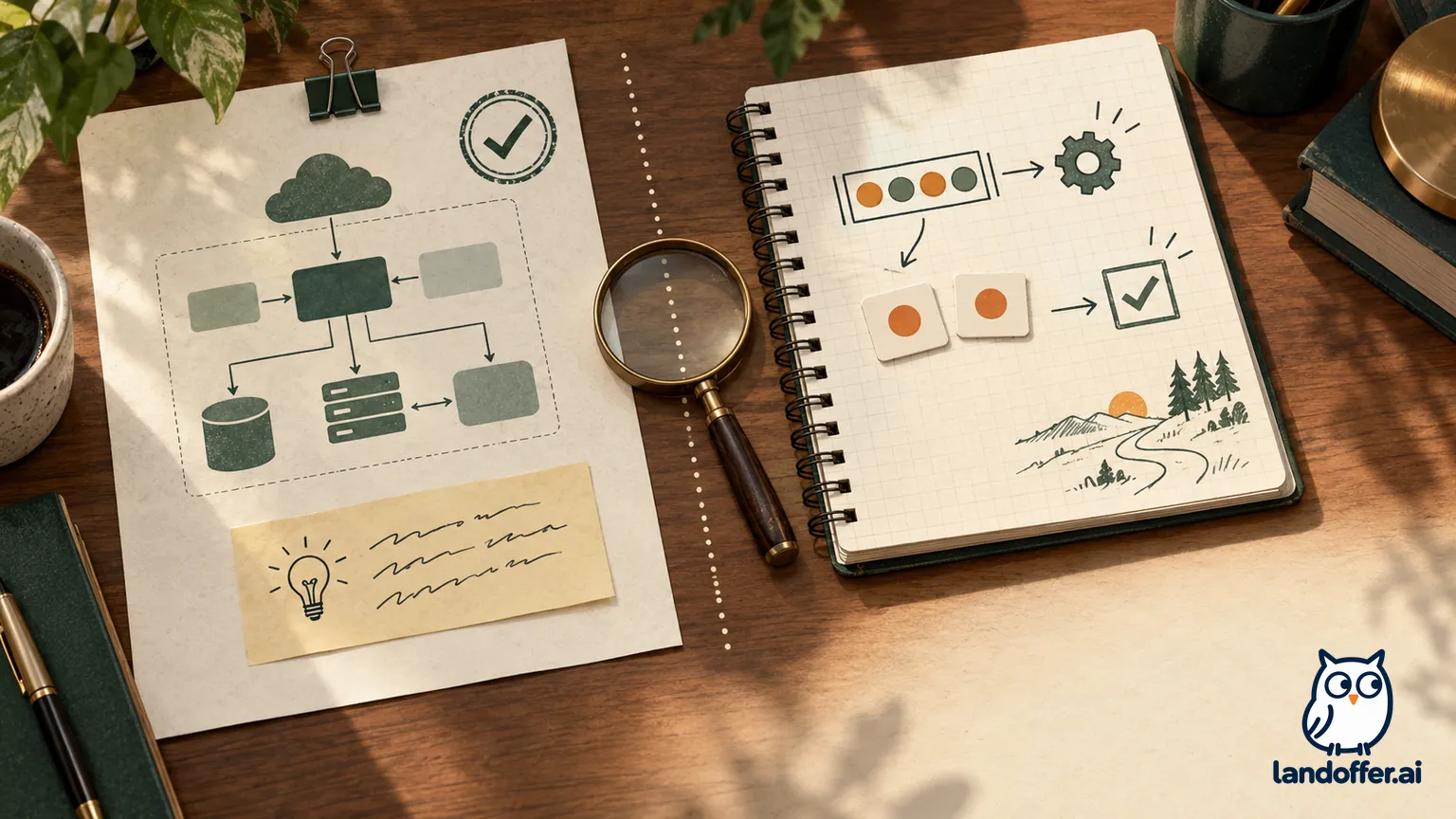
Keep a demo small enough to review quickly. One meaningful test can communicate more than a broad application with unclear setup. Explain the behavior, limitations, and reproduction steps. Label generated data and do not call a local prototype production-ready.
Review every surface, not just the visible screenshot
A screenshot can expose more than its visible center. Before sharing files, check text, hidden spreadsheet tabs, speaker notes, document comments, PDF properties, image metadata, browser chrome, and repository history. Search code and sample data for tokens, internal hostnames, customer identifiers, email addresses, account IDs, or copied configuration. A blur can fail if text remains selectable, appears in a thumbnail, or is recoverable from an earlier version. Rebuild a clean diagram or sample with fictional content when practical.
Repository history deserves special care. Deleting a credential from the latest commit does not make it safe if an earlier commit remains reachable. GitHub's sensitive-data removal guidance says to revoke or rotate an exposed secret first and explains that history cleanup requires coordination; copies, forks, or cached references may remain. If you discover that a credential or confidential material has already been pushed, stop sharing the affected repository, contact the credential owner or security team, and follow the platform's current remediation process. Do not assume a file deletion or repository rename erased every copy.
For a private GitHub repository, a candidate can invite collaborators, but that is a permission change, not a neutral preview. GitHub documents personal repository access and collaboration. Do not invite a recruiter or hiring panel to confidential source as the default workaround. Use an access path only if the owner authorizes it, the right reviewer is identified, and the arrangement is acceptable to the organization. In many cases, an approved description or a separate demonstration is easier to review and safer to manage.
GitHub's profile contribution documentation describes an option to show private contributions with details anonymized. This makes activity visible; it does not open repositories or verify a particular change. A graph is context, not a substitute for an explanation or accessible sample.
Match the artifact to the job and make it easy to review
Choose evidence tied to a posting requirement. A backend demo may show API contracts or error handling; an infrastructure diagram may explain failure modes; a synthetic data sample may demonstrate transformations. These are possible demonstrations, not claims that every employer accepts them or that a portfolio passes an assessment.
Make the first screen useful. Name the artifact, state whether it reflects actual work or an independent demo, identify your contribution, and tell the reviewer how to inspect it. Keep setup commands short and verify them from a clean checkout. Remove links that require your logged-in account, local file system, or access to an employer network. Check the page in a logged-out browser so a link that works for you does not appear broken to everyone else.
For group work, identify the work you personally owned. You can credit collaborators without turning a team outcome into a solo claim. If you cannot separate your work from the team's or disclose enough context to be accurate, choose a different project or describe your contribution at a broader approved level.
A public GitHub profile can help organize work that is already safe to share; see LandOffer's GitHub profile checklist for repository selection, READMEs, and link checks. That guide is about making public profile material easier to review. This one is about the boundary between private work, approved summaries, and new demonstrations. Neither a profile graph nor a polished case study overrides employer policy.
Use a short pre-share check
Before you add a work sample to a resume, application, portfolio, or recruiter email, ask:
- Is this content authorized? Identify the owner or policy that permits the specific facts, screenshots, code, and metrics you plan to share. If you do not know, ask or remove the detail.
- Can a reviewer tell what is real? Label actual work, sanitized artifacts, and independent demonstrations separately. Do not let a reader infer that a synthetic sample was deployed at your employer.
- Does the artifact reveal more than intended? Inspect text, metadata, history, data, comments, links, and alternate views—not just the visible page.
- Can someone open and reproduce it? Use a clean browser or checkout, check permissions, and provide a concise run path. Never widen confidential access just to make a link work.
- Are your contribution and result claims precise? Attribute team work, state what you owned, and include only outcomes that are accurate and approved.
If one answer is unclear, fix that specific issue before applying. You do not need to expose private source to show engineering judgment. A truthful approved summary, a carefully bounded diagram, or a well-documented independent sample gives a reviewer something concrete while preserving the line between what you did and what you can share.
Browse recent roles on LandOffer.ai and use each employer's posting to choose the evidence that best fits the work. The goal is a clear, reviewable explanation—not a public repository at any cost.