LandOffer
Career Growth
Put a Performance Improvement Plan into a Weekly Evidence Plan
Map an issued PIP to weekly actions, evidence, deadlines and reviewers, then write a checkpoint that keeps missed requirements and pending judgments visible.
Turn an existing performance improvement plan into a weekly evidence plan by mapping each requirement to an observable action, a due date, the record that will show progress, and the person responsible for evaluating the result. Record questions and support needs alongside the work. At each checkpoint, distinguish what you completed from what was reviewed and what remains unmet or uncertain.
LandOffer.ai publishes this guide for employees organizing work under a plan they have already received. The worked examples are fictional. This recording method cannot determine a PIP's outcome, change its requirements, or guarantee continued employment; your actual document and employer process control the review.

Start with the issued plan and its actual dates
Keep the issued document, applicable instructions, and any written clarifications together in an approved workplace location. Identify its start and end dates, interim meetings, required deliverables, evaluation criteria, support commitments, and stated outcomes. Use the dates in that document rather than assuming every PIP lasts a standard number of days.
Read each requirement before turning it into a task. “Improve communication” does not yet tell you the expected audience, frequency, channel, or response time. “Deliver higher-quality code” may refer to requirements coverage, avoidable review defects, tests, or something else. Mark the ambiguity and ask which observable behavior or result will be evaluated.
University of Maryland's PIP guidance describes written goals and timelines, realistic resources, recurring meetings, and opportunities for employee questions. Those are useful elements to look for. The university's characterization of its process should not be assumed to apply to another employer's disciplinary rules or decision-making.
Your working evidence plan is an aid for executing the issued requirements. If your manager clarifies a standard, retain the clarification and its date. If you propose a change, label it as a proposal until the appropriate person confirms it. Do not silently replace an inconvenient requirement with an easier task and then report the task as compliance.
Map requirements to evidence you can actually produce
Create one row per requirement, keeping its original wording available. Add the action within your control, the due time, a record location, the reviewer, and the current disposition. Include a separate question or dependency when success requires another person's decision. This keeps a completed activity from being confused with an accepted result.
An artifact can show different things. A submitted design establishes submission and content at that time. A review comment can show a remaining issue. An acceptance note establishes that a named reviewer accepted a particular version. None of these alone proves that every aspect of a broader performance standard has been met.
Select evidence that addresses the actual concern. When the problem is unclear requirements, an agreed acceptance checklist may be useful. When the problem is late updates, a dated status message is more relevant than a screenshot of completed code. Resist adding a large volume of unrelated activity to make a thin requirement look well supported.
Use ordinary work records where possible: an issue's acceptance criteria, a review request, the feedback on a revision, or an agreed status channel. Protect customer and coworker information. An internal progress note does not need raw credentials, production data, or private conversations copied from other systems. Follow your employer's access and retention rules.
Worked example: a requirement-to-evidence map
Consider Jordan, a fictional engineer working on two API integrations, I21 and I22. His issued plan specifies a weekly checkpoint on Friday at 3 p.m. The teaching case supplies these expectations: obtain agreement on each integration's acceptance checklist before coding; have both implementations reviewed against the agreed checklist by the checkpoint; and post a daily status by 4 p.m. The plan also requires raising an identified access blocker within two working hours.
These requirements are invented inputs for this example, not observations from an employee case. They are not recommended universal PIP targets. The case begins after the manager has set them; Jordan is organizing his response, not deciding what standards the employer should use.
| Issued requirement in this example | Jordan's action and record | Evaluator or support |
|---|---|---|
| Agree acceptance criteria before coding I21 and I22 | Record each checklist version and agreement in its issue; retain the coding start time | Manager confirms the criteria; API owner clarifies contract fields |
| Both implementations reviewed by Friday, 3 p.m. | Request review with checklist references; preserve each review result and unresolved item | Named reviewer assesses each implementation |
| Daily status posted by 4 p.m. | Use the agreed channel with progress, next step, and blocker; keep timestamps | Manager reads the updates |
| Identified access blocker raised within two working hours | Record when access failure was identified and when help was requested | Manager routes unresolved access to the service owner |
The map exposes a dependency before it becomes a misleading completion claim: Jordan can request a review but cannot personally create the reviewer's decision. He asks at the start of the week who will cover reviews and when they are available. That request does not remove the Friday criterion. It creates a specific support question that the manager can address.
It also separates two communication requirements. A daily status update does not automatically satisfy an earlier blocker-reporting deadline. If access fails at 2 p.m., waiting until the following morning's summary would miss the example's reporting expectation. Keep both timestamps so you and your manager can check whether the blocker was raised within the required interval.
Clarify the standard without negotiating it away
Ask about the specific action, evidence, reviewer, or deadline that remains unclear. “What does good quality mean?” can be made more actionable: “For I22, should review cover the agreed request fields, response mapping, error handling, and tests? Who confirms whether those checks are sufficient?” If the issued plan already defines them, use its definitions rather than introducing a competing checklist.
Ask what evidence is expected when a dependency remains open. For example: “If the named reviewer is unavailable, should I contact you that day, and who can cover the review?” Preserve the answer. Do not interpret an unanswered question as approval to change the criterion or extend the deadline.
Cornell's guidance for people leaders describes establishing expectations and measures, monitoring performance, and providing feedback. That is an example of the manager's role in a specific organization. An employee's evidence sheet can make a question clear, but it cannot supply a missing management judgment.
When two assigned priorities compete, show the conflict before choosing silently. Identify the deliverable, the time available, the affected criterion, and the decision you need. Continue the work you can reasonably do while seeking direction. A record of asking for help supplies context; it is not a substitute for completing an action that remained within your control.
Completed weekly checkpoint: progress with an unresolved result
Here is Jordan's completed Friday checkpoint note. All events, record aliases, and times are invented teaching inputs. They have not been observed in an employer's systems. The example deliberately includes a missed communication requirement and a review still pending, rather than presenting a perfect week as proof the PIP will end successfully.
Scope and cutoff. “Week 2, Friday at 3 p.m. This note addresses the four requirements in the issued plan. Issue and message references below identify the example records available at the cutoff.”
Acceptance before coding. “I21 checklist version 2 was agreed Monday before implementation began. I22 checklist version 1 was agreed Tuesday before implementation began. Both agreements are recorded in their issue histories. These records address the pre-coding requirement; they do not establish implementation acceptance.”
Implementation review. “I21 was reviewed Wednesday, revised, and accepted Thursday against its checklist. I22 was submitted for review Thursday at 11 a.m. Its review was still pending at the Friday cutoff. I therefore cannot report the requirement for two reviewed implementations as met. I requested coverage Thursday afternoon and again Friday morning. I need confirmation of the reviewer and the next review time.”
Status and blocker communication. “Monday through Thursday status messages were posted before 4 p.m. Friday's update was posted at 4:35 p.m., after this checkpoint note's initial cutoff. I have added that later event as an amendment. The daily timing requirement was missed on Friday. On Tuesday, I identified an I22 access blocker at 2 p.m. and requested help at 2:20 p.m.; access was restored Wednesday at 11 a.m. The request and restoration are separate records.”
Correction and support request. “I will prepare the next daily update before its deadline, including an explicit ‘no material change’ message if appropriate under the agreed instructions. For I22, please confirm review coverage and whether any follow-up changes the issued schedule. Until confirmed, I retain the original criterion and show its result as pending. Please correct any factual discrepancy in this summary.”
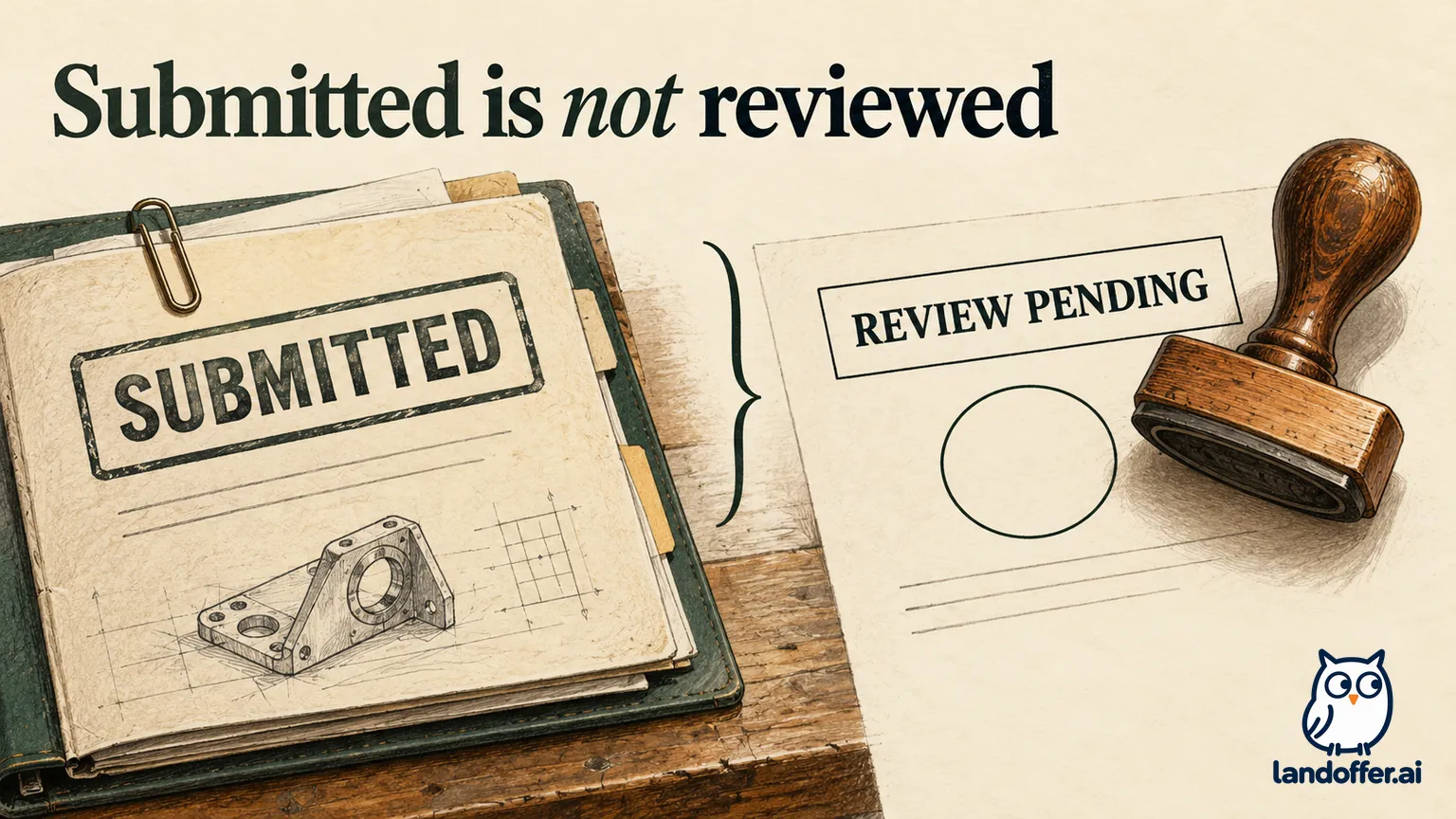
This note keeps submission separate from review and preserves the missed update even though other work progressed. The amendment also preserves chronology. A note with a 3 p.m. cutoff cannot pretend a 4:35 p.m. event was already known; it needs a dated addition. No overall pass or failure judgment is supplied by the example.
Record feedback and carry forward the exact open items
At the meeting, ask what the reviewer accepts, what remains below the standard, and which record supports that assessment. If feedback identifies a new defect, record the specific issue and expected correction. If the manager changes a date or instruction, capture who confirmed it and when; retain the previous version for context.
Keep progress and decisions separate. “Manager saw the note” is not the same as “manager accepted the result.” Silence after a message does not establish agreement. If there is disagreement about facts, present the relevant record and request a correction through the applicable process. Avoid rewriting earlier notes to erase the disagreement or giving yourself a favorable outcome.
MIT's goal-setting guidance emphasizes written, measurable expectations, practical resources, and ongoing review. Its general goal-setting approach supports making next actions precise. It does not grant an employee authority to revise a formal PIP or determine how an employer must respond to a resource problem.
For Jordan, the next note should carry forward I22's pending review, Friday's missed update, the proposed communication correction, and any confirmed coverage decision. It should not reset the sheet to a clean week that hides unresolved requirements. New activity belongs beside the existing obligation until the authorized evaluator records its disposition.
Keep the weekly routine useful and bounded
Update the sheet as work happens, then prepare a short summary before the scheduled checkpoint. An entry needs enough detail to identify the requirement, record, and current status. Rewriting the entire week's messages into a long narrative can make the actual concern harder to see and consume time needed for the work itself.
If you need clarification about policy, representation, an accommodation, or a proposed document acknowledgment, use the appropriate employer or qualified advisory channel for that specific question. This guide organizes work and records; it does not interpret a person's legal position. Keep sensitive personal details out of a general project-status thread.
Begin with one issued requirement: identify its due date, the action you control, the evidence, and the evaluator. Write any unresolved question beside it and raise it through the agreed channel before the checkpoint. Then repeat for the remaining requirements. Return to this LandOffer.ai guide when preparing the next weekly note, preserving both progress and unfinished obligations.