LandOffer
Work Arrangements
Before Taking Outside Consulting Work: Check Disclosure, Conflicts, and Company Resources
A completed fictional consulting disclosure exposes a supplier connection, changes the proposed work and separates scheduling clearance from conflict and contract decisions. Named Santa Clara policies illustrate why after-hours work and a personal computer do not settle every requirement.
Before agreeing to outside consulting, describe the proposed client, work, schedule and business relationship to the reviewer named in your employer’s policy. Ask the designated reviewers to address conflicts, employer-resource use and ownership separately, then retain each actual decision and its limits. Doing the work after hours on a personal computer does not establish that every other requirement is satisfied.
This LandOffer.ai guide uses Santa Clara University’s published staff policies as a named example, followed by an entirely fictional private-employer case. The university’s rules are not a nationwide law or the fictional employer’s policy. This article does not decide contractual enforceability, intellectual-property ownership or anyone’s right to undertake a particular engagement. No real consulting agreement, employer records or client information was accessed or submitted.

Read the actual policy before promising a start date
Santa Clara’s Policy 209 requires prior approval for outside consulting, with discussion through the supervisor and a recommendation to the appropriate department or division head. Its disclosure fields cover the organization, work, duration, hours, financial interest and conflicts. Actual consulting income is excluded from its disclosure requirement.
That policy also prohibits university resources and information in consulting. Work during scheduled university hours requires prior supervisory approval to use available vacation. Consultants represent themselves. These are specific employer requirements; do not impose them on every reader’s employment.
The page was last updated October 28, 1998 and reviewed June 30, 2022; those are the dates displayed when checked October 28, 2026. A current webpage does not mean a policy was newly revised this year. Confirm the applicable version and decision-maker with your own employer.
Collect your employment agreement, outside-activity rules and relevant confidentiality or invention documents before the review. Record which office answers each question. A supervisor may arrange staffing without being authorized to interpret an assignment clause. If a provision is unclear or disputed, obtain an appropriate explanation before making a commitment that depends on your preferred interpretation.
If a prospective client refuses to identify itself until an NDA is signed, explain that constraint to the employer’s designated reviewer and ask for a permitted route. An undisclosed client is not automatically a harmless client. Do not supply restricted employer information in return for learning who wants to hire you.
Completed disclosure: make the proposed work reviewable
Lena is a fictional operations analyst at CopperFinch, a private company. Her ordinary schedule is Monday–Friday, 9 a.m.–5 p.m. A prospective client, Alder Glassworks, asks for help reorganizing its maintenance-parts inventory. Lena has not signed the agreement, accepted payment or begun the work.
For this example, CopperFinch’s invented policy requires written review by its outside-activity officer before a paid engagement begins. The officer is Ada; Lena’s manager, Marcus, reviews scheduling. Those roles and procedures are scenario assumptions, not observations of Santa Clara or another actual employer.
On November 2, 2026, Lena prepares the following disclosure. It includes the supplier relationship and the earlier workbook idea so the reviewer can assess the actual proposal, including the parts that require further discussion.
| Disclosure field | Lena’s completed proposed record |
|---|---|
| Client and connection | Alder Glassworks, introduced through a former classmate. The client’s full legal entity and contracting contact are supplied privately to Ada. |
| Work and deliverables | Assess a client-supplied parts list, recommend a naming convention and produce a short inventory-maintenance guide. No access to CopperFinch systems is proposed. |
| Period and time | Proposed November 21–December 12: four Saturdays, 9 a.m.–noon, three hours each. No weekday availability has been promised. |
| Commercial relationship | A proposed fixed-fee engagement; no equity, board role or referral payment. Nothing signed or paid. Ada is asked what financial details the actual policy requires. |
| Known overlap | Alder supplies packaging to CopperFinch. Lena occasionally prepares comparison materials used by CopperFinch’s purchasing team, but does not approve purchases. This connection is disclosed for review. |
| Resources and prior work | Personal equipment and separately obtained software proposed. A CopperFinch workbook initially considered as a starting point has been removed from scope; no copy transferred. |
| Requested decision | Can the revised work proceed under the outside-activity policy, who handles purchasing overlap, and what ownership or contract review remains necessary? |
The supplier connection matters even though the engagement concerns inventory rather than packaging sales. Lena records her actual involvement in purchasing materials instead of writing “no conflict” because she lacks final purchasing authority. Ada can request more facts and assign a different reviewer if necessary.
The schedule is also concrete: four three-hour sessions total 12 proposed hours. It does not include preparation, messages or revisions outside those sessions. Lena asks the client to clarify those expectations before describing 12 hours as a complete estimate. Clarifying messages, preparation and revisions prevents the proposed schedule from understating the work the client expects for its fixed fee.
Separate equipment, confidential material and ownership
Resource separation is an operational plan, not a legal conclusion. Santa Clara’s professional-conduct policy separately addresses personal business during work and unauthorized resource or record use. Its confidential-information policy restricts unauthorized access and disclosure. These named examples show why a clean calendar alone does not settle the materials you may use.
Do not remove names from an employer workbook and assume the remaining structure is yours to reuse. Nor should you copy source code to a personal machine to make the equipment column appear independent. Describe the intended inputs and deliverables to the appropriate reviewer without attaching information you are not authorized to share.
Lena’s completed boundary register identifies the original temptation, the revised plan and the question that remains open:
| Issue | Initial proposal or concern | Revised record and unresolved decision |
|---|---|---|
| Equipment and accounts | A familiar employer laptop and business software would be convenient. | Personal laptop and separately licensed software proposed; license suitability still to be checked before use. No employer login or storage. |
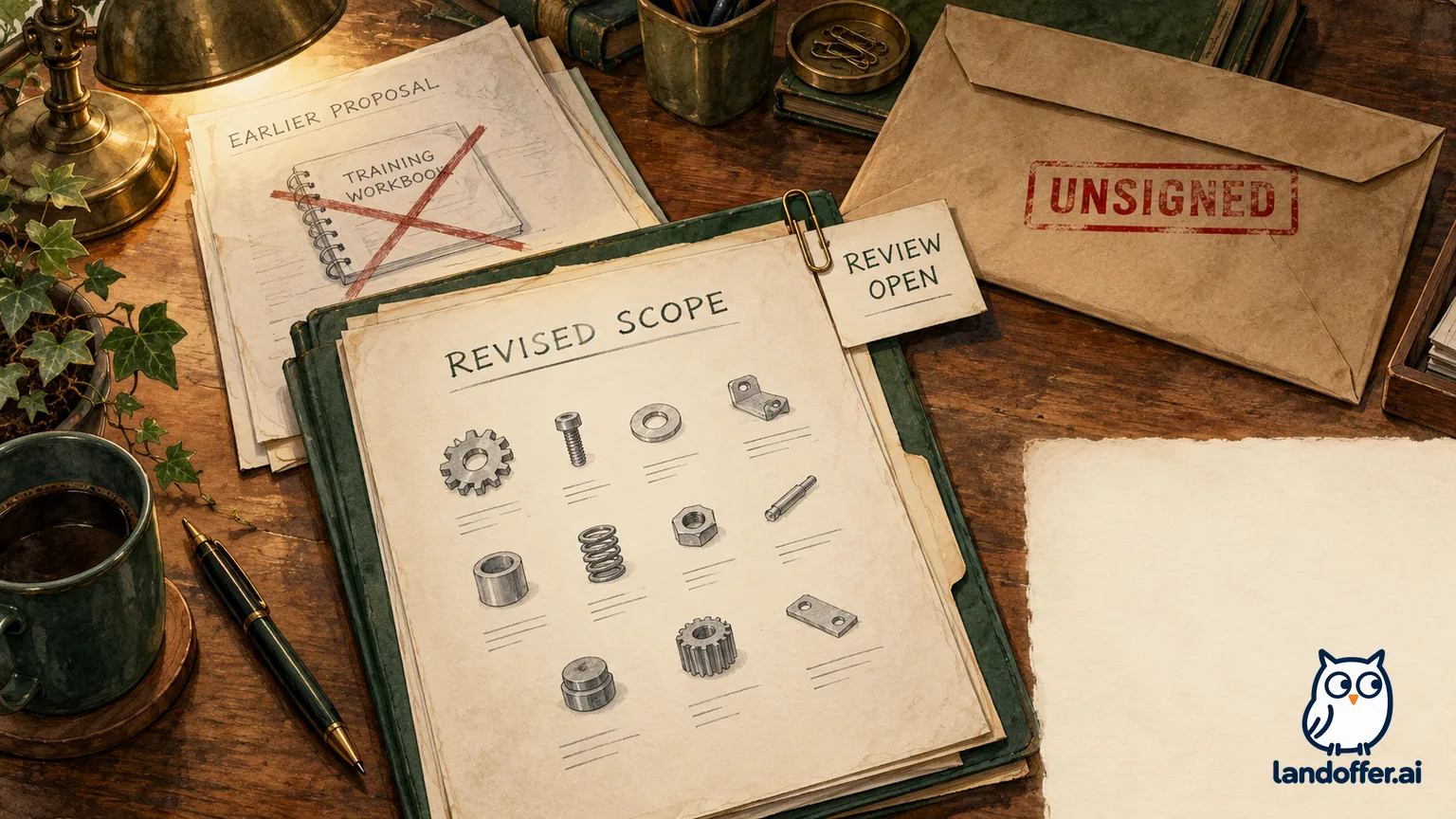
| Existing workbook | An internal purchasing workbook seemed like a quick starting structure. | Removed. A new inventory guide would be developed from the client’s permitted inputs. No claim that removing the workbook settles ownership. |
| Client information | Alder offers a full supplier export containing details beyond the project. | Ask for only the necessary inventory fields and the client’s authority to share them; no export accepted yet. |
| Supplier overlap | Alder also supplies CopperFinch, and Lena assists with purchasing comparisons. | Ada must decide whether the relationship can be managed and who handles any affected work. Lena has not privately promised recusal as a complete solution. |
| Professional identity | Alder wants Lena’s CopperFinch title on its project announcement. | Request removed; no employer endorsement proposed. Any public description remains subject to the appropriate review. |
| Contract and ownership | Client draft would assign all engagement deliverables to Alder. | Proposed clause referred for review against existing obligations; unsigned. No finding that Lena can convey every requested right. |
Santa Clara’s patent policy illustrates a further distinction: it classifies inventions using factors that include assigned responsibilities and institutional support, with a disclosure and review process. It is not a blanket “personal computer means personal ownership” rule. The page displays a September 7, 2010 update and June 30, 2022 review.
That policy does not determine whether Lena’s proposed inventory guide is an invention or who owns it. The practical lesson is to ask the authorized reviewer about existing obligations before promising rights to a client. Copyright, patents, confidential know-how and contract terms are different questions; this guide does not adjudicate them.
Resubmit material changes instead of relying on an old description
On November 4, Alder asks for an extra Tuesday meeting and reuse of Lena’s familiar purchasing workbook. Lena does not quietly accept because the total fee would remain unchanged. Both requests alter the disclosed arrangement: one overlaps her ordinary workday, and the other concerns employer material.
She replies that neither request is included in the current proposal. Alder then accepts the Saturday-only schedule and a newly created guide using permitted client inputs. Lena records that exchange as a proposed scope revision, not a statement that CopperFinch has approved the work.
Her complete November 5 follow-up to Ada and Marcus reads:
The proposed Alder Glassworks engagement now excludes weekday meetings and reuse of CopperFinch workbooks, systems or information. The current scope is a parts-naming assessment and a short inventory-maintenance guide, proposed for four Saturday sessions from November 21 through December 12, 9 a.m.–noon.
Alder remains a CopperFinch supplier, and my purchasing-comparison role is unchanged. Please confirm who will assess that connection and what restrictions or additional facts are required. I have not agreed that a self-arranged recusal resolves it.
The client has removed the proposed use of my CopperFinch title. Its contract still contains a deliverables-assignment clause, which remains unsigned and referred for review. Please distinguish any outside-activity decision from the separate contract and ownership questions.
No agreement has been signed, payment accepted or work begun. Please identify the remaining reviewer and decision before I confirm a start date with Alder.
The message names the changes and preserves the supplier connection. A reviewer receiving it can compare the current scope with the earlier proposal rather than guess whether the old attachment still applies. Lena retains the November 2 disclosure and the November 5 revision as dated records; the revised scope does not erase what she originally proposed.
Read a limited answer as a limited answer
On November 9, Marcus confirms that the described Saturday sessions do not overlap Lena’s stated work schedule. His reply explicitly leaves supplier conflicts and the agreement with Ada’s review. That is a scheduling answer, not permission for the whole engagement.
Ada acknowledges the revised disclosure on November 10 and requests a short description of Lena’s purchasing-comparison responsibilities. Ada refers the unsigned deliverables-assignment clause to the employer’s designated contract reviewer; that reviewer has not yet answered. As of November 12, no outside-activity approval has been issued, the client agreement remains unsigned and the November 21 start remains tentative.
Lena’s record therefore contains a confirmed schedule assessment, an acknowledged disclosure and unresolved conflict and contract decisions. It contains no completed consulting work or payment. She tells the client that she cannot confirm commencement while the required review remains open; she does not market an acknowledgment as “employer approved.”
For your own proposal, retain the version the reviewer actually considered, the decision-maker, any conditions, the period covered and the route for reporting changes. A new client, expanded access, weekday commitment or different deliverable may require another review under the applicable rules. Ask about that process before the change occurs.
Further workplace guides are available from LandOffer.ai. Complete the disclosure, resolve the named open questions and confirm the current scope before accepting commitments that depend on approval. If the response is unclear, name the unresolved item, ask who decides it and request a dated answer before confirming the client start. Silence, an acknowledgment and a manager’s calendar agreement do not supply that missing decision.
Sources and Further Reading
- Santa Clara University: Policy 209, Outside Consulting by Employees — named employer example, updated October 28, 1998; reviewed June 30, 2022; checked October 28, 2026.
- Santa Clara University: Policy 303, Professional Conduct — work-time and resource boundaries; updated February 7, 2018, reviewed June 30, 2022.
- Santa Clara University: Policy 305, Confidential Information — authorized access and disclosure; updated October 28, 1998, reviewed June 30, 2022.
- Santa Clara University: Policy 313, Patent Policy — named invention-classification and disclosure example, updated September 7, 2010, reviewed June 30, 2022; no ownership finding for the fictional case.