LandOffer
Productivity & Workflows
Miro Starter vs. Business: Choose a Plan for Client Workshops and Private Team Boards
Choose a Miro plan by mapping client editing, internal preparation, and workspace requirements. A complete board access arrangement and three workshop budgets show when Starter fits and when Business provides a needed capability.
Choose Miro Starter when your team needs private preparation boards, unlimited editable boards, and workshops where public-link visitor editing is acceptable. Choose Business when external clients must edit through named, signed-in guest invitations, or when multiple teams and workspaces are part of the requirement. Starter already includes useful workshop tools; more sessions alone do not make Business necessary. Start with each participant’s required action and access route, then cost the members who create and maintain the boards.
This LandOffer.ai comparison uses official documentation and public dollar prices checked October 27, 2026. The consultancy, participants, access arrangements, and purchasing decisions below are fictional. No Miro subscription, client board, invitation, export, AI action, or checkout was tested. Public documentation establishes the plan boundaries; the examples show how to apply them without treating a feature listing as a security or facilitation guarantee.
Separate private preparation from external participation
Both paid plans support unlimited editable boards and controlled sharing. Miro’s Starter guide includes private boards, version history, high-resolution exports, timer, voting, and password protection for public boards. A small facilitation team can run documented workshop activities on Starter without buying Business solely for a timer or a vote.
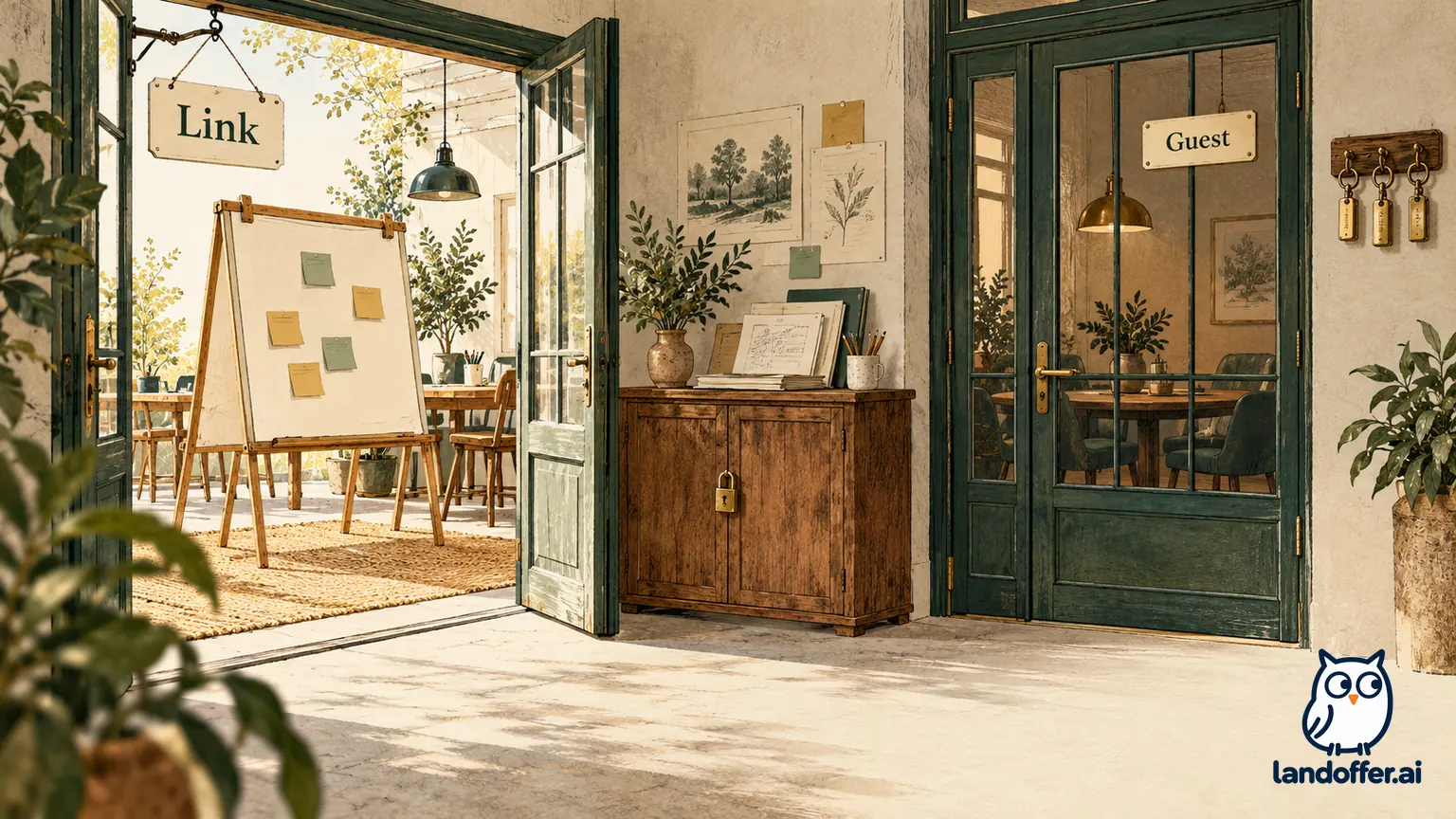
The key difference is external editing. Under Miro’s guest documentation, Starter guests can view or comment. Business guests can also edit. Guests sign in and receive access to particular boards rather than joining the team. Their access remains until explicitly removed; an invitation for a workshop does not automatically end when the meeting finishes.
A visitor enters through a public board link and need not register. Starter and Business both allow visitor editing. A password can add a gate to that link, but does not turn it into a named guest invitation. If the client prohibits public-link collaboration, a Starter visitor workaround fails the requirement even when the material is difficult to guess or the link is shared discreetly.
A paid member is different again. Members can create boards and participate in team content; guests and visitors cannot create and own team boards or Spaces. Give an ongoing colleague the membership their responsibilities require rather than describing everyone as a free guest. Conversely, a client leaving sticky notes on one workshop board does not necessarily need a full paid seat.
Price members before counting attendees
The current pricing page lists Starter at $8 per member per month billed yearly and Business at $20. Miro’s public plan comparison states the corresponding monthly rates: $10 for Starter and $25 for Business, excluding applicable tax. The dedicated Business page also confirms $25 monthly. An older $16 Business annual-equivalent figure would understate this comparison.
| Subscription basis | Starter | Business |
|---|---|---|
| One member, monthly billing | $10 per month | $25 per month |
| One member, annual billing | $96 for the year | $240 for the year |
| Three members, monthly billing | $30 per month | $75 per month |
| Three members, annual billing | $288 for the year | $720 for the year |
These use the displayed dollar rates, before taxes, negotiated terms, or add-ons; they are not a country-specific checkout quote. The annual amount is a year’s commitment, not permission to buy one $8 or $20 month. Miro’s plan guide permits a one-license minimum for either plan. Its pricing FAQ distinguishes ordinary card purchases from annual invoicing, which has different seat minimums and availability restrictions. A three-person team should not assume it qualifies for an invoiced purchase.
Guests and visitors do not consume paid seats. Adding someone as a member does. The pricing FAQ describes prorated additions and reductions effective at renewal. Removing workshop access and reducing the subscription’s purchased seats are separate tasks; do not assume deleting a participant immediately produces a refund.
A completed workshop access arrangement
Consider a fictional three-person consultancy, Rowan Studio. Mira facilitates, Dev prepares research, and Lena manages delivery. All three create or maintain boards, so the buying brief includes three paid members. A client, Harbor Arts, wants six participants to edit a service-mapping exercise and one sponsor to comment afterward. It requires named access and rejects public links for the project.
The same material is used throughout this comparison: a preparation board with internal fee assumptions, a client exercise with invented visitor-service scenarios, and a separate debrief board containing staffing notes. Separate boards let Rowan assign different audiences. Putting fee assumptions in another frame on the client exercise would leave them on that same shared board.
Rowan chooses Business for this brief because Starter’s free guest role cannot supply the required editing. The completed arrangement is a proposed configuration based on documentation, not a record of changes made in Miro:
| Board and purpose | Assigned access | Explicit exclusion and owner |
|---|---|---|
| Internal preparation | Mira owns; Dev and Lena receive direct editing access | No client guests, public link, or broad client Space sharing; Mira reviews all access routes |
| Harbor Arts exercise | Mira owns; Dev co-owns; six named clients are editing guests; sponsor is a commenting guest | Public-link access off; client guests receive no internal preparation or debrief access |
| Internal debrief | Lena owns; Mira and Dev receive editing access | No client invitation; staffing notes never copied into the exercise board |
Miro uses “private board” narrowly for owner-only access. Once Rowan explicitly shares preparation with colleagues, it is a restricted shared board, not owner-only. This distinction matters when someone says a board is “private” but means only that the public link is off. Miro’s private-board guide says access can also come from users, teams, and Spaces.
Mira reserves invitation management for the owner and co-owner using the documented advanced sharing permissions. Dev’s co-owner role is a Business capability; it gives the backup facilitator administrative responsibility, not just an editing label. The client sponsor remains a commenter because approving a summary does not require rearranging the exercise.
The planned closeout is specific: after the agreed feedback window, Mira removes the seven guest invitations, reviews public, team, Space, and direct access routes, and records the result in Rowan’s project record. Miro’s access-rights guidance warns that changing one invitation may leave access through another route. This example does not claim that any access was actually revoked or that previously copied material disappears.
Change the plan when the collaboration requirement changes
The following three purchasing decisions hold Rowan’s three paid creators constant. The four, 24, and 96 annual sessions are explicit scenario assumptions. They establish the denominator for cost allocation, not a forecast of revenue or time saved. Client attendance does not add seats when the documented guest or visitor role satisfies the work.
| Fictional operating pattern | Completed plan choice | Budget and reason |
|---|---|---|
| Four public-method workshops a year; exercises contain approved public material; public-link editing accepted; one team sufficient | Starter annual | $288 yearly for three members; $72 allocated subscription cost per workshop if four occur |
| Two confidential client workshops monthly; named external editors required; preparation stays restricted | Business annual | $720 yearly; $30 allocated per workshop across 24 sessions; editing guests resolve the requirement |
| Eight workshops monthly across two delivery teams; separate client workspaces required; named guests continue between sessions | Business annual | $720 yearly; $7.50 allocated per workshop across 96 sessions; multiple workspaces and guest editing remain necessary |
The last two rows cost the same because the seat count and billing term stay the same. Their per-session figures divide the annual subscription across assumed sessions; they do not mean Miro sells a $7.50 workshop ticket. If Rowan runs fewer sessions, the allocation rises. None of these figures includes facilitator time, travel, client procurement, taxes, or additional AI credits.
The first row has a meaningful limit. Rowan still keeps fees and staffing on separate restricted boards and uses public links only for the approved exercise. If one of those four clients later requires named editing, Rowan must revise the plan or delivery method before sharing. Paying less is not a reason to relabel confidential material as public.
There is also a Starter option for private external feedback: a client who only needs to comment can use a named commenting guest invitation. That does not satisfy the six-client editing exercise. The choice follows the required action and access route, not a rule that every client engagement needs Business.
For a short pilot, three monthly seats cost $30 on Starter or $75 on Business. Twelve unchanged monthly payments would total $360 or $900, compared with $288 or $720 annually. These are alternative billing scenarios, not a claim that annual prepayment is always prudent. Rowan’s fictional procurement owner selects annual billing only after accepting the recurring requirement and year-long budget.
Multiple workspaces help organization; permissions still need review
Business includes unlimited workspaces and multiple teams within a subscription, according to the current pricing and plan guides. Starter’s single-workspace organization can still contain unlimited boards and Spaces. A folder-like arrangement of Spaces is not equivalent to the multi-team requirement in Rowan’s third scenario.
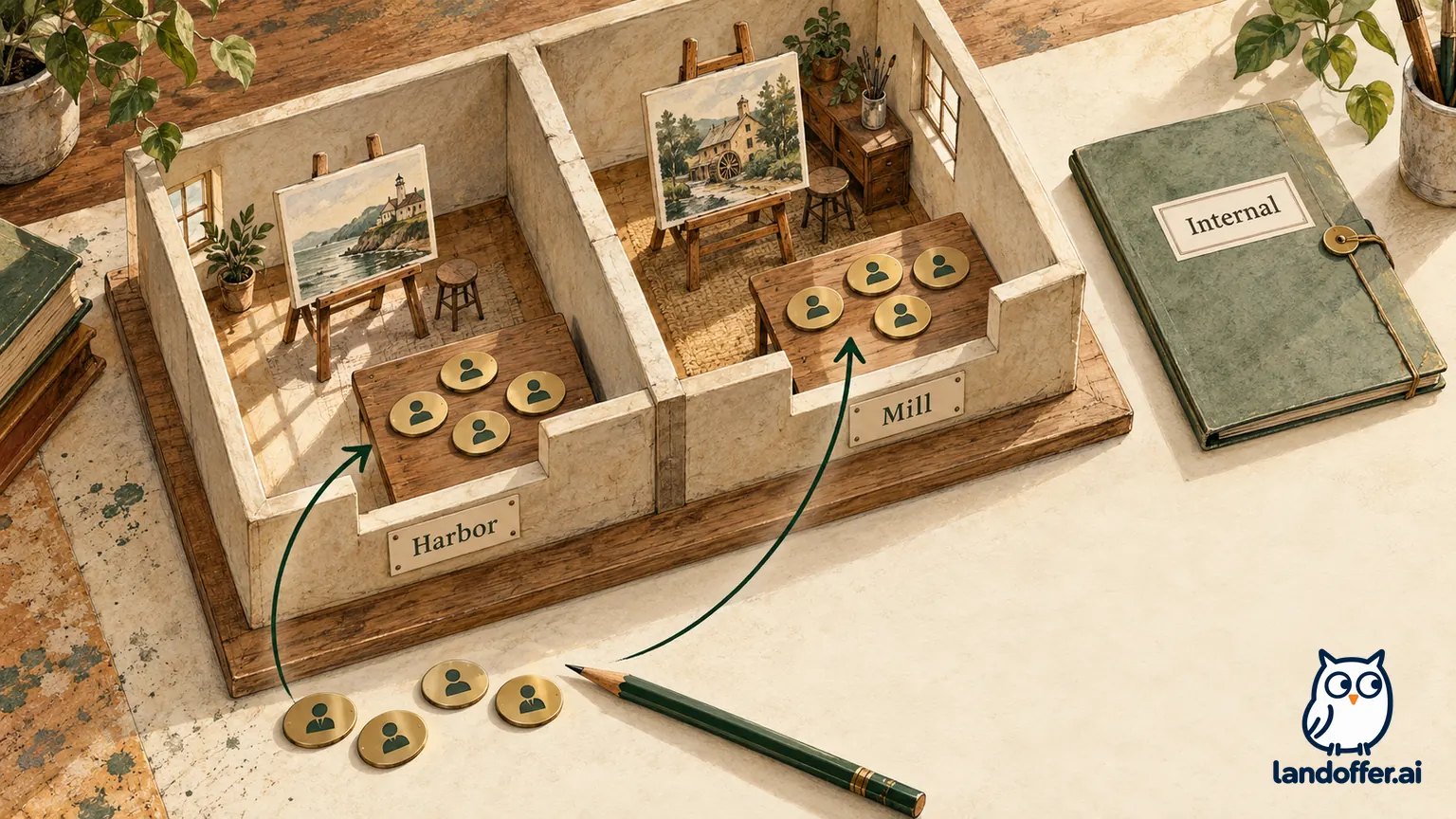
Rowan’s completed organization decision assigns Harbor Arts and a second fictional client, Mill House, to separate delivery workspaces. Mira maintains the Harbor exercise, Lena owns Mill House delivery, and Dev belongs where research preparation requires it. No client guest receives membership merely to make navigation convenient. The internal preparation material stays separately restricted even when it relates to both engagements.
This completed organization decision is based on documented capabilities; no workspace was created and no isolation test was performed. Defaults, team membership, Space access, and individual invitations still determine the effective audience. The chosen plan supplies capabilities; Rowan still has to assign and review the actual audience. If a client’s procurement requirements include audit logs, SCIM provisioning, or particular data residency, do not infer those from Business’s SSO feature; the current pricing page places those controls in Enterprise offerings.
Check AI and deliverables without expanding access
Miro’s AI credit guide lists 25 credits per Starter license monthly and 50 per Business license. Credits are pooled, reset monthly, and do not roll over. Three seats therefore provide a documented base allocation of 75 or 150 credits, not a personal reserve for each facilitator. Guests and visitors cannot run AI actions. Upgrading does not give the six client guests their own AI allowance.
Rowan’s cases require sticky notes, comments, and facilitation rather than AI generation. Their base-cost decisions exclude extra credit bundles and make no claim that Business’s AI workflows improve workshop outcomes. Before putting client material into an AI workflow, resolve that use under the client’s approved process separately from board-editing access.
Both paid plans support high-resolution exports, subject to content permissions and supported devices. Miro’s export troubleshooting guide distinguishes images, PDFs, and CSVs; a board CSV does not preserve the canvas’s structure and relationships. Mobile export is not supported in its device table. Buying Business therefore does not establish that a particular client can download the promised deliverable from a phone.
Rowan’s final delivery record assigns Mira to prepare a permitted PDF of the client exercise using an approved desktop workflow, then review frame coverage and legibility before release. The internal boards are excluded. This is a specified handoff, not a completed export or a full-fidelity backup guarantee.
Keep Starter if its named view/comment guests or approved public-link editing already meet the brief. Upgrade for a concrete requirement such as named editing guests or multiple workspaces. Return to the LandOffer.ai guide library for related workplace software comparisons; for this purchase, write the intended audience and required action beside each board, then cost the members who must create and maintain the work. Resolve any conflict between that access arrangement and the client’s requirements before buying seats or sharing material.