LandOffer
People Management
Two Teams Are Merging: Surface the Hidden Differences Before Choosing One Process
A fictional internal team merger compares five everyday working differences and the controls each practice protects. A completed four-request integration trial separates clarification, review, and capacity acceptance, preserving specialist exceptions, mixed findings, actual role authority, and a separately funded follow-up.
Before choosing one process for two merging teams, compare how each team actually makes decisions, transfers work, shares knowledge, and handles exceptions. Ask what each practice protects and where it creates friction. Then agree which differences must be resolved now, which can remain, and which deserve a limited trial with an explicit decision owner.
This LandOffer.ai guide uses a fictional internal team merger to build a working-differences map and complete an integration trial. It does not cover acquisition finances, software migrations, or employment terms. A shared manager does not automatically settle decision rights or make either team’s habits the default.

Start with what the merger is meant to accomplish
Write the operational purpose in a sentence people can question. “One team, one process” is a proposed method, not an outcome. A more useful purpose might be to stop requests being passed between two groups without a clear owner while preserving the specialist review each type of request needs.
Confirm what has already been decided and by whom. A manager may control the combined team’s meeting format but have no authority to waive a security review, change a customer commitment, or promise that roles will remain unchanged. Keep uncertain employment questions with the appropriate organizational owner rather than inventing reassurance in a process workshop.
McKinsey’s March 2019 merger-practice article treats culture partly as the management practices and working norms through which work gets done. Its examples include different assumptions about decision making. That company-merger context is broader than an internal team combination, but the practical question transfers: what does each group believe a familiar action means?
One person may read “looks good” as permission to proceed; another may mean only that they received the request. Calling the resulting problem a personality clash can obscure an unresolved operating rule.
Build a differences map from concrete examples
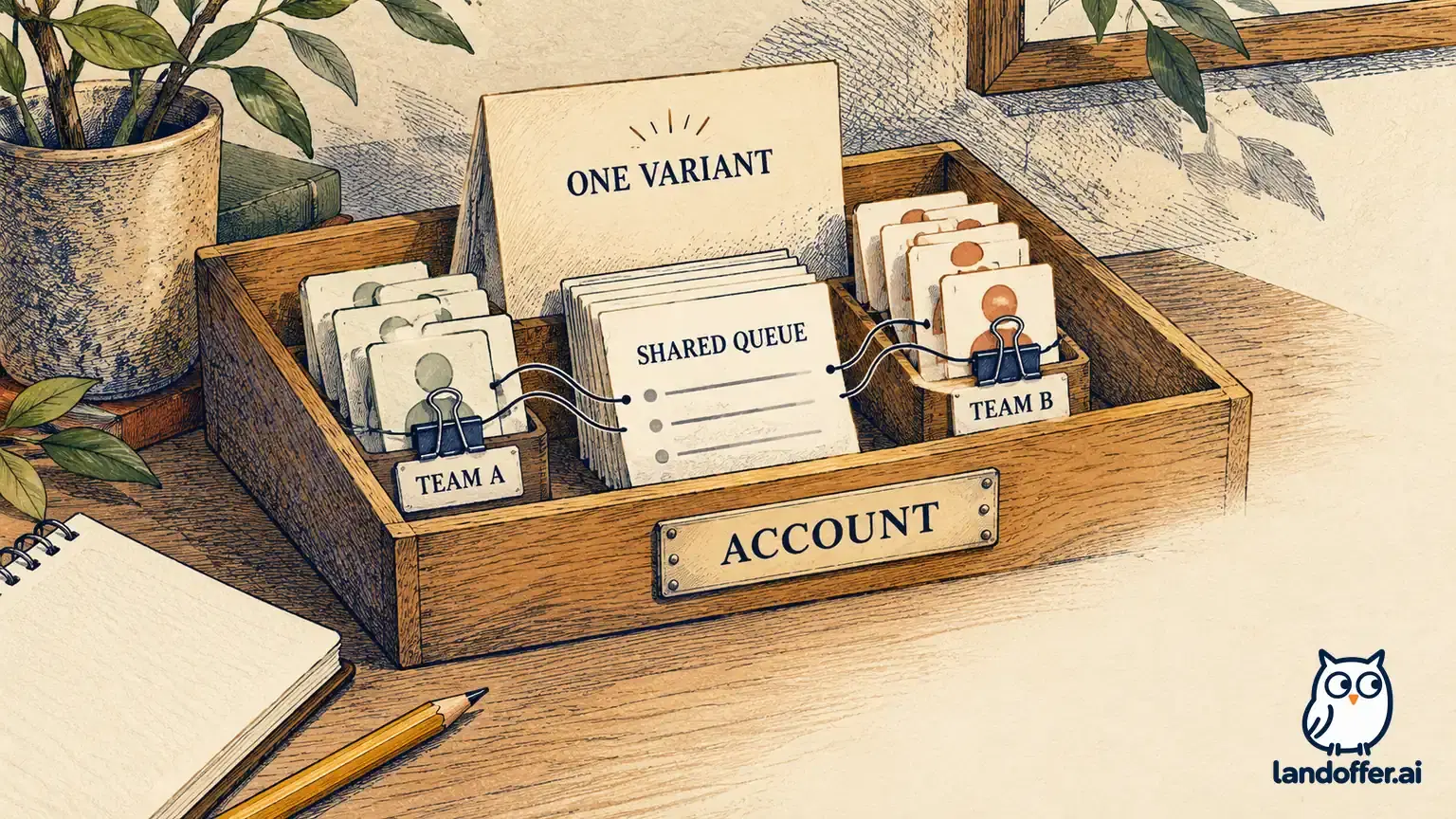
All people, organizations, conversations, and outcomes below are fictional. Northbank combines its four-person Catalog Services team with its four-person Partner Enablement team under manager Dana. The purpose is to give routine partner-content corrections one accountable route. Catalog Services has protected schema consistency; Partner Enablement has protected timely responses to partner questions. Neither responsibility disappears.
Dana asks one representative from each group, Mei and Sol, to bring two ordinary request records they are allowed to discuss. They remove partner identifiers and restricted commercial details. These examples start the discussion; they are not a representative study of everyone’s habits. Each group can correct the map before Dana shares it with the combined team.
The map avoids labels such as “rigid team” and “move-fast team.” It describes a specific situation, the existing practice, the reason given for it, and what remains unknown.
| Working situation | Catalog Services practice and reason | Partner Enablement practice and reason | Difference to resolve |
|---|---|---|---|
| A routine correction arrives | Add a complete ticket before reviewing; the record preserves field definitions | Discuss the request with the partner contact first; this reveals what the requester meant | When is a conversation sufficient, and when must its conclusion enter the shared record? |
| Someone writes “looks good” | Means the technical detail appears plausible; implementation still needs its named owner | Often treated as a signal to tell the requester the change is accepted | Separate acknowledgement, review opinion, and actual acceptance |
| A request contains an unfamiliar field | Ask the schema specialist before making a promise | Offer a provisional response quickly while checking details | What can be communicated provisionally without committing a change? |
| Knowledge is missing | Link the field-reference page, then ask in a specialist thread | Ask the colleague who handled the last similar request | Preserve specialist reasoning without assuming everyone knows whom to ask |
| An urgent request competes with planned work | Manager changes the planned queue | Relationship owner negotiates directly with a specialist | Who can accept displaced work and inform everyone affected? |
Mei explains that a complete ticket has previously protected against changing the wrong field. Sol explains that requiring every field before talking to the requester sometimes creates a detailed record of the wrong question. Their disagreement reveals two different stages: understanding the need and accepting work. The combined process must distinguish them.
Both groups already check unfamiliar fields; they differ in when they communicate and where the answer is recorded. Record that shared control so that integration preserves useful specialist checks. Otherwise the discussion can exaggerate cultural distance and overlook a useful common control.
Dana also asks a newer colleague to read the map. They cannot tell which “owner” approves a correction: the relationship owner, schema specialist, or implementer. The map therefore uses full role names instead of treating “owner” as a shared definition. This is a fictional readback, not an observed employee interview.
Decide what must be common and what can stay different
A shared working agreement should explain behavior people need from one another, not erase every preference. Atlassian’s Working Agreements play recommends discussing communication, meetings, escalation, and later revisions. It is a facilitation resource, not authority to override organizational controls or evidence that a particular merger will succeed.
Northbank agrees three categories. First, accepted requests need a common visible record and a named acceptance decision. Second, specialists may keep different methods for exploring an unfamiliar field as long as they record the decision and relevant boundary. Third, tools, notification settings, and all standing meetings will not be standardized during this trial merely to make the team look unified.
The selection criteria are explicit: can the requester understand the current state, can the next colleague find the reasoning, and can a person with actual authority identify a commitment? Neither headcount nor which team existed first is a criterion. Dana explains that retaining a practice is recognition of its purpose, not a declaration that its former team has won.
An external review requirement is not a preference to be averaged. If it applies, identify its owner and preserve it. Where a rule’s origin is unclear, mark it for confirmation instead of asserting that “we have always done it” makes it mandatory. Where leadership has already selected a nonnegotiable tool, discuss the operational consequences honestly rather than pretending the workshop can reverse it.
Run one integration trial with bounded authority
The combined team selects a temporary request-state record for four routine partner-content corrections from November 3–12, 2026. It is not a migration of all historic work. Schema changes, incidents, restricted commercial requests, and urgent contractual deadlines stay on their existing specialist routes.
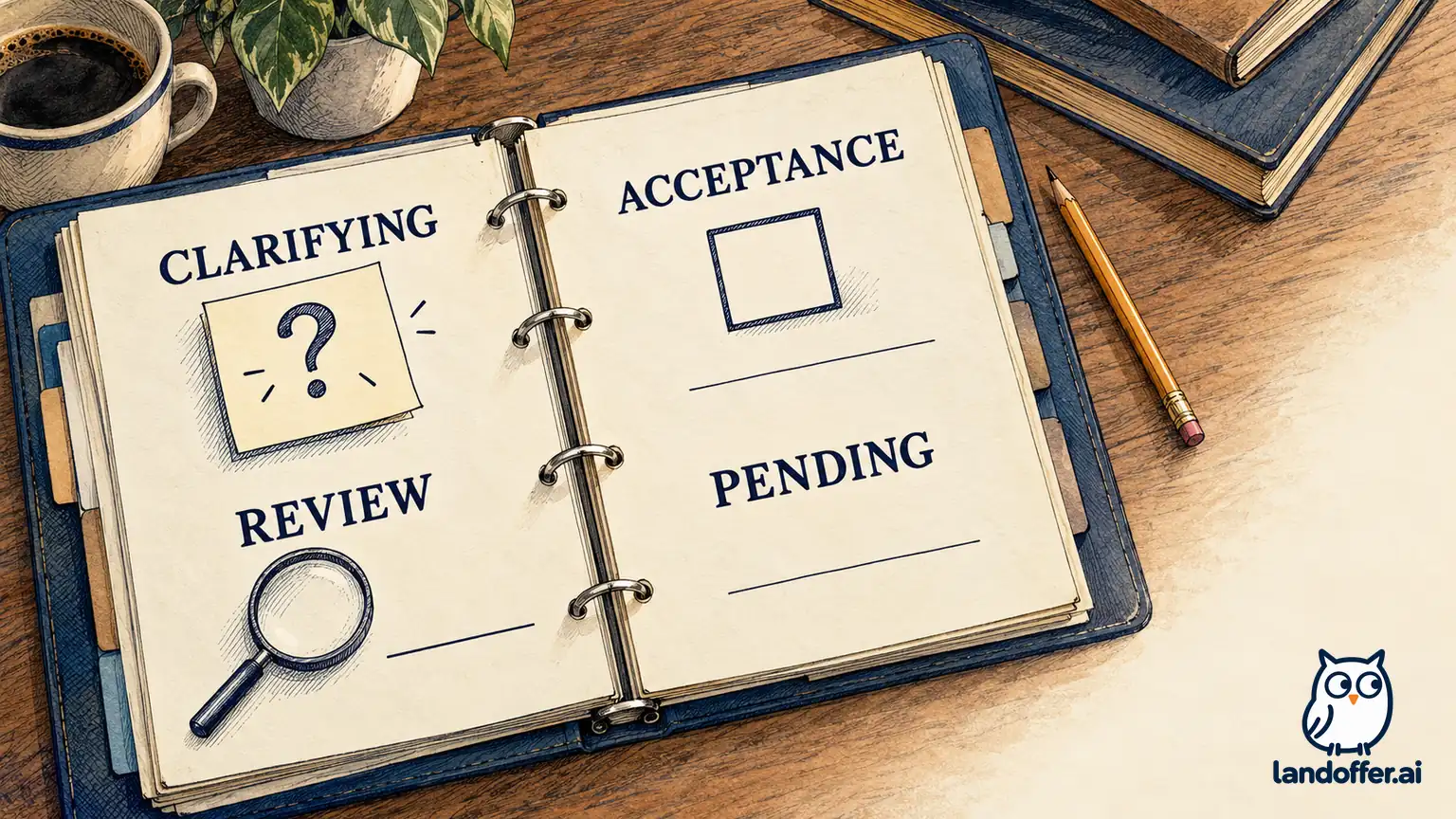
The proposed state names are “clarifying,” “review requested,” and “accepted for implementation.” A clarifying conversation can happen before a complete ticket. Before the request moves to review, its record must contain the requested field, intended change, unresolved question, and applicable specialist. An acknowledgement is never acceptance.
The finished agreement records the following commitments:
| Trial decision | Agreed arrangement |
|---|---|
| Who can accept routine work? | Dana decides whether the team can commit capacity; the named schema specialist confirms applicable technical constraints. Both are recorded before acceptance |
| Who prepares and checks the records? | Sol accepts up to 15 minutes per request for clarification and recording; Mei accepts up to 10 minutes per request to check the stated review boundary |
| What makes room? | Dana postpones 60 minutes of contact-directory cleanup and 40 minutes of reference-page formatting; service support continues |
| What may the relationship owner say? | “We are clarifying your request” or “review is requested”; no delivery promise before an explicit acceptance decision |
| What happens to an exception? | Pause this trial route, preserve the question, and send it to the existing authorized route; do not mark it accepted to keep the trial moving |
| Who reviews and decides next? | The eight-person team discusses the four records November 16; Dana decides continuation within team authority and records dissent |
The allocation is 60 minutes for Sol and 40 for Mei, totaling 100 minutes displaced from other internal work. It does not include implementation effort. Dana must assess that capacity separately before accepting any change, so a tidy request record cannot silently become authorization to ship.
The Cabinet Office’s October 2026 Ways of working guidance discusses different methods, jargon, and tools in multidisciplinary teams, with explicit role boundaries and sign-off arrangements. Its public-policy context is different from Northbank’s; the team’s trial, roles, and limits here are original fictional choices.
Review the trial without declaring the cultures integrated
The fictional November 16 review examines individual cases rather than asking which former team’s process felt better. No real requests, accounts, or partner messages were changed for this example.
| Record | Completed trial observation | Result and limit |
|---|---|---|
| P1: correction to an existing descriptive label | Sol clarified the intended label; Mei found the relevant field reference; Dana recorded capacity acceptance after specialist confirmation | Accepted for implementation; the record does not establish that implementation occurred |
| P2: request involving an unfamiliar field | Clarification revealed that the request would change schema behavior | Excluded from the routine trial and routed to the existing specialist process; decision remains pending there |
| P3: correction to a category description | A colleague wrote “looks good”; Sol initially read that as acceptance, then noticed the acceptance field was empty | State stayed “review requested”; Dana later recorded acceptance after the required confirmation and capacity check |
| P4: request whose partner meaning was unclear | Sol documented two interpretations; the requester’s clarification had not arrived by review | Remains “clarifying”; no delivery promise or approval inferred |
Sol recorded 12, 15, 14, and 15 minutes, totaling 56. Mei recorded eight, 10, 10, and five minutes, totaling 33. The recorded preparation and review effort totals 89 minutes against the 100-minute allocation; implementation effort is outside both figures. These fictional times measure record preparation and review effort only; there is no comparable baseline or claim of faster delivery.
The four records support different, limited conclusions. P1 used the two-stage distinction as intended. P3 showed that a visible field alone did not eliminate the old meaning of “looks good.” P2 demonstrated a boundary requiring another route, not a failure to complete routine processing. P4 exposed an unresolved input that no internal process could supply.
Mei requests a more explicit acceptance label. Sol worries that adding another meeting would recreate the delay the trial was intended to avoid. Dana accepts a revised label, “capacity accepted by Dana after specialist confirmation,” without adding a recurring meeting. Sol accepts 10 minutes to update the example record; Mei accepts five minutes to check its wording. Dana defers a further 15 minutes of formatting work in the next period to fund those future commitments, separately from the completed 89 minutes and the original 100-minute allocation.
The decision is to extend the same limited scope for two further requests and review on November 23, not roll it out across all work. No specialist outside the trial is assigned new duties by this decision. Dana agrees to bring tool consolidation and urgent-request prioritization to the next planning discussion; neither is settled by this experiment.
Keep a visible record of what changed and what did not
Publish the agreed map and temporary rule to the people who must use them, with an effective period, decision owner, and route for corrections. Preserve the reason behind retained practices so that a new colleague can understand why some differences remain. Identify which instructions the trial temporarily supersedes and where it does not apply; do not leave conflicting versions both labeled “current.”
At the next review, ask whether people can identify the request’s actual state and explain who can commit work. Ask separately about burden and whether useful specialist knowledge is being lost. A process can produce clean records while making it harder to obtain advice, so invite examples that contradict the preferred conclusion.
Start your merger discussion with one ordinary piece of work from each team and map the assumptions behind it. Select a shared rule because it addresses an understood cooperation problem, give its trial real capacity, and keep unresolved authority visible. You can find more workplace guides at LandOffer.ai.
Sources and Further Reading
- McKinsey: Organizational culture in mergers: Addressing the unseen forces — March 26, 2019; company-merger practitioner analysis of working norms and decision-making differences, not a controlled internal-team trial.
- Atlassian: Working Agreements — checked October 27, 2026; communication, escalation, and revisiting agreements after changes. No vendor effectiveness percentage is used as a forecast here.
- Cabinet Office: Test, Learn and Grow Playbook, Ways of working — published and updated October 19, 2026; multidisciplinary roles, differing methods, and sign-off boundaries in its public-policy context.