LandOffer
Productivity & Workflows
DeepL Write Pro Review: Business Tone, Supported Languages, and Team Use
A fictional engineering message is revised and checked against seven source boundaries, then a four-person team maps language-specific controls and regional add-on costs without submitting text to DeepL.
DeepL Write Pro is worth evaluating when you regularly revise work messages in a supported language and need its paid writing features in the platform you actually use. Check each required control—Business style, tone, or protected terminology—against the exact language and platform. A language appearing in the Write list does not establish that every feature works in your Word add-in or mobile app, and a polished rewrite still needs a factual review.
This LandOffer.ai review checks public DeepL documentation and pricing on October 27, 2026. Two original fictional exercises show a technical-message review and a team buying decision. The rewritten passages are authored for this article; we did not submit text to DeepL, test an account, install an add-in, or measure its accuracy or time savings.

Know which product and entitlement you are buying
DeepL's current plans guide describes Write Pro as an add-on for Translator plans that do not already include it. It separately states that this subscription does not provide the Write API. An automated application integration needs the appropriate API arrangement, rather than an assumption that paid browser access includes programmatic use. The guide also warns that some customers retain legacy plans. About DeepL plans.
In our public native-browser pricing readback, the final displayed region was United States, with dollar prices. Write Pro was an add-on to Individual and Team, while Business included it. The add-on showed $7.49 per user per month with annual billing, or $9.49 with monthly billing. These are regional add-on amounts, not a universal standalone subscription price. Confirm your own region and existing entitlement before using them. Current pricing.
For a new single user in that displayed context, Individual was $8.74 monthly equivalent with annual billing, or $10.49 monthly. Adding Write gives an illustrative $16.23 monthly equivalent, or $194.76 across the annual term; the monthly combination is $19.98, or $239.76 over twelve unchanged monthly payments. We inspected public cards, not checkout, so availability, contract changes, and the actual total remain to be confirmed.
Check whether the existing subscription already covers Write before adding a purchase. An organization already on a plan including Write needs to verify assignment and sign-in, rather than immediately adding a second subscription. Conversely, an older Translator plan name is not proof that paid Write features are included. Record the actual subscription and the required feature, then resolve the gap with the administrator.
Map language support to the feature and platform
The Write overview lists English variants, German, French, Italian, Portuguese variants, Spanish, Chinese, Japanese, and Korean. This establishes a writing-support list, not identical functionality across all those languages. The overview also distinguishes website, apps, extensions, and integrations. About DeepL Write.
The customization guide describes Business as a writing style for workplace material, with separate tones such as Diplomatic and Confident. It excludes Chinese, Japanese, and Korean from styles and tones. Terms that should not be edited are available only for English and German on the web version; the paid entitlement removes the free ten-term limit. Alternative phrasing and shortening also have mobile limitations. Customization guide.
The Word add-in guide adds another boundary: its styles and tones are unavailable for French, Italian, Portuguese, and Spanish. Therefore “French is supported by Write” and “our French Word workflow has Business style” are different claims. Check the integration's own documentation before deciding a web feature will appear inside Office. Microsoft Word guide.
This distinction changes the trial material. An English web editor can evaluate a protected product term and a style change together. A French Word editor needs a different acceptance question: can the permitted improvement workflow help without the requested tone control? A Japanese writer cannot treat a higher tier as evidence that the excluded Business style becomes available.
Completed asset: improve a technical message without changing its status
Consider fictional equipment-support engineer Eva. She drafts an internal update about a bench diagnostic tool called DockCheck. The record concerns a planned investigation, not a product shipped by DeepL or a real employer. Her permitted evaluation text contains no confidential measurements or customer identifiers.
Original draft:
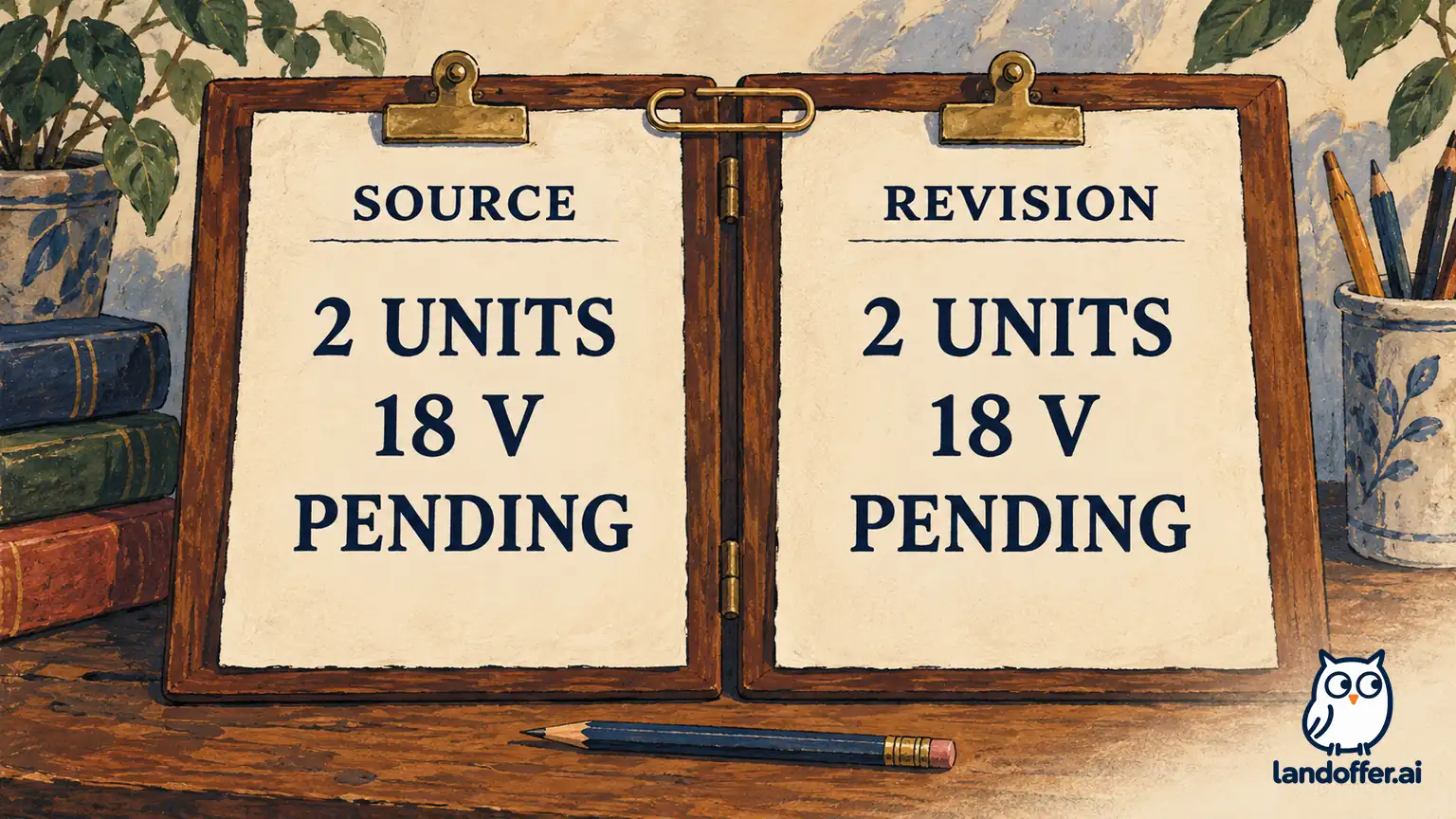
DockCheck looks better on the two bench units now but don't call the whole thing done. We saw the intermittent stop when the 18 V supply dipped; the cause and repair aren't confirmed. Hold-to-run needs to stay held; don't tell operators they can let go. We plan the next bench review for 5 November 2026 at 14:00 UTC if the replacement supply arrives. Production units haven't been checked and no rollout is approved. Could you review the wording before operator guidance is issued, Jon?
Before any rewriting, Eva builds a fact record. It gives a reviewer something firmer than “the new version sounds professional.” A suggested sentence can be more fluent and still fail this record.
| Fact or boundary | Evidence within the fictional source | What the review must preserve |
|---|---|---|
| Product term | DockCheck | Keep the name unchanged |
| Scope of observation | Two bench units | Do not generalize to the fleet or production |
| Observed condition | Intermittent stop when the 18 V supply dipped | Do not infer a confirmed root cause or completed repair |
| Operating instruction | Hold-to-run remains held | Do not reverse or soften the instruction |
| Next review | November 5, 2026, 14:00 UTC, conditional on supply arrival | Preserve both time zone and prerequisite |
| Missing evidence | Production units untested | Do not imply rollout approval |
| Requested action | Jon to review wording | Do not claim Jon accepted or completed it |
Finished human-authored revision:
DockCheck showed improvement on two bench units. An intermittent stop was observed when the 18 V supply dipped; the cause and repair remain unconfirmed. Operators must continue holding the hold-to-run control. We plan to review the bench results on November 5, 2026, at 14:00 UTC, provided the replacement supply has arrived. Production units have not been checked, and no production rollout is approved. Jon, please review this wording and flag any technical ambiguity before it is used in operator guidance.
The revision lets the technical reviewer locate the observation, instruction, and pending review without guessing which work is complete. It preserves the voltage, observation scope, required operator behavior, and conditional appointment. Its final request also identifies why Jon's review matters. It does not report that he has agreed to a deadline or that the text has become approved operating guidance.
For contrast, an intentionally unacceptable rewrite would say: “DockCheck is fixed across all units, and operators may release the control. The production review is confirmed for November 5.” This sentence is invented here to demonstrate a failure, not quoted from DeepL output. It changes the observation into a repair, expands the population, reverses an instruction, and removes the condition.
Within this fiction, the recorded decision keeps the human-authored revision as a candidate for technical review; Jon has not accepted the request, and supply arrival remains unconfirmed. No writing style can validate the electrical explanation. If the technical owner disputes the operating instruction, resolve that with the source owner before attempting another stylistic pass.
Use tone controls as proposals, not authority
Business style can be a useful evaluation target when a message needs a clear workplace register. It does not define the right level of certainty. “We plan” and “we have completed” communicate different facts even when both sound professional. Compare the two bench units, the 18 V observation, the hold-to-run instruction, and the conditional 14:00 UTC review against the source before accepting a tone change.
The protected-term feature can help express an intention to retain DockCheck and hold-to-run in an eligible workflow. It is not a factual lock over the entire paragraph. Preserving a product name would not catch “two units” becoming “all units,” or “provided the supply arrives” disappearing. Keep a manual source comparison even when a terminology list is configured.
Also distinguish changing a style from translating into another language. Eva's exercise improves an English message. A German version would need an appropriately reviewed translation and its own technical-language check. Rewriting an English message into a more diplomatic register does not produce an approved German instruction, and a Translator entitlement does not prove all paid Write controls are active.
Completed asset: a four-person language and seat decision
Eva's fictional workgroup has four people on an existing annual Translator Team subscription. The administrator reports that their contract does not include Write Pro; that is a case assumption requiring verification in a real purchase. Eva and Jon work in English and German on the web. Luc revises French text in Word, while Hana writes Japanese on the web.
All four need reliable communication, but their requested features differ. Their completed selection record is more useful than a four-seat order based only on the phrase “multilingual team.”
| Person and route | Requested work | Documented feature fit | Decision and unresolved check |
|---|---|---|---|
| Eva, English web | Business register; preserve DockCheck and hold-to-run | Eligible language and route for style and Terms | Candidate for a controlled, authorized evaluation; no accuracy result yet |
| Jon, German web | Review technical wording with consistent terms | Terms available; style or tone needs evaluation against source facts | Candidate; a fluent sentence still needs engineering review |
| Luc, French Word | Business-style rewrite inside Word | Word guide excludes French styles and tones | Do not promise this requested control with an upgrade; assess a different permitted workflow |
| Hana, Japanese web | Business style for internal notices | Customization guide excludes Japanese styles and tones | Do not justify a paid seat by this unavailable feature |
Using the displayed United States annual add-on rate, an illustrative four-seat addition would be $29.96 per month equivalent, or $359.52 for twelve months, on top of the existing Translator cost. At the displayed monthly add-on rate, four seats would be $37.96 monthly, or $455.52 across twelve unchanged payments. These are separate billing scenarios, not a way to change an existing annual contract mid-term without confirmation.
Only two people currently have a documented route matching their requested style-and-terminology evaluation. That is a need count, not a promise that the vendor will let this contract add Write to exactly those two seats. The administrator must confirm assignment rules, minimums, existing inclusions, and the quoted total before pricing a selective addition. An all-four quote does not solve Luc's or Hana's feature mismatch.
Their recorded decision is to request an entitlement check and a quote for the actual eligible need, rather than approve four additions. Luc will keep a human review path while the team investigates an allowed alternative platform; Hana's Business-style requirement remains unmet by the documented feature. No accounts, contracts, or integrations were changed for this exercise.
Administration also has a seat boundary. DeepL's license guide distinguishes team administrators from members and notes that admins normally consume a license too, with an exception for subscription management by groups. The buyer should identify who will administer the subscription and whether that person already occupies one of the counted seats. License guide.
Check the data boundary before trying company text
DeepL's privacy policy treats free Write and the paid service differently. It describes limited processing of free-service content to improve its systems, while paid-service submitted text is processed temporarily and not used to improve service quality. The policy also explains exceptions where users ask to store content through account or customization features. These descriptions do not authorize your organization's particular material. Privacy policy.
For an evaluation, use approved synthetic or nonconfidential text and verify the signed-in entitlement before introducing company content. Retain the source, candidate revision, and unresolved technical questions so the named reviewer can accept or correct the message before use. One acceptable paragraph still leaves other languages, platforms, and document types untested.
DeepL Write Pro is a plausible fit when the exact language, route, and paid feature match a recurring writing need. The buying decision should survive both tests in this article: the revision preserves what the source actually says, and the intended users can access the controls they need. For more work-tool evaluations, return to LandOffer.ai with those concrete requirements rather than treating “business tone” as a substitute for factual responsibility.